Category: e-Business

  • MTN Foundation conducts ICT, Business Training in Oyo

    MTN Foundation has held Information Communication Technology (ICT) and Business Skills Training for youths  and for journalists.

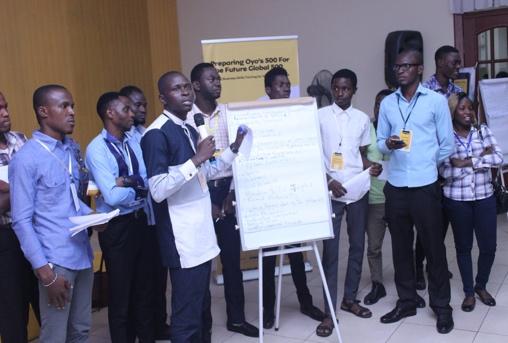
    The two-day training which was the pilot phase of the initiative, held on Thursday and Friday, June 28th and 29th, 2018 at the Olola Ogunlana Hall, International Conference Centre, University of Ibadan, Ibadan, Oyo State.

    Cross section of participants at the on the 1st day of the MTN Foundation’s ICT and Business Skills Training at MTN Foundation’s ICT and Business Skills Training For Youths In Oyo State, at the University of Ibadan, Ibadan, Oyo State, recently.

    The training sessions were handled by expert facilitators from  KPMG, Digital Bridge Institute (DBI), IBM and Oracle.

    The Honourable Minister of Communications, Barrister Adebayo Shittu, Mrs. Mosun Belo-Olusoga, Director, MTN Foundation, an alumnus of the University of Ibadan,The Special Adviser to the Executive Governor of Oyo State, Mr. Niyi Ajao (representing the Executive Governor of Oyo State, His Excellency, Senator Abiola Ajimobi were some of the dignitaries that witnessed the training.

  • How technology can deliver credible elections, by NCS

    Nigeria’s elections have usually been marred by rigging and violence, leading to deaths and destruction of properties. But the Nigerian Computer Society (NCS) believes the application of technology to the process would change the narrative, reports LUCAS AJANAKU

    THE Nigerian Computer Society (NCS) has said the application of technology to the elector  al process in the country would deliver free, fair and rancour-free elections.

    Its President, Prof Adesola Aderounmu, said there is the need for information communication technology (ICT) to be deployed to electioneering not only in the country, but also in sub-Saharan Africa.

    Speaking on: The future of elections in Nigeria: Leveraging ICT infrastructure for sustainable national electoral process at theFifth Covenant University Conference on e-Governance in Nigeria at Otta, Ogun State, he said elections should be seen as the best opportunity to encourage political leaders to promote innovation in the polity.

    “So, using ICT to elect credible leaders could motivate successful and satisfied politicians to encourage emerging governments to adapt the innovations to mainstream development and governance.

    “As the 2019 elections draw closer, there is no doubt that putting in place relevant ICT infrastructure for the application of adaptable technology in our electoral processes will go a long way to ensure transparency and credibility of the elections. It is a welcome development that leveraging technology had started, even if rudimentary, with the last 2015 elections that ushered in the present administration in Nigeria.

    “For instance, the application of technology for biometric registration of voters, the issuance of smart permanent voters card (PVC) to voters and voter verification and authentication using the smart card reader, has helped the infiltration of ICT into the electoral process. So also was the idea to scan and upload all voting result sheets for all the elections on a database, which was made accessible to all stakeholders for some months after the 2015 elections. All these formative adaptations of technology with the 2015 elections are commendable, but there is still a long way to go with our future elections,”  Aderounmu said.

     Sensitisation, civic education, e-inclusion

    Aderounmu, who is the Co-Centre Leader, World Bank-Designated Centre of Excellence in Software Engineering, ObafemiAwolowo University, Ile-Ife, said when it comes to conducting elections, sensitisation and civic education are  key in the electoral process and are necessary for democracy. It is all about voter consciousness and popular participation in elections. The citizens, who are voters, need to be effectively sensitised or enlightened about their civic duties and rights during elections.

    According to him, voter education should come before and during an electoral event, showing how, where, and when to vote. Citizens need to know why they must turn out to vote and how to cast their votes to make them count. Sensitissing and educating voters have always been done via the traditional mass media and direct town-hall community engagements.

    He said now with the pervasive influence of technology in society today, educating and cultivating the voters can be done better with the leverage of digital media such as  mobile phone with bulk SMS, bulk voice call or inbound interactive voice response, and the use of web-portals from pre-election polls.

    “Digital technology now enriches political communications and voter engagement like never before. And with the majority of people having access to computers and mobile technology devices these days, the Independent National Electoral Commission (INEC) and other concerned agencies can transform the sensitisation, civic education and e-inclusion of with the use of the internet via popular social media such as Twitter, Facebook, Instagram, YouTube, WhatsApp and special mobile apps to channel and disseminate voter education messages,” he said.

    According to him, digital media help information to be disseminated faster, smarter and real-time, reaching far more people and carrying everybody along. As an illustration, the Barack Obama American presidential campaigns in 2008 and 2012 as well as the global Arab Spring in 2011 transformed interest in leveraging networked digital connectivity for political action. During those epochal moments, he recalled, the use of social media for citizen engagement spread like wild fire. “Today, even experts at the Brookings Center for Technology Innovation in the U.S. affirmatively advocate “using social networking and digital tools to reinvigorate democracy and extend electronic engagement from campaigns and grassroots-activism to governance.” However, he said it is also possible that not every Nigerian voter will have access to new, cost-effective technological solutions like internet-enabled smartphones.

    For instance, using the internet for voter engagement is a step forward in accommodating technologically advanced voters. So, INEC needs to consider these less-technologically advanced voters as we adopt ICT in our electoral process. And also, voter education should be a continuous process and not necessarily tied to an election year.

    Constituency delimitation

    Another way to leverage ICT for Nigeria’s electoral process is through constituency delimitation, using digital maps and charts for proper voter registration.

    In a democracy, constituency delimitation is very important and an improper segmentation of constituencies can compromise the electoral process, thereby provoking needless conflicts and insinuations of marginalisation among peoples and politicians. To address this, it is better to apply the use of ICT solutions, such as digital mapping, digital charts, Global Positioning System (GPS) and GIS Satellite Footprints like the NigeriaSat-1. GPS uses satellites that orbit earth to send information to GPS receivers that are on the ground. The information so received helps people determine their location.

    Registration, data capture

    Voter registration and data capture constitute a major foundational step in the electoral process. Without a proper voters register, there cannot be proper elections. Voter registration helps to facilitate the credibility of the electoral process by preventing multiple voting as each person is only allowed to register once. With this, no one is allowed to register at multiple centres.  It helps in preventing cases of underage voting because only adults of voting age (18 years and above) are registered. He said there have always been controversies over voter registration as some complain of ghost names appearing on the voters register, names of foreign nationals appearing and names of under-age voters appearing too on the register. The use of a centralised countrywide database for voter registration, drawing on the National Identity Management Commission (NIMC) data inventory will be good. Updates to the centralised database can be done through web portal e-mails with smart fields, mobile apps, and automatic fingerprint and photo identification systems. In a way, online voter registration via the internet is simpler and more secure than paper registration and manual updates, Aderounmu said.

    Voter verification, voting

    He said when election day comes, ICT also has a huge role to play in streamlining the electoral process to make the election outcomes fair and valid. In fact, the deployment of technology during elections is most consequential because it helps minimise the rampant incidents of rigging and its resultant crises.

    “Thus voter verification and voting on election day can be digitally done through the use of direct electronic recoding machine, optical scanning system, use of smart cards and card readers,” he said.

    Card reader technology was deployed during the 2015 general elections, but card readers malfunctioned in a lot of voting areas across the country. There were even complaints by some governors that the card readers deployed by INEC could not read their fingerprints at the polling booths.

    He said for the coming 2019 elections, we hope INEC would have upgraded the card reader technology to be more effective and error-free. Also, the security of the voting technology is of great concern, and INEC officials must take significant steps to secure the voting equipment from their warehouses to the voting centres. This is where GPS technology also proves useful, as it helps INEC to track its drivers as they deliver equipment and supplies to the polling booths or transport election results from there, to avoid tampering with sensitive vote data.

    Vote counting,computation

    For so long in Nigeria, the use of manual systems in vote counting during elections has been the practice. This process should be transformed with digital computation technology that is cheaper, faster and more accurate. Deploying technology in vote counting will also improve the electoral process by making the counting of tedious electoral systems easier to use.

    Thus, new ICT innovations can be used to replace traditional paper ballots. As earlier said under voter verification and voting, using direct electronic devices, or using machine-readable ballots, can help remove the need to count ballots manually and greatly speed up the vote counting process, as well as guaranteeing accuracy. So, with vote counting and computation, it is highly recommended that INEC engages the use of result management systems.  Most automated voting systems even come with analytics based software to make vote counting and computation easier.

    Result dissemination

    After votes have been properly counted and computed, vote results can also be digitally disseminated to the public. Results can be streamed real-time from INEC website, obtained via SMS Query interfacing with INEC website and real-time RSS Feed.

    Other ICT apps

    The applications of technology in improving the electoral process and enriching democracy are quite many. There are other ICT apps such as the automation of electoral court system; digitisation of ballot papers; use of financial tracking technologies for campaign funds that require the cooperation of financial institutions; deployment of motion detectable security cameras at polling booths (in addition to cameras attached to the voting system); use of robots for detection and diffusing improvised explosive devices (IEDs); and use of body scanners with alarm system at polling booths.

    Challenges

    There are enormous challenges against deploying an ICT-driven electoral system in Nigeria. This is not surprising because the penetration of new technological advances in other areas of our national life has always been sluggish, aside e-commerce and social media.

    He sad political manipulation by political actors is a major challenge against the adoption of ICT in the electoral process. “We all know that Nigerian politicians take elections as a do-or-die affair and would kick against, or circumvent, any innovation that would deny them the opportunity to rig elections in their favour. So, the desperation of politicians to win elections by all means can frustrate or slow down the penetration of ICT in our electoral process,” he said.

    Also, abysmally inadequate infrastructure is a challenge against the leverage of technology in the electoral system. There is poor IT and base infrastructure in the country.

    Then, there is also the perennial problem of poor power infrastructure militating the application of ICT tools in the electoral process. It is a fact that IT needs stable power to function; when that is lacking, as it is the case in Nigeria, adoption of technology in the electoral system can be frustratingly
  • Nigeria: Visafone 800MHz to MTN Okay for Telecoms Growth

    MTN Nigeria has said the 30% National Broadband Plan (NBP 2013-2018) by the Federal Government can be actualized by fourth quarter of the year with the release of Visafone’s 800 Megahertz spectrum for usage in the telecommunication sector.

    The multinational mobile telecommunications company explained that its network coverage and Quality of Service (QoS) bound to improve for the benefit of subscribers in the sector with Nigeria Communications Commission (NCC)’s approval of the spectrum transfer to MTN Nigeria.

    According to Senior Manager, Regulatory Affairs, MTN Nigeria, Johnson Oyewo who lauded NCC for sustaining competitive regulatory business environment in the sector over the year however urged the industry regulator to take due diligence and transfer the Visafone spectrum appropriately in due course.

    “In order for the network expansion(MTN), and attendant service quality improvement to continue, it NCC should take a fair decision, in allowing the transfer of the Visafone 800MHz to MTN in the interest of the consumer and the Nigerian economy.

    “Nigeria’s broadband penetration is presently at 21/22%. We are committed to the national broadband penetration which was why we bought the 2.6 GHz spectrum band and MTN was the only bidder then. We are working hard to expand our networks across Nigeria and the 800MHz gives an advantage of wider coverage using fewer resources. The ultimate beneficiaries are the Nigerian government, and every Nigerian who will benefit from the pervasive roll-out of broadband services and success of the rural telephony project.

    ”MTN has shown time and again, that we are committed to the Nigerian market. MTN has consistently invested in communications infrastructure, particularly broadband infrastructure in Nigeria. The facts are there for everyone to verify, no other operator has displayed this level of commitment to development of the Nigerian telecoms space including operators whose parent companies rank higher globally in terms of subscriber numbers.

    “MTN’s continuous infrastructural roll-out underscores the company’s unwavering commitment to Nigeria in the long term, and as such other operators too should demonstrate the same commitment as the attendant impact of all operators’ collective investment on GDP given the International Telecommunication Union (ITU)’s findings will lead to a 10% leap in broadband penetration thereby resulting in 1% yield on GDP as well as lower retail prices which is beneficial to all consumers,” he said.

    Following the acquisition of 100 per cent equity of Visafone by MTN in 2015, Visafone had applied to the Nigeria Communications Commission (NCC) for the transfer of its frequency and licence to MTN.

    Competitors had argued on why the Nigerian Communications Commission should or should not transfer Visafone’s licence and spectrum to MTN Nigeria Communications Limited.

    The Nigerian Communications Commission (NCC) will decide before mid-July on whether to allow MTN Nigeria to continue using the 800MHz spectrum it acquired along with Visafone licence or disallow it.

  • Taxes, other charges killing us, say telcos

    Telecoms operators have lamented the crippling effect of multiple taxation, arbitrary charges and other challenges besetting the industry.

    The operators, acting under the aegis of Association of Telecoms Operators of Nigeria (ATCO), also lamented that the sector was left out in this year’s Appropriation Bill, which was assented to by President Muhammadu Buhari.

    Its President, Olusola Teniola, said lamented that the budget demonstrates the incapability of the government to further fund and spend on the much-needed infrastructure projects, such as power and information communication technology (ICT) and other essential items without reducing the recurrent expenditure to a level that reflects greater efficiencies in the way governance is run in the country. It also reflects a reality that the government’s diversification programme is slowing down or in doubt.

    “So this budget will only indirectly impact the telecoms sector, when the government removes the 38 different taxes and levies being applied to the sector to fund government spending. The government also needs to address the leakages in the 2018 budget, as the current taxes contributed by the telecoms sector alone per year is more than N450 billion and this is not reflected properly in their revenue line, highlighting  a problem with accountability within government and shortchanging the effort that the industry plays in the nation’s economic development.

    “The fact that many projects were removed and replaced with National Assembly projects demonstrates a problem in what is going to be implemented in 2018 and early 2019 to support this diversification,” Teniola said in electronic interview.

    He said Buhari  should address his concerns with the legislature and other stakeholders in the polity to ensure that any gaps that exist are closed in a manner that benefits the citizens. The fact that differences exist is not a problem, he said, adding the area the that needed to be addressed is transparency and relevance of projects that both sides of the government seek as priority within the remaining term of the administration.

    He said collaboration is not only key between the executive arm of government, but also with legislature, the private sector  and civic society in ensuring that this budget delivers the dividends to each citizen and more importantly that the private sector has the much needed funds that government seeks to deliver on its promises.

    However, he said this could only be harnessed when the government provides an enabling environment and a level of accountability as to how taxes are collected and spent to provide the basics to its citizens.

    The recurring expenditure is one line item that speaks to that, it needs to be reduced and not increased going forward.

  • Technology exhibition holds July 14

    TEXPO Technology Exhibition, in conjunction with Purple Chip, is set to stage this year’s technology exhibition.

    A statement by its coordinator, Mr Adetolani Eko, explained that the forum will hold on Saturday, July 14, at LCCI Conference & Exhibition Centre in Alausa, Ikeja, Lagos with: “Driving affordable and sustainable innovation” as its theme.

    He said  it is a yearly event aimed at encouraging young and innovative technology entrepreneurs in Nigeria and Africa as a force to reckon with in the global technology market.

    According to him, the forum will give stakeholders in the tech ecosystem an opportunity to interact and showcase their products before industry influencers, exhibitors and potential investors.

    “TEXPO presents an opportunity for technology entrepreneurs to find investors and mentors for them and their products, provide a platform for start-ups to exhibit their products, create an avenue for start-ups to get funding, provide an avenue for entrepreneurs to interact, help start-ups receive feedback on their products before it hits the market, sensitise youth and recalibrate their thought process  as well as motivate and inspire young technology entrepreneurs and tech enthusiasts,” he said.

    He said TEXPO aims to be different from other tech exhibitions through having experienced, and passionate keynote speakers who also aimed at creating platforms where stakeholders in various aspects of technology, such as hardware, software, artificial intelligence (AI) technologies among others can exhibit their products, get feedback and advice from industry experts and find potential investors.

  • SystemSpecs chief advises govt on capacity building

    Indigenous software powerhouse, SystemSpecs, has advised the Federal Government to build local capacity to meet the requisite manpower requirements of emerging technologies.

    Its Executive Director, Deremi  Atanda  who spoke on the sidelines of the seventh German Nigerian Business Forum  at Eko Hotel and Suites in Lagos, said though the economy is prepared to accommodate new technologies, the government should continue to build local capacities.

    He said: “Our economy is more than ready and you can attest to that by the number of technology companies springing up in Nigeria every day. The potential of what they do, how they are being celebrated all over the world, the potential to earn and bring forex into this so we are more than ready and that is why one of the key areas we need to keep looking at is to keep building capacity to make sure that we seize the day.

    “Nigeria needs to seize the day and see its emergence as a giant and technology landscape. It is not one of the areas we can afford to stay back and keep depending on foreign tech, it’s clear that we have what it takes and we should be firmly committed to that across all levels and to just take the Nigeria success story out there for the benefit of Nigeria and Nigerians. ”

    Atanda said the emergence of new technologies is no threat to jobs, stressing that all that was needed was upskilling.

    “If you have your visions right which takes us back to when man landed in the moon all it took was a vision. So, if there are things we need to address, they are staring us in the face, the vision and first thing is I want to address this issue, once you are committed to that, you will see that there are different ways of solving the problem and particularly about one’s capacity, you can see already, Lagos State is taking a lead and particularly on that, we are partnering with Lagos where young people even those in primary schools are being introduced to the era of programming. So it’s not a future to come, it’s here today.

    “So, solving those problems with technology means developing capacity and manpower and that’s one project I’m very passionate about and can see that once we build capacity from the very root which is not about education curriculum, it’s about capacity for survival, evolution of economies and society, then we are committed to solving our problems. And I think Lagos can be a model for what it takes to create the much needed capacity to address our own problem without reliance on foreign support and technology most of the time,” he said.

  • ‘Offshore cloud hosting causes capital flight, others’

    Comercio Cloud Managing Director,  Mrs Aderonke Adeyegbe, has said when organisations decide to host their data in local public cloud, huge foreign exchange (forex) is saved and jobs created.

    Speaking on the sideline of the unveiling of the first enterprise public cloud platform in the country in Lagos, she said the public cloud platform was created for medium and large enterprises to provide the same services as Microsoft Azure and Amazon Web Services provide.

    She said: “There has been and there continues to be more world class data centres coming on to the market. It provides an adequate platform for us to build a public cloud platform. We use at least two of the data centres to provide redundancy and disaster recovery capabilities. Using VMware technology, we are able to move our cloud infrastructure from one location to another in the event of a failure with little or no data loss. From our local economy point of view, it reduces capital flight and encourages job creation in the country.

    “We could not have picked a better time to launch our public cloud platform because there are up to eight undersea cables available or coming on board to provide access to the outside world. The proliferation of undersea cables providers has increased competition and thereby reducing the cost of internet access. Currently, internet access is cheaper than the metro networks in Nigeria. Though the cost of connectivity is still falling and becoming more attractive, the deregulation of the right of way has allowed many companies to provide affordable access to fibre. There are also more world-class data centres to host cloud platforms available today with a few more being built.”

    According to her, there is a global clamour for cloud computing, adding that original equipment manufacturers (OEMs) are geared to providing support and services to this area of technology.

    She said with the challenges faced globally and especially in Nigeria, companies are looking to reduce their expenditure while trying to grow their business. Global best practice is that most chief information officers (CIOs) are moving to cloud platforms for data storage. With the reduction in recent times in the cost of accessing internet services, this service has not come at a better time with more world class data centres to host cloud platforms available today than ever before in Nigeria. It is not unnoticed that 70 per cent of CIOs worldwide are moving to the cloud this year and the total revenue from cloud computing tripling in the next two years, she said.

    Also, its Chief Technical Officer, Mr. Aderemi Adejumo, said the public cloud platforms offer enterprises the opportunity to move their IT expenditure from a capital expenditure (capex)  to operating expenditure (opex) as well as only pay for what they consume. He said it is a pay-as-you-go model to minimise expenditure and create great saving in total cost of ownership (TCO).

    According to him, the other great advantage is their time to market because in traditional computing, it takes between four and 16 weeks to request, get appropriate approvals and procure hardware before installing and configuration of the software. “In this current fast changing world, this is not acceptable and a great challenge. With our public cloud platform, the required hardware can be provisioned and available in less than 48 hours.

  • Firm, Airtel unveil platform

    A firm, Kwesé iflix, said it has partnered Airtel to launch its premier digital entertainment platform in Nigeria.

    The platform with the best international, regional and local content programmes, is curated especially for African audiences to stream or download. The service offers users the ultimate entertainment experience, with Kwesé’s extraordinary content offering including live coverage of the world’s most elite sporting competitions and the upcoming FIFA World Cup Russia.

    Its vast library include international first-run exclusive shows, award-winning TV series and blockbuster movies, such as Hot Ones, Saints & Sinners, Riviera, Grand Prince, Broken, Britannia, Tin Star, Being Mary Jane, Younger, Action Man, Freakish, and Family Time and Luther.

    Others were popular local and regional content, such as Jenifa’s Diary, V Republic and Dear Mother. Faith-based titles include Enjoying Everyday Life with Joyce Meyer and Hal TV programmes. The content offering also features children’s programming, lifestyle shows, and Nigerian quality content which can be watched for free, including short-form drama series, first episodes of TV shows, and live broadcast of local free-to-air TV stations, such as NTA & Kwesé Free Sports, as well as CNN, Revolt, Viceland, Cartoon Network and much more.

    Announcing the launch of the service, Kwesé iflix CEO, Mayur Patel, said: “A marriage between Africa’s leading media providers, the Kwesé iflix app offers customers the best in entertainment, anytime and anywhere. Created for the mobile generation, consumers now have unlimited access to all their favourite sports and shows in a way which suits their lifestyle – on-the-go and on their terms. We are excited to be working with Airtel to deliver our content into the hands of even more Nigerians”

    Leveraging Airtel’s 4G network, subscribers will be able to stream Kwesé iflix’s world-class programming on their connected devices through innovative data bundles, which will be available to Airtel customers.

  • Systemspecs says Remita is right choice for digital payment


    With so many payment solutions out there, pundits already fear cash may soon be dethroned as ‘king’. Digital payment systems are now so ubiquitous. It is becoming increasingly difficult for consumers—businesses and individuals—to make the right choice. Ideally, this right choice is based on payment needs.

    Irrespective, it should be one that is seamless, easy to use, efficient, fast and secure. A few brands that have been able to deliver these qualities are leading globally. By now, almost everyone in Nigeria, who is averagely financially literate, can mention one or two of such payment providers, mostly foreign (If you can’t we are working on you, never mind). What many do not know is this- from Nigeria, developed at the very heart of Lagos, is one payment solution on its way to becoming a global brand. It is called Remita.

    What makes Remita tick would not only be that it is taking the lead in helping individuals and corporates redefine their financial transaction experience, it is the fact that it was developed by an indigenous company, SystemSpecs, one of the country’s longest-standing fintech firms.

    There is a good chance you have used Remita without realising, especially if you have ever paid to a federal government ministry or parastatal. Yes, Remita has made a name for itself having been tested and trusted by the Nigerian government in its drive towards transparency in the public sector, but it is important to note that Remita is everywhere, not just in the public sector as often misconstrued.

    SystemSpecs have been in the software business for over 26 years, delivering superior human resource and payment solutions across the country. And unlike newer types of payment solutions developed by most startups, SystemSpecs’ Remita has worked so well for users. It has won several national and international awards for the innovativeness it brings to the diverse payment processing needs of Governments, Organisations, SMEs or Individuals. Remita has the most robust payment facilitation options in Nigeria and has become a one-stop financial shop for all payment needs.

    Those very familiar with Fintech products emanating from Nigeria and the rest of Africa have described Remita as one of the most remarkable yet. It’s developers, SystemSpecs is a company that has always been ahead of the curve in the Nigeria’s payments industry. Remita boasts of a large clientele and it processes over $30 billion worth of transactions annually. With Remita, anyone can start receiving payments on their website in less than 48 hours with ZERO activation fee.

    It also makes it easy for customers and service users to pay you using any of the following channels: Online Banking site, Remita (on app, mobile & web), Debit/Credit cards (Visa, Verve, MasterCard, UnionPay); Branches of any commercial bank nationwide; Microfinance Banks; POS, Direct Debit and Digital Wallets. What’s more? Remita has a full suite of comprehensive payment solutions to meet different business or personal transactions needs. Here are some of the packages of this leading brand:

    Remita Payment Application (Mobile and Web)

    Remita online and mobile payment application enables Governments, Businesses, NGOs & Individuals to manage bill payments, funds transfers, invoicing & real time tracking of all transactions on a single platform.

    The mobile app version of Remita, which is available on Android and iOS, is loaded with a lot of features to have consumers experience the best of transactions with their phones. The mobile app helps users aggregate all their bank accounts across different banks on a single screen and make payments seamlessly.

    This app is perfect for you if you are tired of overburdening your phones with many bank apps, each eating up storage space and slowing down processes. Also, if you have a hard-time remembering a thousand and one passwords and usernames from your many bank accounts, you can easily download a Remita app and connect all your bank accounts on a single screen. It is as simple as it sounds.

    Thousands of public and private sector organisations, as well as individuals, consider the Remita Online and Mobile Payments and Collections App as one of the best that has ever happened to them. Apart from being able to pay almost any biller in Nigeria’s private and public sector, the mobile and web platforms also incorporate an integrated payroll processing solution. More interesting features include scan/tap to pay, standing orders, e-invoicing and comprehensive expenses and transactions reporting.

    Remita Payment Gateway

    Remita provides payers with a wide range of payment channels on a SINGLE platform, including Debit/Credit Cards, Bank Branches, POS Terminals, Micro-Finance Banks, Internet Banking, Collection Agents, Mobile Wallets, Account Payment and Direct Debit. lt can be used by Billers, Merchants, e-Commerce sites etc.

    The Federal Government of Nigeria adopted the Remita integrated multichannel Payment Gateway as a one-stop solution for the collection of all revenue types through different transaction channels under its national Treasury Single Account (TSA) initiative.

    The Remita Payment Gateway that drives the TSA is integrated with other payment technology solutions at the core of its design. This has always been one of the very unique and verifiable features that has distinguished the Remita solution in the marketplace.

    Remita Payment Infrastructure

    For clients who need more than just a payment gateway, SystemSpecs deploy Remita as a complete end-to-end payment infrastructure that facilitates seamless funds transfer, settlement and reporting between financial scheme operators (Central Bank, Commercial Banks, Mobile Money Operators, Micro-Finance Banks, etc.).  It also provides visibility over the entire payment ecosystem.

    Remita Payroll

    Remita payroll is ideal for any organisation with 2-200,000 employees. It is a powerful and comprehensive Payroll and Human Resource Management solution, which has been effectively deployed across private companies, and governments in Nigeria.

    Remita Payroll & HR is based on SystemSpecs’ highly successful HumanManager solution that has been a market leader for more than 20 years.

    Among other things, it allows organisations to save costs, detect ghost workers, compute all staff allowances and deductions, and automatically send electronic Payment Notification, Payslips and Tax analysis slips to each staff at the end of every pay run. It also allows them to pay salaries without the need to upload salary schedules from a separate software to the e-Payment platform.

    Although the need to automate payroll processes end-to-end inspired the birth of Remita, it has grown beyond just salary payroll to include payment of taxes, loans, pensions, cooperative deductions, among others. Today, Remita does beyond salaries and vendor payments system; it does financial collections.

    Recently, SystemSpecs formed a strategic collaboration with Access Bank to offer salary earners ‘PayDay’ loans, without human interaction, the need for collateral or guarantor, or the need to visit a bank. This has been made possible through Remita’s robust database.

  • Airtel urges corporates on giving

    Airtel Nigeria has urged corporate organisations to give to less privileged members of the society. It added that there is joy in giving to people one doesn’t expect anything from in return.

    Its Managing Director/CEO, Segun Ogunsanya, who spoke during the premiere of Season 4 of its Corporate Social Responsibility (CSR) programme, Airtel Touching Lives at Eko Hotel & Suites, Victoria Island, Lagos, said there is no limit to how kind anybody can be. He urged corporates not to spend their time asking why there are poor people in the world.

    “The right question is what can we do to change it? We are always going to have poor and unfortunate people among us. What next is what you can do to affect their circumstances and I am encouraging you to do something,” he said.

    Vice President’s wife, Mrs. Dolapo Osinbajo, commended Airtel for its commitment to helping the underprivileged.

    She said: “I remember attending Airtel Touching Lives Season 2 in Abuja and I still remember how inspiring it was. I congratulate you on the CSR as you have effected it in producing Airtel Touching Lives Season 4.

    “I look forward to watching the episodes, I look forward to hearing the stories of those who need help and have found help, I look forward to it being an encouragement to all of us that can share to help those that need. I wish you a delightful event; once more, congratulations Airtel Nigeria.”

    Minister of Communications Technology Adebayo Shittu, urged other corporate organisations to follow the footsteps of Airtel Nigeria in extending a helping hand to those in need.

    “I think that the companies doing business in Nigeria who have been benefiting from the enabling environment in Nigeria and the individuals and businessmen who have been benefiting must certainly come to the rescue and multiply what Airtel has been doing,” he said.