Tag: Ebola

  • 103 Ebola cases reported in DRC – UN

    The Office for the Coordination of Humanitarian Affairs (OCHA) said no fewer than 103 cases of Ebola have been reported in the Democratic Republic of the Congo (DRC).

    OCHA said the figures includes 76 confirmed and 27 probable, including 61 deaths, as at Tuesday this week.

    Suspected new cases continued to emerge in Mabalako and Oicha areas of North Kivu, according to the UN relief wing.

    It said new alerts were under investigation in three more provinces: Mongala, Haut-Uele and Haut Katanga.

    Read also: Congo approves four more experimental Ebola treatments as cases rise

    A joint United Nations-Ministry of Health team is implementing activities to combat the Ebola outbreak including alerts investigation; vaccination; water, sanitation and hygiene education; epidemiological surveillance; and psychological assistance to the affected families.

    Since Aug. 8, more than 2,000 people have been vaccinated, OCHA said.

    A joint response plan by the World Health Organisation (WHO) and the Ministry of Health was finalised with funds secured from donors and humanitarian partners.

    The UN office, however, said the country-wide Humanitarian Response Plan, which required $1.67 billion to respond to the needs of 10.5 million people, was only 24 per cent funded. (NAN)

  • Congo approves four more experimental Ebola treatments as cases rise

    Democratic Republic of Congo (DRC) has approved four more experimental treatments against the deadly Ebola virus, the health ministry said as it raced to contain an outbreak in its violence-torn east.

    Health authorities on Aug. 11, started administering the U.S.-developed mAb114 treatment to Ebola patients, the first time such a treatment had been used against an active outbreak.

    The DRC health ministry said in a daily bulletin that the 10 patients who received mAb114 since Aug. 11 have experienced a “positive evolution”, but the outbreak has continued to grow.

    The four additional treatments approved by Congo’s ethics committee are Remdesivir, made by Israel’s Gilead Sciences; ZMapp, an intravenous treatment made by San Diego’s Mapp Pharmaceutical; Japanese drug Favipiravir; and one referred to as “Regn3450 – 3471 – 3479”.

    Remdesivir was administered to its first patient in the town of Beni on Tuesday, who is doing well, the ministry said in its bulletin.

    Read Also: Expect more Ebola cases in Congo – WHO

    The ministry said six new cases and four new deaths have been confirmed from the haemmorhagic fever, which causes vomiting and severe diarrhea.

    That brings the total number of deaths to 59 and confirmed cases to 75 since July.

    Congo, whose heavily forested interior makes its a natural home for Ebola, is at the forefront of a global campaign to combat the virus, which killed more than 11,000 people when it swept through West Africa from 2013 to 2016.

    The Central African country has experienced ten Ebola outbreaks since the virus was discovered in northern Congo in 1976, more than twice as many as any other country and 33 people died in a flare-up in the northwest that ended last month.

    In addition, a vaccine manufactured by Merck, which proved effective against the earlier outbreak in northwestern Congo, has been administered to 1,693 health workers and contacts of Ebola patients.

    Insecurity in Congo’s eastern borderlands with Uganda has continued to complicate the response, with some contacts of Ebola patients located in so-called “red-zones”, which are off limits to emergency responders due to militia activity.

    Instead, local health workers in those areas are monitoring the contacts and no Ebola cases have yet been confirmed there.

    NAN

  • WHO chief pleads for access to Ebola-affected areas of DRC

    The Director-General of the World Health Organisation (WHO), Dr Tedros Ghebreyesus, has pleaded for access to conflict zones in Ebola-ravaged areas of the Democratic Republic of Congo (DRC).

    Ghebreyesus warned the conflict zones could constitute ‘hiding places’ for the deadly virus in DRC, following a two-day mission in the country.

    He repeated his call for warring parties in conflict-riven North Kivu to stop fighting and allow health team access to areas affected by the recent Ebola outbreak in the region.

    Speaking in Geneva, the WHO chief stated that his visit to Beni and Mangina – the epicentre of the outbreak which started about a week ago – left him “more worried” than he had been over containing the outbreak on the western side of the country, which officially ended late July.

    “What makes the outbreak in Eastern DRC or Northern Kivu more dangerous, is that there is a security challenge.

    “There is active conflict in that area,” Ghebreyesus said.

    He noted that since January, the area had seen more than 120 violent incidents, including killings and kidnappings of civilians.

    “We have difficulty accessing those areas and people in those areas will have difficulty moving to places where they can get the support they need.

    “We are asking the international community to help in ensuring access into the inaccessible areas.

    “We also call on the warring parties for a cessation of hostilities because the virus is dangerous to all; it doesn’t choose between this group or that group.’’

    According to WHO and the DRC’s Ministry of Health, the number of cases so far stands at 57 confirmed or suspected cases, with 41 deaths, already surpassing the previous Ebola outbreak in the country’s Equateur Province, with 53 cases and 29 deaths.

    In addition, WHO reported that the number of women infected in Kivu so far was much higher than the number of men infected.

    Apart from the lack of access, the WHO chief cited several factors that complicated the operational environment for Ebola responders, including the high population density in North Kivu, which was not an issue in Equateur Province.

    Another factor was the large-scale population movements within the region and across borders with neighbouring countries, which continued.

    He added that some one million people have been internally-displaced so far by fighting.

    The WHO chief also reported that seven health workers had been infected to date, explaining that this presents additional challenges for the response.

    Ghebreyesus assured that, while all these factors rendered this outbreak “more difficult to manage,” WHO was continuing to provide support to the Ministry of Health and “doing all we can to be more aggressive than the virus’’.

    Case-finding efforts have led to the identification of over 600 potential virus carriers so far; vaccinations and treatment programmes are underway while awareness has been stepped up within affected communities, through radio broadcasts and other community-wide communication.

    Ghebreyesus commended the joint efforts by the Government of DRC, WHO, the UN stabilisation mission in-country (MONUSCO), UN Children’s Fund (UNICEF) and various international non-profit organisations in order to defeat the virus.

    Thanking donors for their support in helping defeat the previous outbreaks in the Equateur Province, Ghebreyesus called on the international community to “speed up the financing’’ to respond to this new crisis. (NAN)

  • Vaccination on latest Ebola outbreak may start Wednesday – WHO

    The Ebola outbreak in Congo has been confirmed to be the Zaire strain of the virus and vaccinations of health workers may start on Wednesday, a senior official of the World Health Organization (WHO) said.

    Peter Salama, WHO Deputy Director for Emergency Preparedness and Response, gave the results of genetic sequencing in a tweet, saying that analysis showed it was a new outbreak in North Kivu province.

    He said: “We can start using rVSV-ZEBOV vaccine as early as tomorrow.”

    Reuters reported that the experimental vaccine, manufactured by Merck, proved successful during its first wide-scale usage against an outbreak of Zaire virus on the other side of Congo in the northwest.

    The Ebola outbreak was declared less than two weeks ago after killing 33.

    More than 3,000 doses remain in stock in the capital Kinshasa, allowing authorities to quickly deploy it to the affected areas near the Ugandan border.

    The vaccine normally needs to be kept at 80 degrees Celsius below freezing (minus 112 Fahrenheit), although it can be stored for a couple of weeks at just above freezing.

  • Ebola survivors suffer severe mental, neurological problems – Study

    People who survive the deadly Ebola virus can continue to suffer severe psychiatric and neurological problems including depression, debilitating migraines, nerve pain and stroke, according to a study.

    Researchers who analysed patients infected during the 2014 to 2016 Ebola outbreak in West Africa found that some survivors had such severe health conditions that they were left unable to care for themselves.

    “We knew that a disease as severe as Ebola would leave survivors with major problems – however, it took me aback to see young and previously active people who had survived but were now unable to move half their bodies, or talk, or pick up their children,” said Janet Scott of Britain’s University of Liverpool, who co-led the research.

    She said the findings show a need for larger and more detailed studies of Ebola survivors compared to matched controls who did not get virus.

    Published in the Emerging Infectious Diseases journal, the study looked at patient notes from of more than 300 Ebola survivors in Sierra Leone, one of the countries worst hit in the 2014 to 2016 epidemic.

    Thirty-four selected patients were then asked to attend a joint neuro-psychiatric clinic in 2016 where they underwent a full neurological examination, psychiatric screening and specialist investigations including brain scan imaging.

    Read Also: Find lasting solution to farmers, herders crisis – NANS tells FG

    Patrick Howlett of King’s College London, who co-led the research, said its results showed that Ebola survivors can suffer with “Post-Ebola Syndrome” (PES), a wide range of disorders “from minor to extremely severe and disabling”.

    Neurological problems included stroke, debilitating migraine-type headaches and nerve pain, while the most frequent psychiatric diagnoses among the survivors studied were depression and anxiety.

    The 2014 to 2016 West Africa Ebola epidemic killed more than 11,300 people and infected around 28,000 as it swept through Guinea, Sierra Leone and Liberia.

    World Health Organisation (WHO) estimates suggest there are well over 10,000 people who survived the disease.

    The researchers said the findings pointed to an urgent need for specialist medical professionals trained in the needs of Ebola survivors and how best to treat PES.

    “Post-Ebola syndrome is not going away, and those with the condition deserve better treatment,” said Scott.

  • We are still at war with Ebola – WHO

    The head of the World Health Organisation (WHO) on Tuesday cautioned against declaring victory too early in Congo’s Ebola epidemic, despite encouraging signs that it may be brought under control.

    “The outbreak is stabilising, but still the outbreak is not over,” WHO chief, Tedros Adhanom Ghebreyesus, told journalists on a visit to Democratic Republic of Congo’s capital Kinshasa.

    “We are still at war, and we need to continue to strengthen our surveillance and be very vigilant,” Reuters quoted the WHO chief as saying during the visit.

    WHO officials on Friday expressed cautious optimism that the epidemic was stabilising partly due to swift deployment of vaccines.

    But a day earlier, Congo’s health ministry reported its first confirmed case of Ebola in over a week, in the rural community of Iboko.

    Ghebreyesus said 2,200 people had been vaccinated, and that case management and tracing contacts of victims had gone well.

    He said: “It’s not over until it is over. Even if one case crosses into Congo (Republic) and gets to an urban area, that could trigger another epidemic.”


  • Ebola in Congo DR: Nigerians who had encounters with virus recall horror stories

    Following the resurgence of the dreaded Ebola virus in Congo DR, Nigerians have been expressing anxiety. Gboyega Alaka in this piece, sought audience with two Nigerians, who had close shaves with the virus: one a victim, who lost his fiancée to the virus; and the other a professor of Virology, who literally went to confront the virus.

    TRACKING down Dennis Akagha, one of the surviving victims of the Ebola virus the last time it landed in Nigeria, for an interview can be likened to pulling the biblical camel through the needle’s eye. For one, he has decided to put everything about Ebola behind him – so he claimed. Besides, he has been busy with his new found love for social works, which has culminated in his founding of Justcare Development Initiative, an NGO, aimed at helping people living with HIV and AIDS cope with the problems of stigmatisation and discrimination. As a result, he had to be dragged out late in night for this interview, having been busy all weeks attending some training.

    The NGO, he explained, is an offshoot of what he suffered right after his encounter with the virus. Adjusting his glasses and inching closer to this reporter, he asked, rather rhetorically, ‘Have you ever found yourself in a situation where young children who have always rushed into your arms to greet you, suddenly see you and cower or run away? Have you found yourself in a situation, where friends and neighbours, each time you step out, give you the distance, rather than warm up to you like they used to? That was the situation I found myself right after I was declared free from the virus and came back home in 2014. That was why, once I decided to dedicate myself to social works,  I just thought the best aspect to focus on, was stigmatisation and discrimination, because I’ve been there and know how it feels. Even the ‘Just’ in the name ‘Justcare’ is after my late fiancé, Justina (Ejelonu) of blessed memory.”

    It will be recalled that Akagha contracted the virus, while taking care of his fiancé, Justina, who, as a nurse at First Consultant Hospital, Lagos, had, alongside the late Dr Adadevoh and some other health personnel in the hospital, contracted the virus, from the index case, the late Liberian, Patrick Sawyer. Reliving the dark days, Akagha, who says he recently introduced a dating site, PL Connect, to connect persons living with HIV/AIDS for marriage says,  “Clearly, it was a sad experience for me. It was one huge trauma; don’t forget I had just lost the lady I was building a life with. The only consolation was that she died in the line of duty. But just when we thought the worst was over, I was isolated and later confirmed positive to the virus.”

    Akagha recalls that he inevitably had to contract the virus, as he was the one taking care of Justina, after she came home sick. At the time, he knew nothing about the virus and couldn’t even identify the symptoms. If she did, she never told him, although he reasoned that it was possible that she knew and kept it away from him for fear he may abandon her and run away.

    “We managed her illness for two weeks at home until she started bleeding and we had to seek help. First, I took her to First Consultant Hospital, where we were advised to take her to the Lagos Mainland Hospital, which had been designated for infectious diseases.” Akagha said.

    After Justina was confirmed and isolated along with a few other cases, it all seemed like countdown to end, even as the whole nation prayed in anxiety. How did Akagha manage the tension? Wasn’t he scared he was going to lose her? And wasn’t he scared for himself?

    “Frankly, I was believing she would survive; I went to church, prayed and tried to encourage her psychologically and infect her with my optimism, but the fact remains that someone else’s faith cannot save you. It just seemed like she had given up, because most of the things I was telling her to do to hang on, she wasn’t doing. To answer your second question, I had a lot of contact with her alright, but I couldn’t desert her, only a wicked person would do such a thing.”

    Akagha’s isolation

    After Justina’s death, Akagha inevitably had to be isolated. The authorities felt he was too much of a risk to other people, to be left to roam freely. “I was taken in for one day as a suspect, and after they’d ran tests that confirmed that I had the virus, I was taking into the section where we had people with confirmed cases. ”

    Was he scared that the end had come? Akagha’s simple reply was, “I wasn’t.”

    If anything, he insists that he was the healthiest in the isolation room that had about five patients with various advance stages of the disease. “I was running errands for everyone else, I was the one who went to the gate to get their food for them because most of them couldn’t walk. I was doing my exercise, praying and encouraging them.”

    What was the mood like in the isolation room?

    “The mood was sober. Definitely not one for jokes. The guy whose bed was beside me was visibly disillusioned. He kept saying things like ‘Wow, so I’m going to die?, and I had to be placating him and telling him, ‘No, you’re not going to die.’ One thing I noticed was that that Ebola seemed to affect the memory, because he appeared to be losing it. He would go on the phone to monitor the news in town, about what people were saying about us, and this seriously affected him. At that point, it had become full-blown in them, so to speak. The woman opposite me was stooling and vomiting; same for the guy beside me; another guy appeared a bit healthy, but he was advancing…. I was the strongest. The only things I felt were the pains in my joints and the sore throat. I never got to the bleeding stage before I started recovering.”

    And the drugs?

    “I can’t remember the drugs now, but one of the immediate consequences of Ebola is dehydration, so we were given salt and water solution, plenty of it. We were required to drink up to five 1.5-litre bottles of the solutions per day, sometimes more. And if you know the taste, you would understand that that was like a punishment on its own. But you had to force yourself. We were also given lots of proteic foods, and lots of fruits. It’s not as if they were curative but they helped boost our immune system.

    At the mention of lots of fruits, one couldn’t but picture a scenario where the patients had to mechanically consume the fruits, as against relishing them; but Akagha says that was not the case with him. “I was enjoying it and even asked for more. Not so for others though.”

    Asked what gave him the seeming feeling of immunity, Akagha said, ‘God.’ In the end, his positivity prevailed, as all of them in the room fully healed, starting of course with him. Even the doctor’s wife, who was brought from Port Harcourt with her son, survived.

    One of the lasting effect of the experience on him, he said was the difficulty he faced in getting into a new relationship. Hard as he tried, he said “I just found it difficult to love, possibly because of the trauma. And maybe because I was looking for someone like her; but of course no two persons are alike. I think it was also because I wasn’t properly healed. So I sat myself down at a point and said, Boy you need to wake up. Fortunately, she came along, he said, cuddling his new heartthrob, who had escorted him out on the occasion of this interview.

  • Our major concern was to ensure virus didn’t escape into the city -Prof Nasidi

    Prof. Abdulsalami Nasidi, then coordinator, Nigerian Centre for Disease Control, was one of the very first health personnel, who responded and stood in the eye of the storm to shield the nation from a horrible Ebola explosion. He tells Gboyega Alaka how he, along with the late Dr Stella Ameyoh Adadevoh and other health personnel; the government and the private sector worked together, to stop the virus.

    YOU were one of the senior health personnel, who helped in arresting the Ebola virus when it landed in Nigeria in 2014, did you have any close contact with any of the infected persons?

    I was the first non-resident doctor  that went to the First Consultant Hospital, Lagos, when the news broke that a suspected case had been identified there. That was the second day; the third day, I handled the patient together with the late Dr Ameyo Adadevoh and other junior doctors of the hospital and medical personnel. Unfortunately, by the time we realised it was Ebola, myself and Professor Sunday Omilabu of the University of Lagos, a number of the personnel had had contacts directly or indirectly with the patient. Of course if they had known that it was Ebola, they would not have handled the patient directly like they initially did, but sought our intervention. As a matter of fact, it was only when they realised that he was from Liberia that the alarm bell went off.

    As a health expert, were you unsettled when you realised that Ebola had finally landed in Nigeria?

    Of course! We are talking of a city of over 20 million people, so densely populated. If the virus had escaped into the city, it would have been very devastating for Nigeria. So, we were lucky. Our main aim was to ensure that the virus did not escape into the city, otherwise it would have been a disaster.

    What part did you play in ensuring that the index case did not escape into town? There was the story about how he at a point wanted to leave the hospital and Dr Adadevoh had to physically restrain him.

    Yeah that was the narrative out there, but there was more. Dr Adadevoh did so well, no doubt; but she couldn’t have done it successfully without the Liberian Embassy. The Liberian Embassy intervened; at a point they even wanted to take him back to Liberia, which would have endangered more people. Don’t forget he was also an American citizen. But of course, we resisted the move and the ambassador saw reasons with us. I had to involve the Health Minister, the Minister of Foreign Affairs and the Liberian Ambassador.

    Did you at any point get to this particular case or any other case to the extent that you felt you might have contracted the virus?

    Yes. As a matter of fact, I consider myself a lucky man. Adadevoh and I were the ones that took over the management of the patient; don’t forget it was during Ramadan and as we got busy, she was the one preparing my tea and little chops. Unfortunately, I did not know that she had contracted the virus at the time, so that is why I said I was lucky. Of course, once we realised what we were dealing with, we immediately brought protective gears to the hospital, gave them masks and trained them on how to use it. When he (the index case) died, we also used our team to evacuate him and prevent further spread.

    What other personnel of the hospital got in close enough contact with the index case to raise anxiety, I know of the late Nurse Justina Ejelonu and Adaorah Okoli, now a doctor in the US?

    There were various degrees of contacts. I know of young doctors, whom all the contacts they had was touching the door knob leading to his ward, and they contracted the virus. Some had administered intravenous injections, and weren’t wearing the protective gear, because of course, they didn’t know at the time, that he had the virus.

    Can you capture the anxiety of those moments, when it had been confirmed that Dr. Adadevoh had contracted the virus and it was like a countdown for her?

    Yeah, what happened was that I assembled all the workers at the hospital, together with one Dr Musa of the WHO and later the Commissioner for Health, and lectured them on the danger of the virus and the fact that some of them may have contracted it. Of course none of them had started exhibiting the symptoms, but we gave them thermometers to monitor their temperature and get back to us on a regular basis, just in case. We also coached them on how to thenceforth handle cases of Ebola and such other deadly virus.

    Nigeria was successful to a great extent in curtailing the virus and most of the health workers and their relatives who contracted the virus survived; so how come an icon like Dr. Adadevoh didn’t survive?

    Myself and the officer from the WHO became very worried when we didn’t see her at work the first and second day after. We quickly went to see her and by the time we got there, she was already exhibiting the symptoms; so we quickly evacuated her from her home to the treatment centre.

    Do you think she deliberately stayed away from work, so she didn’t infect other people?

    Possibly. But that is very difficult to say now because she’s no more and we have to be careful the kind of things we say about her.

    What memory stood out for you as the nation battled to contain the virus?

    It was trying time indeed. At that stage, our major fear was for the virus not to escape. When I was telling the hospital personnel that some of them may have contracted the virus and that they had to be monitoring their temperature for at least 21 days before they could be declared free, they apparently didn’t believe me… until the eleventh day, when the first patient came in and we had to create a treatment centre on Lagos Island.

    Another thing that stood out for us as public health officers was the prospect of the virus escaping into the city. We thought of the water system; the hospital was particularly located by the Obalende bus terminal and very busy with human and vehicular activities, so we were just thinking of how to protect the city, and then the country.

    Nigeria surprisingly fought back the virus in record time; how did we achieve that?

    Before then, we had been advocating that Nigeria establish a centre for disease control; luckily, the government accepted it and we had the NCDC Nigerian Centre for Disease Control, devoid of the usual bureaucracy. So we were prepared. Even as soon as it broke out in the three countries of Guinea, Liberia and Sierra Leone, we had already conducted training and sent notes out, had a check list; as if we knew. In fact, I’d just given a lecture in Ibadan that Monday and was passing by Lagos to connect a flight to Abuja, when they told me there was a suspected case and I had to stop over and organise the response.

    Where did help come from, because of course, cure was still rare and Nigeria had to wait on some foreign countries to get drugs?

    The number one partner we had was the WHO (World Health organisation). We also had the USCDC, and then of course UNICEF, Red Cross and other health agencies. But what surprised us most was the role the private sector played. They came in with full force and supported us. Not necessarily with money but logistics and supplies. They donated their vehicles, provided the things we needed, like disinfectants and stuffs. The Dangote Foundation released some funds, the Bill Gates Foundations released some funds, the oil companies – Total, Shell etc all rallied round us. It’s as if Nigerians all came together, irrespective of our differences. It was a wonderful experience.

    Considering the resurfacing of the virus in Congo DR, do you think Nigeria is in danger yet again?

    Anywhere you have Ebola, the major concern is always for the virus not to escape into the city. If it remains in the jungle, it is always manageable, but once it escapes into the city, where people can access planes and fly into other parts of the world like it happened in Liberia, then it becomes highly dangerous.
  • Ebola: Remembering Stella Adadevoh

    Last week, I wrote about the power of influence based on the annual TIME Magazine’s 100 Most Influential Persons edition for 2018 in which prominent and not too prominent personalities are featured for their roles in making the world a better place.

    Influence like I noted regarding the ability to make a difference and going the extra-mile to cause change in the society and not abuse of power to influence things to suit personal purpose.

    Persons who are just committed to doing what they know how to do very well, without seeking any recognition should be celebrated as role models.

    Indeed Nigeria has a long list or real change agents, not politicians, office holders and other rich persons who buy themselves awards.

    These change agents are those who had impacted our society in many ways.

    Following my piece, a reader contacted me about the need for Nigerian media to emulate the TIME magazine by drawing more attention to the exploits of many Nigerians for others to learn from and emulate.

    He specifically mentioned the late Dr. Stella Ameyo Adadevoh who died following her contact with Patrick Sawyer, the Liberian national who brought the Ebola virus to Nigeria.

    Adadevoh, who headed the treatment team reportedly declined to discharge Sawyer despite pressure from his employers to allow the Liberian to travel to Calabar for a conference. Very much unlike what some others in her position could have done, she quarantined Sawyer, contacted relevant authorities, and ensured the provision of protective materials and Ebola educational material for the hospital staff.

    She was indeed a heroine who saved our country from what could have been a major health crisis through enforcement of medical ethics in such situation and died in the process.

    But for the excuse that the nation’s national award is not given post-humously, which may still need to be reconsidered, Adadevoh deserves a national honour even in death as a role model to be emulated by colleagues and other professionals.

    The resurgence of the Ebola crisis in DR Congo that has led to the death of many citizens is a good reminder of how lucky we are as a country to have had medical personnel like Adadevoh and other team members who by their devotion to their duties prevented the spread of the killer virus.

    One of the ways to pay tributes to Adadevoh’s memory is by ensuring that we don’t have a recurrence of Ebola in the country. All the major precautions taken in the heat of the crisis must not be forgotten by medical centers and everyone.

    Officials at boarder checkpoints and international airports in the country must be very vigilant and not compromise any requirement to ascertain the health status of anyone. We were lucky that Sawyer was properly diagnosed and stopped by Adadevoh and her team, next time we may not be.

    The anniversary of Adadevoh’s death was August 19, but for the major role she played at a crucial time in the history of our country, she deserves every accolade she can get.

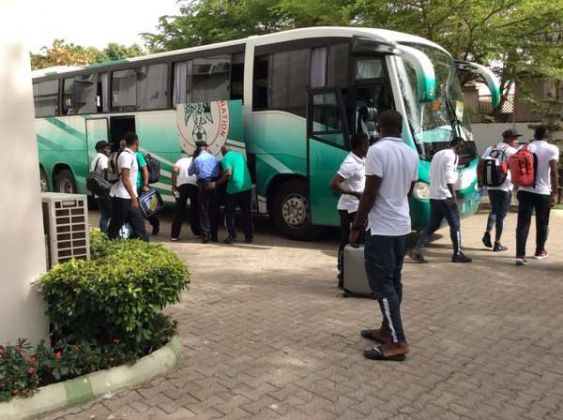
  • Ebola: Anxiety as Congo team arrive Nigeria Friday

    NationSport can report that there has been uneasy calm among Nigerians as over 30 Congolese football officials and players would be storming Nigeria on Friday (tomorrow) for the planned May 28 friendly with the Super Eagles in Port Harcourt.

    In a statement made available, Nollywood actor, Joseph Okechukwu, has urged the Sports Minister, Solomon Dalung; Amaju Pinnick, and the Nigeria Football Federation,(NFF) to cancel the friendly match to prevent the nation from coming under the same Ebola attack experienced in 2014, which cut short the lives of innocent Nigerians.

    He recalled that, “On the night of Sunday July 20, 2014, Patrick Sawyer was wheeled into the Emergency Room at First Consultants Medical Centre, Obalende, Lagos, with complaints of fever and body weakness. The male doctor on call admitted him as a case of malaria and took a full history. Knowing that Mr. Sawyer had recently arrived from Liberia, the doctor asked if he had been in contact with an Ebola patient in the last couple of weeks, and Mr. Sawyer denied any such contact. He also denied attending any funeral ceremony recently.”

    Super Eagles

    “We all know how that story ended. Patrick Sawyer died; people who had contacts with him at the hospital when they didn’t know he had Ebola equally contracted the disease, about twenty of them. Eight later died.”

     He continued; “How can we forget the amazing Dr. Stella Ameyo Adadevoh. She was the doctor who oversaw the treatment of Patrick Sawyer and vehemently refused to let him travel to Calabar, even when his employers insisted he should be allowed to travel.

    “This precious angel saved thousands, if not millions of lives in that part of the country and beyond. Dr. Stella Adadevoh eventually paid the ultimate price. She laid down her life for the rest of us and I hope we don’t repeat the mistakes of 2014 in 2018.”

    Mr. Oyewole Adewunmi- a Lagos based Social Commentator who also prayed that the football match be cancelled before the Congolese team players enter Nigeria said,

    “Infact, that match will not add anything significant to Nigeria’s economy and even if it does, it cannot by any stretch of the imagination be equated to the value of one precious soul of Nigerians.

    “Please cancel the match. We are not prepared for Ebola now. We won’t be in the nearest future and we will never be. You prepare for what you’re willing to host and we won’t host Ebola or anyone of its relatives, never again!”

    Meanwhile, a call to the Minister of Health Prof. Isaac Folorunso Adewole by our reporter on Thursday for enquiry on how prepared is Nigeria to screen the visiting footballers for Ebola virus was not answered and he did not also reply the text message the reporter sent.

    However, the Minister of Sport had on Monday said the match would not be cancelled speaking in confidence that the Congolese squad will be screened before they travel to Nigeria and they will also be screened at their point of entry by the Ministry of Health under the supervision of the World Health Organisation (WHO).