Tag: North East

  • Insurgency denying children immunisation in North East, says ex-Reps member 

    Insurgency denying children immunisation in North East, says ex-Reps member 

    Former member of the House of Representatives and medical practitioner, Dr Wale Okediran, has said insurgency in the North East has deprived children and infants of essential immunisation for more than five years.

    He made the disclosure while speaking on Guest Platform, a monthly programme of the state-owned Broadcasting Corporation of Oyo State (BCOS).

    Okediran said the development poses serious risks to the health of affected children and infants, warning that failure to address the situation could lead to higher child mortality rates and possible outbreaks of epidemics.

    He also lamented that the Boko Haram insurgency has restricted the movement of people in some northern states, adding that the crisis has disrupted commercial activities and reduced their internally generated revenue (IGR).

    He said, “The North of Nigeria has been a very difficult story. When we were young many of us loved going to the North. We have our railway system which at that time unified Nigeria. Many of our parents were railway workers.

    “People like late Chief Bola Ige and his generation were all born in the North. If I may recall, Chief Ige told us that his first language was Hausa. Imfact, he came to the Southwest of Nigeria when he was about twelve years old. He couldn’t speak a word of Yoruba because his parents were railway workers who were working in the North.

    “In those days, the railway system and many other things were good, you have many Yoruba extraction growing up in the North. They were even born there and the movement was peaceful.

    “Unfortunately, in the last decade or so because of the onslaught of insurgency, the North has become a difficult place to visit.

    “When I was working on my book, ‘Madagali’ I had the opportunity of working in Yola, Adamawa state. I used that opportunity to tour the areas of the North down to Borno state. I had first hand information of the devastation caused by the Boko Haram insurgency. 

    “I was totally depressed about what was happening couple with this out of school children. The insurgency has affected so many indices including health.

    “Where I am bothered as health practitioner is that because of insurgency, we have not been able to immunize many children in the North for years.

    “When you want to look at the indices of Nigeria when it comes to vaccination, the North’s record will always go down.

    “Also the rate of out of school children is on increase while farming has also been affected. Many areas of human endeavour has been affected by the insurgency.

    “I am hopeful that with this collaboration between Nigeria and some other foreign countries to stem insurgency, the North will be able to regain its glory pf previous years.”

    On the military assistance being rendered by the United States government to stem insurgency, Okediran said, “the assertion that the genocide is against the Christians is wrong because we all know that when it comes to terrorism, there is no religious bias. Both Christians and Muslims are affected.

    “Also, I know by hindsight that when a country needs external help to tackle some of its problems, there is nothing wrong in calling for help. We remember the ECOMOG military force that was drafted to Liberia and Sierra Leone when they had civil war. It was ECOMOG that helped these countries to clear their mess.

    “My own feelings is that if Nigeria has needs for external helps either from the US or the NATO particularly in the area of the Military Intelligence or Technology, there is nothing wrong in asking for help.”

  • North East: Airstrikes kill terrorist leader, Munzir, others in 15 days

    North East: Airstrikes kill terrorist leader, Munzir, others in 15 days

    …troops rescue 106 kidnap victims

    ….arrest 82 terrorists/criminals

    …destroy 20 illegal refineries, arrest 30 oil thieves

    Strikes carried out by the Air Component of Operation Hadi Kai, a military offensive against Boko Haram and its splinter groups, have resulted in the death of terrorist leader Munzir (AKA Baa Yanziye) and several others in North East Nigeria.

    The airstrikes, conducted in support of ground troops, were carried out during combined operations between January 1 and 15, targeting terrorist hideouts, logistics bases, and fleeing fighters.

    The Director of Defence Media Operations, Major General Michael Onoja, revealed this in a statement on Monday as part of an update on the military’s successes against terrorists and other non-state actors.

    According to General Onoja, ground forces, in conjunction with the Air Component, hybrid forces, and local security outfits, conducted aggressive operations in Gwoza, Konduga, Bama, Askira Uba, Chibok, Mafa, Guzamala, and Damboa Local Government Areas (LGAs) of Borno State; Hong and Madagali LGAs of Adamawa State; and Damaturu and Gujba LGAs of Yobe State.

    He said, “During the encounters, scores of the terrorists were neutralized. Also, 34 of them were arrested, while 17 kidnap victims were rescued. The suspects and weapons recovered are in the troops’ custody for further action.

    “Between January 1 and 3, 2026, the Air Component of Operation HADIN KAI conducted multiple air interdiction missions at Abirma, Chiralia, Guva in the Timbuktu Triangle, as well as Garin Mallam Iddirisa and Garin Abu Ayuba in the Nduva general area of Damboa LGA of Borno State. Battle Damage Assessment revealed that a well-known terrorist leader, Munzir (otherwise known as Baa Yanziye), was neutralized alongside many others during the strikes.”

    “Similarly, between 8 and 13 January 8 to 13, 2026, multiple air interdiction missions were conducted at Abbagajiri in Timbuktu Triangle, while the component provided close air support to ground troops within Damasak, Megumeri, Gubio, Kereto, Binduldul, Matari, Gashagar, and Gudumbali general areas of Borno State. Battle Damage Assessment revealed that some selected targets were acquired and engaged with bombs and rockets accordingly.”

    Giving an update on troop operations in the North West, the Defence spokesperson said that troops of Operation Fansan Yamma conducted offensive operations from January 1 to 15 in Anka, Bakura, Bungudu, Kaura Namoda, Maru, Maradun, Talata Mafara, Zurmi and Tsafe Local Government Areas (LGAs) of Zamfara State; Kankara, Danmusa, Malumfashi and Matazu LGAs of Katsina State; Arewa and Shanga LGAs of Kebbi State; Binji, Gudu, Isa, Rabah, Sabon Birni, Tambuwal and Wurno LGAs of Sokoto State; and Borgu and Kontagora LGAs of Niger State, as well as Tsanyawa and Shanono LGAs of Kano State.

    Onoja said that during the operations, troops killed several terrorists and arrested nine others. He added that 52 kidnap victims were rescued, while a large cache of weapons was recovered from the terrorists.

    “Between January 9 and 12, the Air Component of Operation FANSAN YAMMA conducted armed reconnaissance and air interdiction missions at Dutsen Magaji, Machata, and Kana Birniwa in Jigawa State, as well as Maru Local Government Area of Zamfara State.

    “Accordingly, targets were acquired and engaged with rockets. Subsequent battle damage assessment revealed that scores of terrorists were neutralised, while their enclaves and logistics facilities were destroyed,” he said.

    Read Also: NAF airstrikes kill over 40 terrorists, disrupt planned attacks on civilians

    The Defence spokesperson said that the two ongoing operations in the North Central – Operation Endurance Peace and Whirl Stroke – achieved significant feats against terrorists/ extremists.

    According to him, troops of Operation Enduring Peace killed several terrorists/criminals, arrested 25 others, and rescued 14 kidnap victims during operations conducted between January 1 and 15 in Barkin Ladi, Bassa, Kanam, Mangu, Riyom, Jos East, Jos North, and Wase Local Government Areas (LGAs) of Plateau State, as well as Chikun, Jema’a, and Sanga LGAs of Kaduna State.

    While troops of Operation Whirl Stroke arrested the wife of a notorious bandit, John Gata, and eight suspected kidnappers, rescued 21 kidnap victims, and seized arms, ammunition, and other items from the suspected criminals.

    In the Niger Delta region, the Defence spokesperson said troops of Operation Delta Safe foiled oil theft worth over ₦53,752,100.00, comprising 63,200 litres of stolen crude oil and 19,300 litres of AGO. The troops also discovered and destroyed 20 illegal refining sites and arrested 31 oil thieves and other criminals, while assorted arms and ammunition were recovered.

    On the military offensive against Indigenous People of Biafra/ Eastern Security Network (IPOB/ESN) in the South East, the military high command said troops arrested 3 IPOB/ESN members at Umunze Community in Orumba South LGA of Anambra State.

    “Investigation revealed that they belong to the Jukwese IPOB/ESN syndicate operating within the Umunze community in Orumba LGA of Anambra State.

    “Similarly, a suspected notorious arms dealer was also arrested at his residence in Nteje, Oyi LGA of Anambra State. Following his arrest, troops recovered a vehicle and two Samsung phones,” Onoja said.

    According to him, on January 1, the Air Component of Operation UDO KA provided close air support to the ground troops during a clearance operation at Ajalli Forest in Ezeagu LGA of Enugu State, where terrorists’ enclaves were identified within the thickly forested area and were set ablaze.

    “Also, on January 8 and 9, armed reconnaissance missions were conducted over Awo-Ommama, Eke-Ututu, Mbieri, Njaba, Orlu, Orsu West, Orsumoghu, and Owerri, as well as Nkalagu, Ishielu, Ohaukwu, Izzi, and Abakaliki general area. During the missions, significant successes were recorded,” he said. 

  • North-East is more secure now – Army

    North-East is more secure now – Army

    Maj.-Gen. Abdulsalam Abubakar, Theatre Commander, Joint Task Force, North East Operation Hadin Kai (OPHK), says the security situation in the region has improved significantly following sustained counter-terrorism operations and renewed synergy among security agencies.

    He said this in an interview with the News Agency of Nigeria (NAN), on Saturday in Maiduguri.

    Abubakar said the Armed Forces of Nigeria (AFN) maintained the operational initiative across the theatre, denying terrorists the freedom of movements and access to logistics that once fueled their campaigns of terror.

    He said the lingering insecurity in North-East was not an isolated phenomenon rather closely linked to broader regional and global developments, including instability in the Sahel, the Middle East, and the Russia–Ukraine war.

    “Since November last year, we have observed an increase in the use of armed drones and radio-controlled Improvised Explosive Devices (IEDs) by the terrorists. These trends are direct consequences of global technological proliferation linked to conflicts elsewhere.

    “However, our forces continue to retain the initiative. The goal of the armed forces remains to flush out the terrorists from their remaining strongholds in Sambisa Forest, the Mandara Mountains, the Tumbuns and the Lake Chad Islands (LCI),” he said.

    Abubakar highlighted that coordinated operations aimed at achieving this strategic objective was yielding remarkable results.

    He said, “in the last two months alone, about 26 key terrorist commanders have been neutralised, with substantial recoveries of arms, ammunition and vehicles. Many insurgent camps have been cleared and destroyed, forcing remnants of the groups into isolated pockets.

    “Socio-economic activities have resumed in most areas previously under terrorist influence. Markets have reopened, schools are functioning, and roads that were once unsafe now experience daily movement of goods and people. That is a major milestone for us as a nation.”

    The commander said sustained pressure by the Nigerian Army troops had restored confidence among the citizens, leading to increased voluntary returns to ancestral homes under the Borno State Government’s resettlement framework.

    While highlighting some of the key achievements of the operations, Abubakar described the strangulation of the terrorists’ logistics strategy as a turning point in the fight against Boko Haram and ISWAP.

    “By cutting off their supply chains, we have effectively crippled their capacity to sustain prolonged engagements. Several IED-making factories have been discovered and destroyed, and we have recorded tremendous successes in intercepting their logistics convoys,” he said.

    Abubakar cited the July 2025 operation in Dikwa, where troops recovered over 50 lethal Improvised Explosive Devices (IEDs), as an example of how intelligence-led missions disrupted enemy capabilities.

    He said the troops neutralised more than 257 terrorists in coordinated ground and air offensives, with many others surrendered along with their families between July and September, 2025.

    “The terrorists’ employment of drones has also been curtailed through the deployment of advanced anti-drone technology and improved air dominance made possible by the unwavering support of the Military High Command.

    “Recoveries of weapons have increased significantly, and our sustained offensive operations have continued to shrink the battle space for the terrorists,” he said.

    Reacting to reports of renewed attacks in some border communities around Kirawa, Abubakar said the incidents were desperate attempts by the terrorists to create fear and attract attention.

    “Most of these attacks are confined to remote border settlements, reflecting desperation rather than strength. Kirawa was previously under the security framework of the Multinational Joint Task Force (MNJTF), but we have now made adequate deployments to strengthen control and forestall further incursions,” Abubakar said.

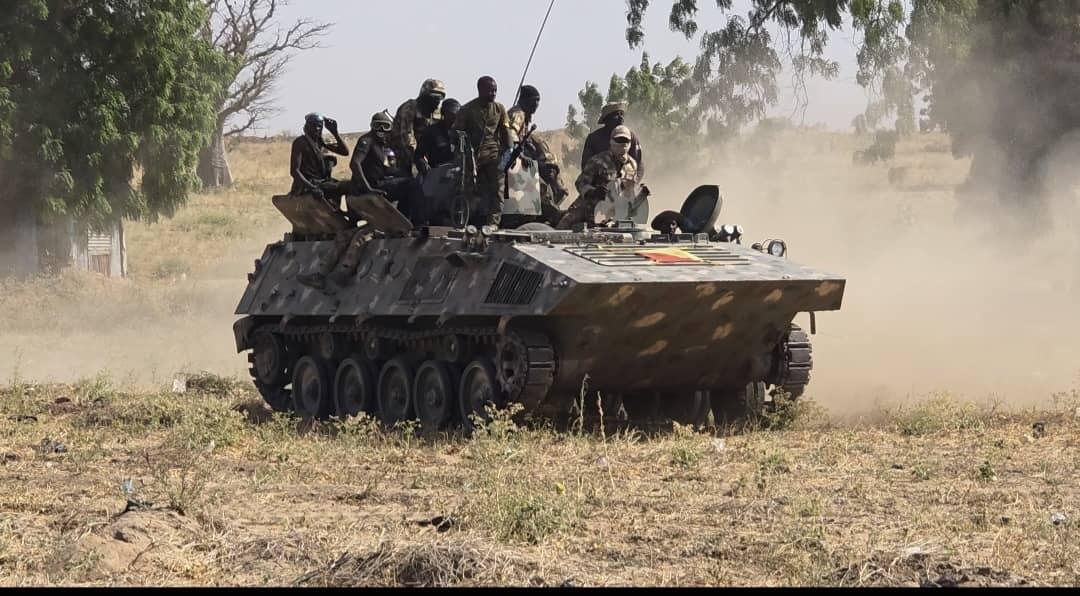
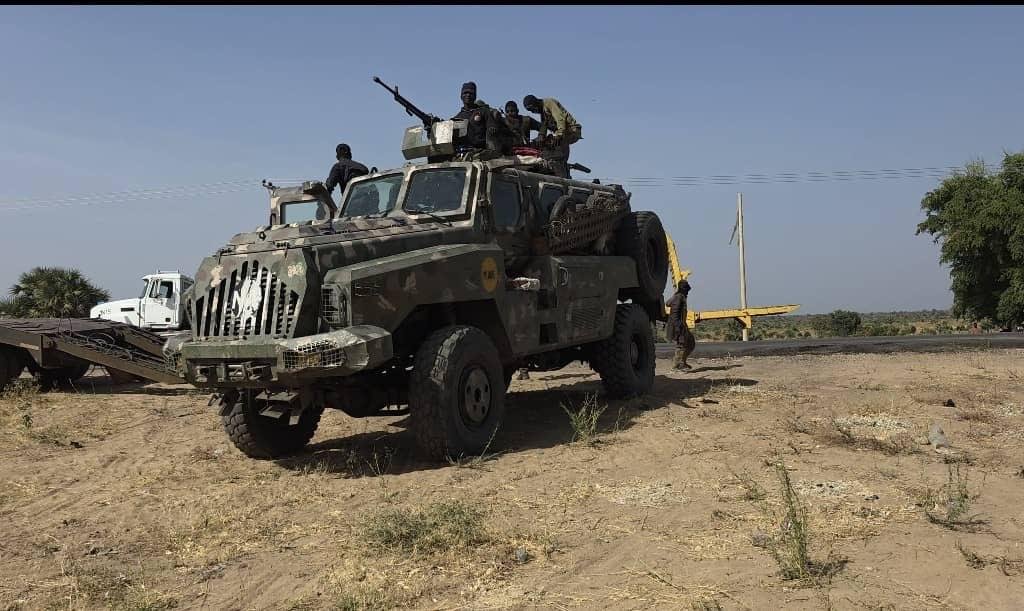
    To stem the attacks, Abubakar said the military command had deployed additional troops and logistics assets to the Kirawa axis, including quick response teams, armoured vehicles and surveillance units to ensure rapid response to any threat.

    “OPHK covers about 130,000 square kilometres, so the terrain is vast. But we have improved our deployment posture and enhanced coordination with the MNJTF and local security volunteers to ensure that no area remains vulnerable. Kirawa is now fully secured with boots on ground,” he assured.

    Abubakar reiterated the commitment of the Armed Forces to achieve lasting peace in the region, stressing that the troops remain motivated and focused in their missions.

    He urged the residents to continue cooperating with the military by providing credible intelligence as well as deny logistics support to the  terrorists.

    “Citizens must collaborate with the military in fishing out bad elements. This is a whole-of-society approach to asymmetric warfare. Denial of logistics and timely passage of information by communities remain crucial for our collective success.” 

    The commander also commended the gallantry of officers and men of the OPHK, who demonstrated courage, resilience and sacrifice in defence of the nation.

    “Our troops are highly motivated and determined. The North-East is steadily regaining its stability, and we remain fully committed to consolidating these gains until peace is completely restored,” the commander said.

    (NAN)

  • EU, Fed Govt demand domestic funding to address malnutrition in North West, North East 

    EU, Fed Govt demand domestic funding to address malnutrition in North West, North East 

    The European Union (EU) and the Federal Government have called for ramping up of domestic funding to address the growing crises of malnutrition in the North-East and North-West regions.

    They also demanded the provision of relief materials for displaced victims in Benue State.

    The EU noted that while issues like climate change and displacement are worsening the crises in the regions, the reduction in funding from international donors is a major source of concern, hence the need to look inwards for more funding support.

    Addressing a joint press briefing at the Federal Ministry of Humanitarian Affairs and Poverty Reduction, EU Ambassador to Nigeria and ECOWAS, Gautier Mignot commended the unwavering commitment of the ministry towards the most vulnerable in the country and collaborating with the EU.

    The envoy noted that the EU remains Nigeria’s reliable partner, especially at a time when most international donors are reducing their funding. 

    Mignot said: “The EU is a special partner to Nigeria, especially in a fast-evolving world where partnerships are being reviewed. We are a reliable partner; a partner that keeps its commitments.”

    He explained that the EU is partnering with Nigeria to harness the many opportunities it has for development and prosperity through the Global Gateway Strategy, in particular, offering long-term solutions and supporting long-term developments across the country. 

    READ ALSO; Five lucrative ways Nigerians can make money on TikTok

    “We are also here when it comes to emergency situations like the one we are discussing today; emergency situations where humanitarian aid is necessary because lives are at stake. The EU has brought about €37 million already for humanitarian assistance this year, and is considering a top-up,” he added.

    Concerning the need to ramp up domestic funding for humanitarian purposes, Amb. Mignot said: “There is a lot of stretch globally on humanitarian assistance. There are many competing crises like in Sudan, the Sahel, Gaza, and others. Therefore, it is difficult to count on additional support from the international community.

    “This means that mobilisation is necessary in Nigeria to raise more domestic support from all sources – federal government, state governments, private sector – to address the needs and prevent a shortage and break in the supply of the therapeutic foods for hundreds of children which might die if we don’t treat them with these therapeutic foods because they are acutely malnourished. In addition, these therapeutic foods are in part produced in Nigeria.

    “This is a call for action. We have distribution networks in place with extremely competent implementing partners. This is a call for action to the public and private sector in Nigeria to come and bring the most needed resources because this cannot wait and has to be done now.”

    Highlighting the EU’s interventions in Benue State for displaced victims and the malnutrition crisis in the North-East and North-West, Amb. Mignot disclosed that the EU has rolled out the Supporting Sustainable and Innovative Social Protection Programmes (SUSI) and Social and Economic Participation of Returnees, as well as the Support to Internally Displaced Persons and  Host Population in North-East Nigeria (SIDPIN) programmes.

    He said: “In Makurdi, we launched the Supporting Sustainable Social Protection Systems in Nigeria (SUSI), which helped to operate the needs assessment to efficiently build the response for the victims. We are now coming up with two more supports: one in terms of immediate humanitarian action of € 0.5million through our humanitarian office. In the longer term, we are coming with durable solutions in livelihoods, housing, to help the reintegration of these IDPs through a project called SIDPIN, which was initially designed to cover Kano, Yobe and Adamawa, but we have extended it to cover Benue State with a €1 million support for durable solutions.”

    Minister of Humanitarian Affairs and Poverty Reduction, Nentawe Yilwata commended the efforts and support of the EU to Nigeria. 

    The minister said: “We generously and profoundly appreciate the EU for its contributions to our country, ensuring that all vulnerable persons in the country are all taken care of. We are hopeful that the commitment of the EU and other donor partners and commitment from the federal government will ensure that we receive and give life to our kids.

    “We will work together, hand-in-glove, to ensure that we rescue every soul that needs to be saved in Nigeria. Thank you for your contribution and the money you have given us. This funding will go, in no small way, to saving more lives and reviving more people.

    “This intervention is timely; it is coming at the best time that Nigeria needs it, especially in Benue where livelihood was lost, buildings were destroyed, lives were lost, 810 kids are out of school, and we have over 200 kids within our IDP camp in that community at the risk of malnutrition also. We also have over 100 businesses that have been terminated in those communities and several things that we need to respond to.

    “The Ministry is working on an anticipatory response plan, so that for all these challenges, we can h​ave a basket that can help respond timely to these issues. We are trying to look at getting anticipatory response funds into the budget, so that it could respond to needs linked to malnutrition and support to displaced communities, and also response plans for disasters that are anticipated and unanticipated.”

    Chief Field Services and Emergency, UNICEF Nigeria, Judith Leveillee said: “We are gathered because we have a common understanding that more can be done to ensure that all malnourished children, about 3.5m, who need quality treatment, get it. More needs to be done. We found that nutrition service centres are overstretched.”