Category: e-Business

  • Opportunities, new revenue streams possible with digitalisation

    In the digital era, the telecommunications market is arguably more competitive than it has ever been. With the global technological transformation well underway, governments, industries, and individuals alike have become increasingly dependent on the digital tools, services, and solutions provided and managed by telecoms operators.

    As such, it is up to ICT players to uncover new opportunities and take advantage of untapped markets in order to prosper now and in the future.

    They must be able to competently and cost-efficiently deploy an extensive portfolio of use cases, fulfill the appropriate roles within customers’ ecosystem or value chain, and execute the relevant go-to-market models to maximize ROI.

    In a previous study by Ericsson the global ICT provider found that in today’s digitally-driven business landscape, operators can benefit from an additional 36 percent revenue from 5G-enabled industry digitalization market opportunities by 2026. With an additional revenue of up to USD 619 billion available to operators, industry digitalisation via 5G and IoT presents huge financial opportunities in the next decade.

    In a follow-up report, “The Guide to Capturing the 5G Industry Digitalisation Business Potential, Ericsson analyzed more than 400 industry digitalisation use cases across 10 vertical markets to define the operator 5G market opportunities starting from a use case perspective.

    Ericsson identified over 200 use cases where 5G is expected to play a major role in the coming years, grouped them into clusters by applications, and created a comprehensive guide for operators to address challenges and maximize the business potential of 5G and IoT across several major industries.


    Operators can capture billions of dollars in new revenue potential by targeting the digital transformation of other industries using 5G and IoT technology.


    By clustering use cases into 5G and IoT applications, they provide a more sizable opportunity through shared investments across a larger revenue pool and increased scalability and adaptability across industries.

    Clustering use cases into 5G and IoT applications like this is also advantageous in terms adaptability, which enables operators to address the possibilities for 5G and IoT in industry digitalisation today and ultimately capture their full business potential in lasting and sustainable ways. For instance, use cases in the ‘monitoring and tracking’ cluster may be executed today through monitoring technologies; from there, they can easily be adapted using 5G to provide real-time monitoring services; and finally, using 5G and IoT in tandem, they can evolve into end-to-end life cycle management solutions.

    In a similar fashion, business and monetisation models will need to evolve in order to capture the maximum value. In this regard, operator ambitions are key: while some clusters of 5G and IoT applications are more difficult to deploy or present greater challenges from a go-to-market perspective, these may also offer the greatest market size and ROI. For example, the greatest market opportunities are in enhanced video services and real-time automation – but both pose relatively large deployment and go-to-market challenges.

    With industry digitalisation comes fast-growing new revenue pools, and capturing this opportunity is high on the executive agenda for most operators. As such, implementing a roadmap for the successful introduction of digitalisation revenues will be vital for operators to compete in a saturated ICT market.

    Operators will need to address questions of relevance, difficulty, and feasibility in terms of 5G and IoT use case applications, and they will need to identify current examples of ongoing operator-driven 5G and IoT business models as well as concrete first steps towards becoming key drivers of industry digitalisation moving forward.

    5G and IoT are powerful pieces of technology at operators’ disposal in capturing the revenue potential opportunities from industry digitalisation. By targeting industries undergoing digital transformation, identifying the most applicable use case clusters, and building an actionable strategy for implementing next generation technologies in this regard, operators can evolve to keep pace with the worldwide technological transformation and seize opportunities for sustainable growth in the same stride.


    Chafic Traboulsi is Head of Networks; Ericsson, Middle East & Africa.
  • Play Tv eyes 90% local channels

    Direct to Home (DTH) broadcasting system that offers services to its subscribers through highly entertaining and informative channels, Play Tv has said its focus is to make 90 per cent of its channels totally indigenous to support the creative sector of the economy.

    The Executive Chairman, Digital Play Nigeria Limited, Toyin Subair, who spoke in an interview with The Nation, said Play is a brand that has been developed, conceptualised and is being rolled out for different sectors in television, video-on-demand, cinemas and in production.

    “Play Television is coming up in a lot of channels and we will create more local channels. The ideal situation for us is getting 90 per cent of our channels to be local channels. We are not just doing that, what we are doing is that we are creating a partnership with different people who have good ideas about monitoring the channels; we have the infrastructure, the facility to use to partner with them to make it easier for them. They don’t need to go and re-invent the wheel again. You know everybody has become so used to becoming our own utility centres where you are the one doing everything yourself. This infrastructure now becomes a hub. You don’t need to start putting structure in place. You just come here and everything is ready for you. That’s where we make good use of our resources because we don’t have it like many other people. It is not even cheap; so instead of people going to get that (loan at) 35 per cent (interest rate), it is available somewhere you can use the little money you have to  create what you have and let the expert put it together for you, transmit it for you,” Mr Subair said.

    He said the idea of Play Tv is a common world where people come together making it easy for them to monetise their creative talent.

    “The brand will evolve over the next few months, launching various products both for Nollywood, making Nollywood available to people in their homes even if they don’t have internet, that’s one of our products. Then you have the television and a whole multitude of channels for different people. We have very well-known creative people leading and spearheading the different channels of their own and a product line put on television. The future of television is mobile and people that are able to enjoy it and so that is what PLAY is about at the end of the day,” he added.

    Last week, award winning hip hop sensation and Play Brand Ambassador, Olamide aka Baddosneh launched his music and lifestyle channel, Voice of the Streets (VOTS) on Play Tv.

    VOTS is expected to deliver the best in showbiz bringing in the best street music, lifestyle, reality shows and entertainment news across Nigeria. The channel will also offer rich contents on events, documentaries, red carpet events, features, interviews and many more.

    Speaking on the occasion, Olamide had said: “This is just the beginning of good things to come to Entertainment industry in Nigeria. In Play TV, we have a collaborator that enhances our offering of local contents to our fans. For me and my team, we have always aimed to launch a channel that will speak for the streets and so when the opportunity came up, the choice of Play TV and the launch of VOTS for us is significant as it will cement VOTS as the leading music and entertainment channel in Nigeria and beyond.”

    Formerly known as Continental Satellite Limited (CONSAT), Play Tv has deployed advanced digital broadcasting system to broadcast world-class international channels, channels from Africa and Nigeria. With the target audience of age group 0-70,  it offers the best music hits  exclusive movies, entertainment, cartoon, comedy, lifestyle, fashion and an exclusive behind-the-scene access to top African celebrities: from the latest video clips/concerts of the major urban artists, behind the scenes to the most( intimate interviews with A-list champions.

    With over 40 channels, the platform is home to some of the world’s most popular brands, including Rishtey Asia, Aljazeera, HFATV, Colors International, Mount Zion Television and 1Music.

    In less than one year, Pay has grown into a global urban entertainment brand that is the catalyst, the voice and the one stop destination for urban entertainment creators and fans. Each Play channel has a clear mission: ( to entertain, empower and engage with a passionate multicultural cross over audience.


  • NCC ‘ll partner stakeholders to drive broadband development

    In spite of the enormous contribution of the telecoms sector to the nation’s gross domestic product (GDP), it is still conatrained by a myriad of challenges which could derail the Federal Government’s target of 30 per cent broadband penetration. But the Executive Commissioner, Stakeholder Management, Nigerian Communications Commission (NCC), Mr. Sunday Dare says the regulator is partnering stakeholders in the industry to address these challenges, LUCAS AJANAKU met him in Lagos.

    What is your assessment of the industry and why is NCC convening this forum?

    The situation across the country is dire in terms of non-approvals of Right of Way (RoW) and multiple taxation. In some cases, we have more than 25 applications for permits unapproved for two years or more. Thus, in terms of deployment of telecom infrastructure, the major telcos suffer great setbacks and these translate into declining quality of service (QoS) to millions of subscribers. The non-approval and heavy taxation of telecom infrastructure have led to service gaps in FCT in particular and across the country. Nigeria has slightly over 250 service gaps where there is no telecom service or penetration.  Connectivity is not yet 100 per cent and we said without this approvals, we cannot have improvement in the QoS. The Commission has received assurances particularly from the FCT minister and some state governors that approvals will be granted speedily and taxes reviewed. Even as I speak, I think certain approvals have taken place.  Presently, given the situation which is staring us in the face, with the expiration of the NEC document soon, NCC is speeding up consultations. We are leveraging the results of the state-to-state interventions we have had, the feedback we’ve had across the stakeholder matrix, the experiences of the operators and numerous other engagements at the highest levels to review the document and present an acceptable standardised RoW and taxation document with regard to the telecoms industry. The Commission, in October last year, made a presentation to the office of the Vice President.NCC, through the Industry Working Group (IWG) is now looking at how it can bring all of these together- by identifying different interests, challenges of the economy and revenue and other relevant matters in the document review process.  What do we hope to achieve? To come up with a reasonable and acceptable document -a standardised regime of charges and taxation. One that pays attention to the peculiarity of a strategic state like Lagos and a developing telecom state like, perhaps Jigawa for instance, because it might be difficult to charge in Jigawa the same amount Lagos is charging. In some instances, charge per linear meter in Lagos can be N500 while in Jigawa, it may be slightly higher due to low volume of telecom activity and the need to generate some revenue. Importantly, beyond the charges, we hope to shorten the times for approvals, improve the engagement between the state governments who need tax revenue and the operators who want to deploy to expand their networks. Now, the NCC is caught between these two giants and the Commission’s overriding interest is to ensure that Nigeria’s goal of attaining a broadband penetration of over 60 per cent across the country is not impeded. The interests of the parties do not collide but are reinforcing. They complement each other.  If for instance, the telcos deploy their infrastructure, their revenue base increases by the same token the taxable revenue that will come to the state also increases. So if one of the operators makes N10billion because it is able to improve and increase the volume of its business and then it has problems with certain deployment and the revenue dips to N5billion, what is going to go to the federal and state as taxable revenue also decreases. So we hope that this document that we are trying to review now will look at this critically. NCC has other critical stakeholders. It is not just the state governments. We have the federal ministries, departments and agencies and everybody is coming with charges. It’s a whole galaxy to say but we are trying to bring that whole galaxy under one regime and then have something that can be looked at. There might be a range for Row charges with a ceiling.  We hope that the IWG will do that difficult task so that by April, we could have a draft resolution that will be presented to NEC and then NEC can discuss this towards reaching an agreement. NCC hopes to do a presentation there, answer their questions and then see how we can get this done.

    What are the implications of these charges on government and telecoms end users?

    Well, I think the implications are tripartite. There are implications for the telecom industry especially and the key stakeholders, implications for the government in terms of the revenue accruing to it, in terms of the investment that comes into telecom and then that dovetails in terms of the number of people employed in the telecom industry and then we have implications for the subscriber. Let me start from the subscriber, the quality of service (customer satisfaction)  suffers because a subscriber expects that if he gets a registered line, puts credit on it, he expects to enjoy some level of satisfaction in terms of quality of service. Your call is going through, your text message is not delivered on time, and your connectivity to the internet is slow and lots more. These will persist if the operator for instance continues to have problems in deploying additional infrastructure or expanding his network because of multiple charges and right of way issue. What it means is that the operator has to or will put a lot of pressure on the system and equipment it has such that if you have a duct that only 500 calls can go through every hour and you want to expand and you cannot expand, you will now start piling 2000 calls through that duct. That leads to congestion and of course dropped calls.  You know what happens when 2000 people are trying to get into a door that was made for 500 people and of course the only reason might not be that they don’t have the permit but it is part of it, we will say we want to deploy but we cannot deploy because we’ve not been given permit but there is also something called the capital expenditure (capex). The dollar component of their commercial agreement and the rest is a major concern for operators. Some of them took loans from the banks at the rate of N195-196 to a dollar and it went to N500, N450 it’s at N360 now but we are still looking at almost twice the amount and have not been able to get out of that debt trap. It’s going to take a while so they are cutting down, they are not getting enough forex which will bring in equipment from outside. On the part of government, it affects the revenue (annual operating level) because if they are not making enough revenue, we’ll only tax them based on the volume of business they do that’s one. Two, one of the core mandates of NCC through the NCC Act 2003 is to encourage investment we have seen between 2015, 2016, 2017, we’ve seen an almost 10 per cent contribution to GDP but as the telecom industry is facing  some challenges the GDP contribution has dropped slightly. All of these affect the taxable revenue that comes to government, impact on quality of service and employment is at risk.  So, you see, it’s tripartite. It is so connected and let’s say, unless we face these challenges and solve them, it will affect the foreign direct investment (FDI) coming into the country, it will affect QoS and consumer satisfaction, it will also affect the revenue base of the operators and the taxable revenue accruable to government at different levels.

    Three years ago, Association of Licensed Telecoms Company of Nigeria (ALTON) signed an agreement with Lagos State government over the harmonisation of these charges. What is the situation? Has it become a stumbling block?

    It will not be right to say Lagos is a stumbling block and this is the narrative.  Lagos State is a bellwether for this country in several aspects. When it comes to the telecoms industry, the telecom headquarters of this country is Lagos; when it comes to population, the one single biggest population is Lagos; when it comes to the centre of business, it is Lagos; when it comes to the pace of development, it is Lagos. So Lagos does matter and like other big cities in the world, you expect that a state like Lagos in any economic engagement will like to maximise the benefit for the sake of the state. So that is what you are seeing in Lagos and rightly so.  Lagos is trying to make sure that even in engaging with the telecom industry and other similar industries as you have seen, the state wants to renegotiate the basis of agreements or review this and that. Is there a way Lagos can get more value for this engagement? That is what is happening. Now, the worry for us is that while the legitimacy of that position cannot be challenged, time is of essence. Lagos has the right to do it, but we are worried about the timeline, the pace at which it is happening. If it is not fast enough, if it is delayed willingly or unwillingly, the effect on the telecom industry and particularly the effect on the achievement of the roll out obligations in the National Broadband Plan (NBP) 2018 suffers. And there will be ripple effects. Our role is to ensure amicability and help facilitate collaboration between states like Lagos and NCC licence holders.  So what we want to see on the part of Lagos and we know that once Lagos gets it right, other states will take a cue from it, is harmonisation of positions and a partnership that works both ways.

    For the benefit of all the states of the federation let’s have this review; let us have this understanding and agreements and make sure that we hit it on an accelerated pace such that every party wins. For instance,  Lagos and any other state as the case may be, gets more value, the operators can deploy the infrastructure needed and ultimately the man on the last mile which is the consumer also gets better services. Let me give you an example, Lagos is clearly the number state in the country and its Smart City project tis on course. There is greater value in working with all the elements in the industry especially the regulator.  The smart city thing is also within the new ecosystem and  you have to ride on the back of telecom infrastructure. What is this telecom infrastructure? It’s not independent of the infrastructure of any of the operators, it’s not independent of the NCC as a regulator; it’s not independent of the quick deployment of the huge submarine cables lying at the shores in Lagos needed to create the backbone infrastructure for broadband penetration. We have Main One, SAT 1, GLO 1 just lying there at the shores. We know about six other states who have started their Smart City projects in Nigeria and are working with NCC.

    The engagement spectrum is wide; government to government, some is government to private but we are all connected. NCC will work with Lagos as with others to achieve smart city, e-government and a digital economy. So like I said, Lagos is not a stumbling block. Lagos provides that critical passage to the success of the Infraco or NBP of the Federal Government.

    Against all these odds, is the 30 per cent broadband penetration target is  still achievable?

    Well, I think as at the end of last year, we were at 23.1 per cent and we have a 2018 target. We are not where we exactly want to be. We believe that the fact that we are at 23.1 per cent now realistically has to do with some of the challenges I mentioned earlier. One of these challenges has to do with the economic environment and the steep rise in forex pricing.  Nothing indicates that more than what happened to Etisalat. Beyond the fact they took a loan of $1.2billion, dollar component was massive and taken at the rate of N195 and have to pay back at almost N400. Etisalat almost collapsed. The fact that the other big telcos were able to survive also shows the resilience of the telecom industry and its operators.  But also with that comes the fact that the rate of network expansion and the rate of deployment we expected to see has slowed down. The industry has not been able to move that fast enough with the development of backbone infrastructure for broadband penetration. Ironically, you look at our shores, we have Main One, we have Glo 1, we have Sat 1, and they are there at our shores untapped.  Other countries are saying if you are not using them give us, they are sitting there because we don’t have the backbone infrastructure to distribute.  It is a question of the backbone infrastructure. Once you have the backbone infrastructure, the broadband penetration we are talking about is going to happen. Right now, we have 270 access gaps across the country and you know what I mean by access gaps, places where you don’t have connectivity at all either internet or telephone connectivity.

  • Regulatory pangs stifle $251b 5G market

    Uncertain regulatory environments are stifling the growth of 5G networks in Middle East and Africa (MEA) region.

    The Global 5G Market Report by market intelligence firm Netscribes said the global 5G market will grow at an overall compound annual growth rate of 97 per cent and will be worth $251 billion by 2025.

    However, Netscribes says the MEA telecommunication industry faces numerous challenges in terms of an uncertain regulatory environment, low coverage of 2G, 3G and 4G technologies, and lack of spectrum.

    Reuters reports that 5G networks, now in the final testing stage, will rely on denser arrays of small antennas and the cloud to offer data speeds up to 50 or 100 times faster than current 4G networks and serve as critical infrastructure for a range of industries.

    It adds that deals to start building mass-market 5G networks are still largely a year away, but by 2025, 1.2 billion people are set to have access to 5G networks – a third of them in China, according to the global wireless trade group Global System for Mobile Communication Association (GSMA).

    Meanwhile, Netscout believes a clean and regulatory business environment, along with well-defined 5G standards, is essential to make the most of 5G services.

    Many countries in MEA, including Nigeria, have still not completed the digital switchover (DSO) process, and are therefore yet to allocate spectrum in the digital dividend band (700MHz) for mobile services, it adds.

    According to Netscribes, this band is key in bringing affordable 4G mobile broadband services. It points out that many countries are now at a disadvantage when it comes to supporting swiftly growing cellular broadband uptake and usage as well as advanced 4G, and in the future 5G services, it notes.

    It explains that some of the key challenges facing developing nations on the road to 5G adoption include inadequate spectrum, stiff competition and lack of infrastructure.

    In South Africa as well as Nigeria, the low-band, around 700MHz, is currently occupied by analogue television stations without a clear timeline for digital migration. This band is critical for rural area deployment as it can cover large areas.

    The mid-bands around 3.3MHz to 3.8MHz are partially allocated to other operators and used for radar services and satellite.

    In Nigeria, the National Broadcasting Commission (NBC) is driving the DSO while it is expected to work with the Nigerian Communications Commission (NCC) to provide a migration plan for this spectrum to ensure optimal allocation for 5G networks.

    Looking ahead, Netscibes says some markets in the MEA will be among the first countries to launch global 5G networks, with commercial deployments planned in the UAE in 2019 and Qatar in 2020.

    It points out that in regards to smartphone adoption, sub-Saharan Africa is still growing faster than any other region and will record a CAGR of 6.2 per cent over the next five years till 2020, compared to a global average of 4.2 per cent for the same period. By 2020, the penetration rate will rise to 50 per cent.


  • Samsung unveils Galaxy S9, S9+

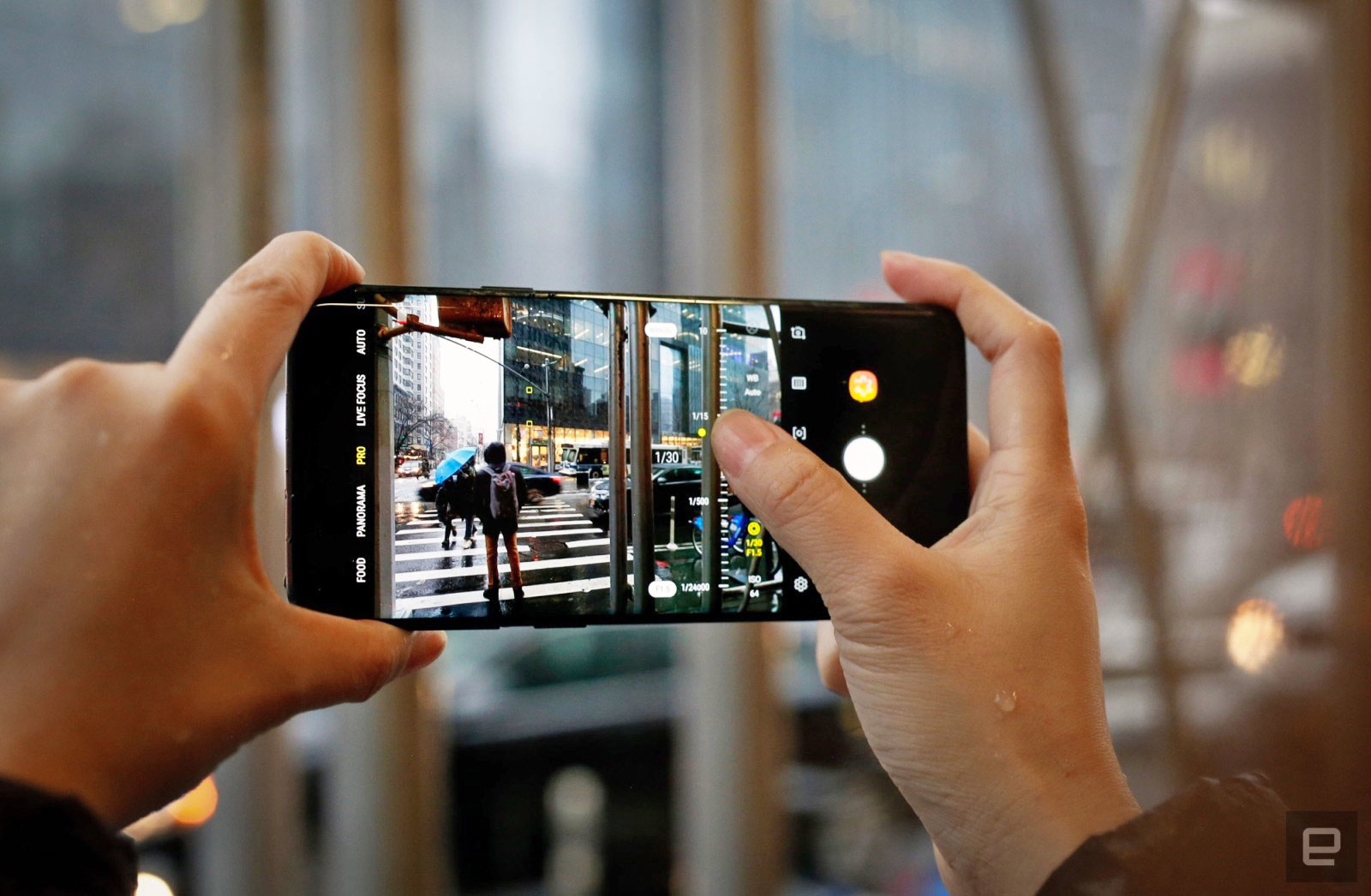
    Samsung Electronics  at the weekend, unveiled the Samsung Galaxy S9 and S9+, the smartphones which it said reimagine the way people communicate, share and experience the world. Made for an age in which consumers increasingly communicate and express themselves more with images, videos and emojis, the Galaxy S9 and S9+ drive innovation with Samsung’s advanced camera. Redesigned with a new Dual Aperture lens that powers an innovative low light camera, super slow-mo video capabilities and personalised AR Emoji, the Galaxy S9 and S9+ ensure users do not miss a moment and make their everyday epic.

    The Galaxy S9 and S9+ deliver an enhanced entertainment experience with powerful stereo speakers tuned by AKG, immersive audio with Dolby Atmos and a refined edge-to-edge Infinity Display – a key staple in Samsung’s design heritage. In addition, the Galaxy S9 and S9+ will come with the new SmartThings app, which unites Samsung’s existing IoT services into one single, smart experience.

    Speaking on the occasion, the Managing Director, Samsung Electronics West Africa, Jingak Chung, said: “The way we use our smartphones has changed as communication and self-expression has evolved. With the Galaxy S9 and S9+, we have reimagined the smartphone camera. Not only do the Galaxy S9 and S9+ enable consumers to shoot great photos and videos anywhere, it’s a smartphone that’s designed to help them connect to others and express themselves in a way that’s unique and personal to them.”

    On the camera he said today’s cameras are for more than taking pictures – they’re for connecting and communicating. Consumers want a smartphone camera with state-of-the-art technology, so they can express themselves with high-quality images and tools to tell their own, unique story. The Galaxy S9 and S9+ cameras are built with these consumers in mind, with a super speed dual pixel sensor with dedicated processing power and memory to take amazing shotswith high photo quality.

  • Samsung Launches Two New Smartphones Galaxy S9 & S9+

    Samsung Electronics Co., Ltd. on Friday introduced Samsung Galaxy S9 and S9+ smartphones in Nigeria in the bid to re-imagine the way people communicate, share and experience the world.

    The Original Equipment Manufacturer(OEM) said its inroad into the mobility market space in Nigeria for the year 2018 would be a pathfinder for awesome innovation for communication, and re-invented life-style experiences.

    Made for an age in which consumers increasingly communicate and express themselves more with images, videos and emojis, the Galaxy S9 and S9+ has been designed to drive innovation with advanced camera features.

    Redesigned with a new Dual Aperture lens that powers an innovative low light camera, Super Slow-mo video capabilities and personalised AR Emoji, the Galaxy S9 and S9+ ensure users do not miss a moment and make their everyday epic.

    The Galaxy S9 and S9+ deliver an enhanced entertainment experience with powerful stereo speakers tuned by AKG, immersive audio with Dolby Atmos® and a refined edge-to-edge Infinity Display – a key staple in Samsung’s design heritage. In addition, the Galaxy S9 and S9+ will come with the new SmartThings app, which unites Samsung’s existing IoT services into one single, smart experience.

    “The way we use our smartphones has changed as communication and self-expression has evolved,” said Jingak Chung, Managing Director, Samsung Electronics West Africa. “With the Galaxy S9 and S9+, we have reimagined the smartphone camera. Not only do the Galaxy S9 and S9+ enable consumers to shoot great photos and videos anywhere, it’s a smartphone that’s designed to help them connect to others and express themselves in a way that’s unique and personal to them.”

    Camera Re-imagined

    Today’s cameras are for more than taking pictures – they’re for connecting and communicating. Consumers want a smartphone camera with state-of-the-art technology, so they can express themselves with high-quality images and tools to tell their own, unique story.

    The Galaxy S9 and S9+ cameras are built with these consumers in mind, with a Super Speed Dual Pixel sensor with dedicated processing power and memory to take amazing shotswith high photo quality.

    The Galaxy S9 and S9+’s camera features include:

    • Super Slow-mo: Make every day moments epic with dynamic, slow-motion video that captures 960 frames per second.

    The Galaxy S9 and S9+ also offer automatic Motion Detection, an intelligent feature that detects movement in the frame and automatically begins to record – all users have to do is set up the shot.

    After capturing the Super Slow-mo video, users can select background music from 35 different options or add a tune from their favorite playlist.

    Users can also easily create, edit and share GIF files with a simple tap in three playful styles of looping to watch the action over and over again.

    • Low Light Camera: Good lighting is the secret to any great photo. But often, photos are taken in less-than-ideal lighting conditions and most smartphone cameras have a fixed aperture that can’t adjust to low or bright lighting environments resulting in grainy or washed out pictures.

    Similar to the way the iris of a human eye expands and contracts, Samsung’s Dual Aperture  (F1.5 / F2.4) automatically lets in more light when it’s dark and less light when it’s too bright, taking photos that are crisp and clear.

    • AR Emoji: Samsung lets users create an emoji that looks, sounds and acts like them.

    AR Emojiuses a data-based machine learning algorithm, which analyses a 2D image of the user and maps out more than 100 facial features to create a 3D model that reflects and imitates expressions, like winks and nods, for true personalisation.

    AR Emoji shares users’ real-life emotionsnot only in video but also with a range of stickers and uses a standard AGIF file format so users can share their emojis across most third-party messaging platforms.

    • Bixby: Samsung’s intelligence platform, integrated into the camera, uses augmented reality and deep learning technologies to provide helpful information about a user’s surroundings.

    With real-time object detection and recognition, Bixby instantly generates information directly on top of the image that the camera is pointing at.

    Users can translate foreign languages and currency in real time with Live Translation, learn about their surroundings, purchase products seen in the real world and track calories throughout the day.

    Entertainment Reimagined

    Smartphones are often our go-to choice for entertainment, which is why Samsung created a device that offers premium sound experiences with stereo speakers tuned by AKG.

    Whether users are watching their favorite movie or streaming their favorite artist’s latest album, sounds are clear, crisp and rich in quality.

    Smartphones

    The Galaxy S9 and S9+ also support Dolby Atmos, giving the effect of 360-degree sound. Its audio experience is complemented by Samsung’s revolutionary Infinity Display.

    First introduced on the Galaxy S8, the bold, bright Super AMOLED Infinity Display blends right into the phone with virtually no distracting notches.

    With adaptive contrast enhancement, users can use their device even in direct sunlight.

    A Device that Fits with the Connected Lifestyle

    As the first smartphone to support the new SmartThings app, the Galaxy S9 and S9+ are the central hub to manage every facet of the connected lifestyle at home, at the office or on the go.

    The SmartThings app will be introduced with the Galaxy S9 and S9+ and will connect to other Samsung and non-Samsung devices.

    The Best Comes Standard with the Galaxy Foundation

    Samsung sets the gold standard for smartphones with IP68 water and dust resistance and wireless charging and goes a step beyond with the Galaxy S9 and S9+.

    The devices now support expandable memory of up to 400GB with a Micro SD Card and are equipped with the latest premium application processors offering powerful performance and sophisticated image processing.

    In addition, the Galaxy S9 and S9+ give users peace of mind knowing that their phone is protected by Knox 3.1, Samsung’s latest defense-grade security platform.

    The Galaxy S9 and S9+ support three different biometric authentication options – iris, fingerprint, and facial recognition – so users can choose the way they want to protect their device and applications.

    The devices feature Intelligent Scan, a new verification that intelligently uses the collective strength of iris scanning and facial recognition technology to quickly and conveniently unlock a user’s phone in various situations.

    The Galaxy S9 and S9+ also introduce Dedicated Fingerprint, giving users the option to use a different fingerprint to access Secure Folder than the one used to unlock the phone.

    The Galaxy S9 and S9+ are available in Nigeria from Friday, March 23rd, 2018 in Midnight Black, Titanium Gray, and Lilac Purple colours.

    To purchase any of the devices, customers can visit the network providers, MTN, Airtel, Etisalat and GLO; Samsung Experience Stores, and select retail partners nationwide.

    “Customers are encouraged to purchase their S9 smartphones in Nigeria from authorized dealers so they can enjoy a 24-month warranty,” said Director, Information Technology & Mobile (IM), Samsung Electronics West Africa, Olumide Ojo.

  • Infinix hits Nigeria mobile market with S3 smartphone

    Hong Kong-based smartphone manufacturer, Infinix Mobility has introduced a new smartphone called Infinix S3 in Nigeria.

    This is the first device from the Original Equipment Manufacturer in the year 2018 and  the first-of-its-kind lifestyle device was introduced with themed ‘Express yourself with 20MP’.

    You would recall that the brand started its lifestyle smartphone series in 2016 and has upgraded it till date.This, according to Country Manager, Infinix Mobility Nigeria, Jay Liu at the product launch in Lagos, makes the brand to continue to gain good market share in Nigeria.

    “We upgrade and make it real lifestyle model for perfect selfie/wefie for this 3rd generation Infinix series,” he said.

    According to Jay Liu the new Infinix S3 comes with d with 20 MP (4 in 1) making it the best selfie smartphone. It allows users to take the perfect selfie in low light.

    The lifestyle smartphone also features Qualcomm Snapdragon 430, Face ID for unlocking, 4G LTE, 4000MAH battery life, XOS for the best smartphone experience on Android 8.0 OS packaged in a stylish sleek metal-framed device.

    “We have made a commitment to our fans and customers in this market on our product quality, continuing to improve our products with the best smartphone technology focusing on making it affordable and accessible stated

    Infinix also unveiled plans for its City fans club, which will commence this month with tours to meet Infinix fans in each city, more information on InfinixXclub.

    The new Infinix S3 will be available from the 28th of March exclusively at ALL SLOT outlets in Nigeria. Infinix and SLOT will be offering a pre-order to customers who want to be among the first set of people to own the Infinix S3 in Nigeria.

    The pre-order window is from the 22nd of March 2018 till the 27th of March, 2018. The first 1000 customers to pre-order the latest smartphone will receive shopping vouchers and also gift accessories courtesy of the partnership.

  • U.S: Economic growth unsustainable without women

    The United States (U.S.) government has said there can never be any meaningful and sustainable economic growth and development without the inclusion of women.

    It therefore called for inclusive participation of women in science, technology, engineering and mathematics (STEM) fields in the country.

    Its Consul-General in Nigeria, John Bray, spoke during a forum tagged: TechWomen Mentoring Programme for Nigerian Female STEM Leaders anchored by a 16-member delegation of senior tech executives and professionals from the Silicon Valley.

    The group promotes STEM education and technology in the U.S. He lamented that many young women who pursue studies in STEM at tertiary institutions share stories of being grossly outnumbered by men.

    He said: “In workplaces, women in STEM fields face discriminatory practices and behaviours from colleagues and supervisors including compensation at lower levels than male counterparts for their labour. They also generally lack opportunities for coaching, mentoring, and growth compared to their male colleagues.

    “(But) here’s the blunt truth: without women’s inclusive participation, any gains in economic growth and development as well as advances in science and technology would be lopsided and unsustainable.  Therefore, it is critical that women’s voices, at all levels, find representation in collaborative solutions that will have an impact on them.”

    The envoy said the U.S. government is convinced that when barriers to women’s full participation in STEM fields are removed, women do better, families do better, countries do better, and the world does better.  Whether at home or abroad, promoting women in STEM fields is a top priority of the U.S. government, he stated.

    He recalled that when Ambassador Symington opened the American Space in Yaba in 2017, co-hosted by Co-Creation Hub (CCHUB), he pledged the U.S. government’s support for additional projects that might expand the use of technology in Nigeria.

    He said the U.S. has since funded a number of projects to increase STEM education in different parts of the country.  “In October 2017, we hosted RoboRAVE, a robotics education programme in Lagos and Abeokuta.  Last December, we funded the establishment of a technology hub in Lagos that will host training and mentoring sessions for persons living with disabilities in various technology-based skills.

    “The goal of encouraging the role of girls and women in STEM fields has been the cornerstone of the technology-learning programmes funded by the U.S. Mission in Nigeria,” Bray said.

    According to him, more broadly, the U.S. has invested millions of dollars to directly advance gender equality across sub-Saharan Africa, through activities that promote political and economic opportunities for women, access to health and education services, and efforts to prevent and respond to gender-based violence.

    He said in 2011, the U.S. government introduced the TechWomenprogramme to empower the next generation of women leaders in the technology field. This exchange programme brings together women in Northern California with their counterparts in the Middle East, Central Asia, North Africa, and sub-Saharan Africa including Nigeria for a professional mentorship at leading technology companies in the U.S.

    “I strongly encourage everyone here to think broadly about ways you or your organisations can form partnerships and expand your network as women STEM leaders,” Bray said.

    He siaid members of the delegation represent organisations as diverse as Twitter, LinkedIn, Netflix, and Mozilla.  Among them are also representatives of Autodesk, WomenCollege Tech, Stanford Graduate School of Business, Juniper Networks, FairrerSamani Group, Northgate Environmental Management, Jessica Dickinson Goodman Consulting, and the Institute of International Education.

    He said: “The American consulate is pleased to sponsor this series of seminars and trainings by leading women technology leaders from Nigeria and the U.S. who are actively advocating for women in science, engineering, and technology. STEM education is the key foundation for any country’s economic success,” the envoy said.

  • VC: OAU ICT Park’ll align skills with job market

    The Obafemi Awolowo University ICT Knowledge Park (OAK-Park), African Centre of Excellence (ACE), Ife, Nigeria was designed to address the dearth of information communication technology (ICT) personnel in the country, the Vice Chancellor, Prof Eyitope Ogunbodede, has said.

    Speaking with The Nation on the sideline of a one-day forum tagged: Academia/Industry Engagement at Lagos Sheraton Hotel, Ikeja, he said over the years, the skills available have not been speaking to available jobs in the market.

    According to him, the system has placed so much emphasis on the theoretical aspect of learning. He added that the ACE, backed with the World Bank, will bring about a paradigm shift as students would be exposed to practical aspect of engineering programmes.

    “Job creation is the crucial thing for us. What has been happening over the years is that we have been so theoretical in our approach. But the ACE programme, we are introducing the practical day-to-day aspects of engineering to our students. We are, through this project, sending our students to the industry for practical experience and we are also bringing in captains of industry to also talk to the students because we have laboratories where they have equipment to develop their own projects; we have incubators where they could stay and advance whatever they have developed before it will be commercialised. This is more of a deviation from the past and a movement towards practical exposure as opposed to the theoretical framework that people have been emphasising.

    “We already have 15 post-graduate programmes running including cybersecurity and other newer areas of ICT,” Prof Ogunbodede said.

    Also speaking, Pro-Chancellor and Chairman, Governing Council, OAU, Dr. Yemi Ogunbiyi said the ACE project is a World Bank sponsored initiative to rapidly build capacity in Africa in some identified domains of knowledge, adding that OAU is one of the 16 centres in Africa being supported by the global bank.

    He said the OAU ACE aims to create a regionally-recognised and acknowledged model that is driven by high quality postgraduate education for uptake and commercialisation of research and technology to advance the growth of ICT industry. The centre is actively providing launch pad for start-up companies borne out of university research activities, and collaboration with partnering ICT companies especially along Lagos axis, who will have the competitive advantage of proximity and direct access to the intellectual infrastructure and output of the university.

    “The ACE project is to develop a centre of excellence in ICT as a training hub in software engineering for   Nigeria and other countries in the sub-region; develop the next generation of scientists, researchers, teachers, entrepreneurs and product developers in the area of ICT through appropriate practice-anchored capacity building measures and enrolling new postgraduate students from Nigeria and the sub-region; stimulate creativity and excellence in research and innovation in ICT applicable to other fields and related to regional developmental objectives, in postgraduate students, with opportunities for industrial research uptake through the centre model; expand learning opportunities for postgraduate students in all the sectors, by deploying existing and new developments in ICT, for which OAU is leading in the sub-region, ,” he said.

    According to Dr Ogunbiyi, a major component of the project is the linkage between academia and industry hence this engagement, adding that the forum will stimulate a more robust engagement between the university and industry; and birth a new thinking in the relationship between university, industry and government.

    He said: “We want to create a platform where OAU and the industries here can jointly identify challenges plaguing our society and through well-grounded research provides solutions to the identified challenges. The intent here is that such solutions be innovative and can be commercialised.   There is an emerging OAU Knowledge Park from the Africa Centre of Excellence project. “

  • NCC seeks stakeholders’ input on commercial satellite regulations

    The Executive Vice Chairman, Nigeria Communications Commission (NCC), Prof. Umar Garba Danbatta, has advocated for a robust input from critical stakeholders for the development of guidelines for Nigerian Satellite Communications market.

    He said there is need to fine-tune and update the guidelines and regulatory framework for commercial satellite communications in Nigeria in line with international best practices and standards to enable the country maximise the opportunities in the sector.

    He made the remark during a Public Inquiry on the Commercial Satellite Communications Guidelines and the Draft Consumer Code of Practice Regulations at the Headquarters of the NCC in Abuja.

    Represented by the Director, Spectrum Administration, Mr Austine Nwanlune, an engineer, Dambatta said: “The draft commercial satellite communications guidelines are aimed at creating a legal framework to regulate the provision and use of satellite communications services and networks, in whole or in part within Nigeria or on a ship or aircraft registered in Nigeria.

    “The intention behind the development of the guidelines is to ensure a well developed and organised satellite communications market in Nigeria with appropriate legal framework that meets international best practice, encourages innovation and guarantees public safety.

    “Furthermore, the guidelines will ensure effective management of scarce frequency resources, especially bands where frequency is shared between satellite and terrestrial systems.

    “It will also encourage the use of satellite connectivity to unserved areas that lack terrestrial transmission infrastructure backbone.

    “The draft consumer code of practice regulations which is an amendment of the previous regulations made in 2007 when finalised will provide a more robust framework for effective and efficient processes/procedures to be followed by licensees in developing their individual consumer code to govern the provision of services and other related consumer practices.

    “This is to ensure that consumers are adequately informed of the type of services being offered by operators, thereby aligning with the commission’s function of protecting the interest of consumers against unfair practices.”