Tag: Serena Williams

  • Aussie Open Ouster: Karolina was simply superb-Serena


    Serena Williams refused to blame a jarred ankle after suffering a remarkable Australian Open collapse in the quarter-finals against Karolina Pliskova.

    From a set and a break down, the title favourite turned things around to lead 5-1 in the deciding set and had four match points but lost six games in a row to fall to a 6-4, 4-6, 7-5 defeat.

    Williams had her first match point at 5-1 but, after being called for a foot fault on what appeared to be an ace, she jarred her left ankle and did not win another point on serve during the match.

    The other three chances came with Pliskova serving at 4-5 but the Czech was rewarded for bravery on her forehand, and Williams insisted afterwards it had been her opponent who had won the match rather than she who had lost it.

    Williams said: ‘There’s nothing I did wrong on those match points. I can’t say that I choked. She literally played her best tennis ever on those shots.

    ‘I don’t really take losses well. But Karolina played lights out starting 5-1, 40-30. Literally, I’ve never seen anything like it. If anything, I think that’s a little bit easier to know, OK, next time I’m up 5-1 against anybody, I just need to make sure I play lights out when I have match points

    Pliskova was happy to agree with Williams, saying with a smile: ‘I’m not going to go against Serena.

    ‘Normally I’m having lot of comebacks, but maybe from being a set down or a break down, so nothing like this. I think it’s going to be the best comeback ever so far in my life.’

    Asked why she had not called the trainer after the ankle incident, Williams said: ‘I really hate calling the trainer out. And at that point I didn’t feel like I needed it, or I didn’t feel like it would be a big deal. So I just kept going. I like to just kind of tough it out. It was fine.’

  • Serena consoles Dayana Yastremska after demolition


    Serena Williams produced one of the most heartwarming moments of the Australian Open following her third-round victory over Dayana Yastremska on Saturday.

    Williams put on a typically impressive performance as she powered past her Ukrainian opponent, giving away just three games in the process.

    When the pair embraced at the net, Yastremska burst into tears as the reality of her crushing defeat sank in.

    Serena Williams is used to dominating her competition at the Australian Open, but showed once again she was a magnanimous winner when she took the time to console her Ukrainian opponent who became overwhelmed after suffering a heavy defeat.

    Williams, 37, was seen consoling Dayana Yastremska, 18, Saturday. Yastremska was seen wiping away tears after losing to Williams 6-2 6-1. The veteran tennis star put her hand on her opponent’s shoulder and offered some comforting words

    “I could tell she was quite upset. I kind of liked that. It shows she wasn’t just there to play a good match – she was there to win. She wanted to win. That really broke my heart,” Williams said. “I think she’s a good talent. It’s good to see that attitude.”

    So far, Williams has sailed through the Australian Open as she chases her 24th Grand Slam title, but her fourth-round opponent will be slightly stiffer competition. She will face number one ranked player Simona Halep. Williams’ older sister Venus was beaten by Halep, 6-2, 6-3.

    On Tuesday, Williams was also seen comforting her opponent, Tatjana Maria, after running away with her opening-round match.

    To put things into context, Yastremska was born in 2000, the year after Serena won her first major, and grew up cheering for someone she calls ‘a legend’.

    Yastremska recalls swinging her racket in the living room at home while watching on TV aged eight as her favourite player competed.

    But on Saturday, she was standing opposite Williams and swinging her racket. Unfortunately, it wasn’t nearly enough to stop the 37-year-old easing to victory.


  • Serena beats Eugenie Bouchard to advance to third round

    Serena Williams soundly beat Eugenie Bouchard 6-2 6-2 on Thursday night, racing through the last five games to advance to the third round of the Australian Open.

    Easily beaten in the first set, the Canadian Bouchard, a former Wimbledon finalist who has been trying to retrieve her stellar form of five years ago, pressed early in the second to lead two games to one.

    Read Also: Serena ready to claim first Slam as a mum, says coach

    Williams responded in dominant fashion, however, and did not drop another game on her way to ending the match with a drive-volley winner.

    The American is vying for a record-equaling 24th Grand Slam singles title and will play Ukraine’s Dayana Yastremska in the third round.

  • Serena sends tongues wagging in custom skin-tight bodysuit


    There is always something to look forward to when American tennis star Serena Williams steps on the court. If you are not attracted by her pattern of play then it could be her outfit which could appear tantalizing to others and irritable to some.

    The French Open courted controversy in August last year, when they banned Serena Williams from wearing her catsuit at this year’s tournament.

    And on Tuesday at the first round of the Australian Open in Melbourne, the American tennis champion had a defiant message for her critics.

    The 37-year-old sported a custom-made, revealing green Lycra jumpsuit by Nike, teamed with fishnet stockings.

    The mother-of-one’s body-hugging attire caused mixed reactions, with some loving the look and others finding it ‘distasteful’.

    In her first-round victory over Germany’s Tatjana Maria, Serena took to centre court in a sleeveless green lycra jumpsuit featuring black and white panels across the bust and waist, the hemline finished at mid-thigh, revealing every contour of

    her figure.

    Viewers flocked to Twitter to comment on her eye-catching ensemble, with the majority on the positive side.

    ‘Loving @serenawilliams outfit. She’s giving me #AussieRules meets SuperHero. Stunning. Feisty. A winner,’ wrote one.

    Another followed with: ‘I’m living for Serena Williams outfit that she is wearing for the Aus Open today. So fab.’ ‘That outfit is bangin!!! And perfect for the weather!!’ one also said.

    It was however certain that not all that file out to watch the game are actually focusing on the game as one of those who reacted on social media said “‘Serena Williams in this green jumpsuit is redirecting the blood flow from my brain to other parts of my anatomy’

    However not all comments were positive, with one posting: ‘Serena, you can’t wear this on a tennis court!’

    Another wrote: ‘Looking like the green Power Ranger.’

    Ms Williams, who is known for her bold and risqué tennis attire, made headlines in August last year, when the French Open banned her from wearing her black catsuit at this year’s tournament.

    President Bernard Giudicelli said in the 500th issue of Tennis Magazine that stricter rules will be in place as ‘sometimes we go too far.’

    Referring to Ms Williams’ black catsuit, which she wore to the tournament last year, Mr Giudicelli said: ‘It will no longer be accepted. One must respect the game and the place.’

    In defence, Ms Williams said the skin-tight outfit helps with preventing blood-clots, a condition she has covered in depth in her HBO series, Being Serena.


  • Anyone can be victim of maternal mortality

    With the recent postpartum experience of tennis star, Serena Williams and close shave with death, it just might seem like every woman, irrespective of education or financial wherewithal can fall victim to maternal mortality. Medinat Kanabe reports.

    A few weeks ago, the news broke of how tennis superstar, Serena Williams almost died after child birth. Williams, who was delivered of her baby through a Caesarian Section, CS, fell ill a day after the operation and doctors found several little clots in her lungs.

    Not long after, she suffered another terrifying scare, when her C-section scar burst open and doctors found that a large haematoma (a solid swelling of clotted blood within the tissues) had flooded her abdomen.

    The tennis star had to undergo several surgeries and was unable to get out of bed for six weeks.

    Recounting her ordeal, Williams said she almost died if not for the prompt intervention of the doctors.

    Without doubt, Serena Williams is one lucky woman; as many others have died due to such careless oversight.

    Grace Thompson (not real name), a graduate of Business Administration from one of Nigeria’s prestigious universities is one of the unlucky ones. She died a few weeks after child birth. According to family source, she died from high blood pressure while some others said she bled to death.

    She had given birth and was undergoing the normal postpartum bleeding period; having an elaborate naming ceremony was therefore understandable as the bleeding was not supposed to make her handicapped. Unfortunately, the bleeding never stopped and she died of excessive blood loss.

    Another case is that of Nollywood actress, Modupe Oyekunle who died after given birth to her third child. She had been delivered of the baby, even held the child in her hands before she passed on.

    Another popular Yoruba actress who died after childbirth is 42-year-old Moji Olaiya, who passed on in Canada two months after bringing forth her baby. While it was never confirmed that her death was due to complications from childbirth, many drew their conclusion based on the time span.

    Emmanuella Harrison is another such victim. In March, 2017, she left her husband and children for the hospital to deliver her baby but never returned home.

    Mrs. Harrison, who was already a few days overdue, was driven to the hospital by her husband. She finally gave birth to a healthy child after laboring for hours but died from postpartum hemorrhage.

    According to Doctor Rufus Olawale Adewuyi of the Ilogbo Central Hospital, Ijanikin, maternal mortality is the death of a woman while pregnant or within 42 days of delivery or termination of pregnancy irrespective of the duration of the pregnancy, which may be caused by things related to the pregnancy or the management of the pregnancy.

    “If a woman aborts a pregnancy, no matter how old the pregnancy is, and dies within 6 weeks after the termination, it is maternal mortality.”

    Adewuyi hinted that maternal mortality is a big issue in the world, saying one can assess the state of health of every country based on their maternal mortality rate. “A country with a good health condition translates to a very low maternal mortality rate. It is unfortunate that Nigeria is one of the five countries in the world with high maternal mortality rate. This shows the state of our public health and the standard of living of the people.”

    The doctor said things that are responsible for maternal mortality includes socio economic status of the people; socio cultural status of the people, their beliefs, the health consciousness of the people, how affordable their health services are, and how effective the regulatory agencies are.

    Other reasons responsible for maternal mortality according to the doctor include the fact that a sizable number of deliveries are either taken at home or handled by non trained personnel.

    Although not trying to hold brief for abortion, he said because abortion is illegal, people cannot come out to do it, hence it is being handled and managed by quacks.

    “For the socio economic status, we understand that many people cannot access good health care because of lack of money. Because of some beliefs, many people prefer to deliver at home, thereby patronising TBAs. This has remained this way because of the lack of PHCs in many rural communities, making them worst hit.

    “People in these places fall into labour and cannot get into a secondary health care facility, if urgently required. Usually, it takes so much time, which may lead to death,” he said.

    One of the ways to reduce maternal mortality, according to Adewuyi is to educate the girl child. “This will keep them in school all through childhood to about 20 years of their lives; this helps them to escape teenage pregnancy. Teenage pregnancy is known as a high risk pregnancy because when a teenager is pregnant, there is a high risk of Vesicovagina Fistula, VVF, turbulent delivery and many other issues that can lead to maternal mortality.

    “They are more informed when educated, they are placed in a better socio economic class, they know when to go to the hospital, where to go, and can plan their lives better, which in turn helps the society. They are also aware of family planning and know that the more they get pregnant and go through labour, the higher they are exposed to risks.

    “Hypertension, diabetes and hemorrhage are other major causes of maternal mortality and they require special and professional management, which is not available in many parts of our country.”

    Using the hospital where he works as an example, Adewuyi said antenatal is very important to have a healthy child and a happy mother. During this period, the women are counseled and checked on a regular basis to know those who require special care and close monitoring during pregnancy and after delivery.

    “Some are placed on classical ANC while others are placed on close monitoring. We may see some only four times throughout the pregnancy while we see some almost every week all through the pregnancy. Every pregnant woman that comes to the hospital here must see the doctor.

    “We always have an obstetrics gaenocologists on ground every time the women come; that is why our maternal mortality rate is 0 in 10. We don’t have any here except when the pregnancy was not managed by us and poorly managed or before the patient gets here the baby or the mother is already dead. Once a woman is discharged, we advise her to do exclusive breastfeeding, which we start telling them from the beginning of the pregnancy, so they are very much enlightened about the benefits.

    “We also have a congratulatory message, which we hand over to every mother and it contains things that we expect them to do when they get home and what we don’t want them to do. After we discharge them, we give them 48-hour appointment, a 72 hour appointment, an eight day and some other appointments to monitor them.”

    Asked if women that deliver through CS have higher risks than those who go through vagina delivery, Adewuyi said “For every surgery, the risks are there but CS is a surgery that can be performed by a junior doctor; so it is a very simple one but it cannot be compared to vagina delivery.

    Noting that sometimes people who deliver through the vagina have complications and those that deliver through CS don’t have any form of complications, he said “For CS, the risk is usually postpartum hemorrhage.”

    Postpartum hemorrhage, according to him, can be primary or secondary. “It is primary when it reduces after 24 hours but becomes secondary when it continues for more than one week and is heavy. After delivery, we expect the womb to contract to help contain the amount of blood loss but when the womb is not contracting, which we call lack of uterus contraction, the blood vessels, especially from the placenta bed continues to bleed.

    “Another cause is when part of the placenta is retained in the womb. The first thing she should do is to come back to the hospital. After you deliver, if you notice anything strange, don’t listen to people around you; come to the hospital and let the doctor tell you that it is nothing. Don’t wait until it gets out of hand because it will increase from one stage to another and may make it difficult for the health practitioners to handle.

    “When a woman delivers, we administer some treatment so that after the first day, the blood begins to reduce until after 6 weeks when it would have changed to spotting.

    “If after 24 hours of delivery a woman discovers that her bed is soaked with blood even with the use of pads, then she should raise alarm. She should also raise alarm if the bleeding comes with weakness.”

    In his final analysis, Dr Olawuyi concluded that child spacing does not only reduce maternal mortality but also improves the health status of the mother. “It goes a long way to help the economic status of the family. It allows the family to be able to cater for the ones they have and for the woman to be able to recover very well from the last delivery. It also helps the society, as the woman is able to stay at work, as against observing maternal leave every time.”

  • Serena Williams turns 37 ahead of likely record-breaking season

    Wednesday marked a very special day in the tennis world as one of the game’s greatest legends, 23-time Grand Slam champion Serena Williams turned 37 years old.

    And though she won’t be adding to that Grand Slam tally in 2018 or playing any more events until 2019, this year has been incredible in many ways for Serena. She’s not only the highest-ranked mother on tour at the moment, currently sitting at No. 16 in the world, but she also reached the 30th and 31st Grand Slam finals of her career at Wimbledon, falling to Angelique Kerber and in the US Open, losing to Naomi Osaka.

    She’s now tied with Steffi Graf for third-most Grand Slam finals reached in the Open Era, male or female, Chris Evert and Martina Navratilova lead with 34 and 32 Grand Slam finals, respectively.

    There are some very big records Serena could break as a 37-year-old in 2019

    She could become the oldest player to win a Grand Slam title in the Open Era, male or female.

    As of now, Ken Rosewall is the oldest player to win a Grand Slam title in the Open Era, male or female. The Australian won the last of his eight Grand Slam titles at the 1972 Australian Open when he was 37 years and 62 days old. With the next Grand Slam more than 62 days away, Serena would break that longstanding record if she wins any of the four Grand Slams in 2019 (or beyond).

    She can become the oldest player ever to reach No. 1, male or female.

    Serena has the all-time record for the oldest woman to reach No. 1, last holding it when she was 35 in 2016, but Roger Federer got back to No.1 as a 36-year-old this year on the men’s tour, one-upping Serena’s record. If Serena can get back to that top spot anytime in the future, she’ll set a new record.

    And then, of course, there’s the big one…

    Serena’s one away from tying Margaret Court’s all-time record for most career Grand Slam titles, male or female (Serena’s at 23, Court’s at 24). Two more and Serena will break Court’s record.

    And at the US Open this year, Serena made it clear she’s not going anywhere.

    “This is just the beginning of my return,” she said after reaching the final. “I’m still on the way up. There’s still much more that I plan on doing. You don’t reach your best a couple months in.

    “I feel like there’s a lot of growth still to go in my game. That’s the most exciting part.”

  • Serena’s conqueror, Naomi Osaka is the coolest thing in tennis

    In spite of the controversy and rage that tainted the 2018 U.S Open, it did not come as a surprise that Naomi Osaka beat Serena Williams to pick her first Grand Slam. Serena had lost to her at Indian Wells.

    Her coach, Sascha Bajin, who used to be Serena’s hitting partner predicted that Osaka was capable of winning a Grand Slam this year. “Of course,” he says. “If she can keep her composure, yeah, I don’t see why not?”

    At Indian Wells, Osaka looked like she could beat any tennis player in the world. She’d entered the tournament unseeded, having never won a WTA title before. But in the heat of the desert, she proceeded—efficiently and almost cruelly—to dismantle opponents at their own game. First, the 20-year-old stunned former no. 1 player Maria Sharapova in straight sets with her precise and powerful serve. (Sharapova would part ways with her coach after that match.) Later, she took out Karolína Plíšková, another former no. 1, with a unrelenting series of crushing forehands from the baseline.

    And when defeating former no. 1’s wasn’t enough, she matched up against the current one, Simona Halep, and throttled her so badly that Halep didn’t win a single game in the second set. Her finals match against Daria Kasatkina was nearly as effortless. The victory speech she gave after that? A different kind of effortless.

    “Hello, hi, I am—okay never mind,” she started, before meandering through a series of thank yous in a seemingly random order, giggling throughout. After a couple minutes, she closed by saying, “This is probably gonna be the worst acceptance speech of all time.”

    On the court, Osaka appeared confident and fearless. But as soon as she was off of it, she returned to being a soft-spoken teen with a penchant for nerdy interests. At a press conference after the finals match, Naomi Osaka described the feeling of winning her first title the way any champion would: in reference to a meme. “Towards the end I didn’t know that I won the match point,” she said. “So then I was like Caveman SpongeBob.”

    Four days later, in the first round of the Miami Open, Osaka faced her childhood hero and inarguably the greatest living tennis player—perhaps the greatest ever—Serena Williams, a woman with more Grand Slam titles than Osaka has years on Earth.

    Were you nervous to play Serena?

    “My whole life, I’ve always wanted to play her,” Osaka says. “So I had nothing to be nervous about.”

    Osaka stomped Williams in straight sets.

    To understand Naomi Osaka, the brightest young talent in tennis, you don’t have to understand the sport. You need to know Overwatch. It’s a popular video game, and it’s the first thing she mentions when we start talking at Evert Tennis Academy in Boca Raton, Florida, where she usually trains, just a five-minute bike ride from her home. (Osaka plays for Japan, even though she’s lived in the U.S. since the age of three.)

    On practice days, Osaka is on the court for four hours. Then she goes home and plays four, sometimes five hours of video games—mostly Overwatch with her older sister Mari. The game, a shooter where two teams of six square off, is composed of colorful cartoon characters, each corresponding to a class. There are more offensive types with a plethora of sci-fi weaponry, it being a video game and all. But Osaka prefers the defensive characters—“healers,” who support their teammates with medical aid, and “tanks,” who absorb bullets like a human shield.

    “Like, I’m not that great at attacking,” Osaka says. “My aim is not that amazing, so I’d just rather be a shield or something.”

    That’s funny, because I think people would describe your tennis playing as fairly aggressive and more offensive.

    “Yeah, I’ve heard that a lot.”

    So you are a very different Overwatch player than you are tennis player?

    “Yeah, ummm…” A lot of our conversation is like this, Osaka’s sentences quietly trailing off into a void of polite laughs and ums.

    Still, the gap between her self-assured on-court personality and her shyer off-court one doesn’t seem weird to her. She can compartmentalize those two modes. But explaining it, she still relates her tennis game to a video game: “I just feel like I know [tennis] is sort of my job and, like, if I were to say it, like, in a gaming term, then it’s sort of a mission that I have to complete. Um, so yeah. I just sort of tune everything out and just try my best to complete the mission.”

    “She’s very honest and open,” Bajin says, “and I think that’s why people are drawn to her.”

    But you don’t become the coolest kid in tennis without being a fire follow on Instagram. After she defeated Serena Williams in Miami, Osaka posted a pic of the two shaking hands at the net. The caption read: “Omg”

    Now that she’s beaten Serena again to win her first Grand Slam, she does not even know who she feels. Happy and perhaps, sad, especially with all the controversy and the rage of her child idol.

    “For me, I don’t feel sad because I wouldn’t even know what I’m expected to feel,” she said in Yokohama after she was treated to a heroic welcome at home.

    “Because it was my first final and my first Grand Slam victory, overall I felt really happy and I know that I accomplished a lot. I don’t think I even thought about feeling sad because there’s no experience for me to draw on (from) any other Grand Slam final.”

  • Nissan signs rising tennis star Osaka as brand ambassador

    Japanese automaker Nissan Motor Co (7201.T) said on Thursday it had signed U.S. Open champion Naomi Osaka as its next brand ambassador.
    Nissan wants to tap the tennis star’s youth, drive and Japanese roots to appeal to younger customers.
    Osaka, 20, shot to international fame on Saturday when she defeated 36-year-old American Serena Williams at Flushing Meadows to become the first Japanese player to claim a Grand Slam singles crown.
    “Growing up, my dad drove a Nissan, so being able to be a brand ambassador now, it feels like I’ve come full circle,” Osaka said at a contract signing event at Nissan’s headquarters in Yokohama.
    Nissan said the passionate video-game player and Beyonce fan would appear in global promotions and advertising as part of its three-year contract.
    That contract will be something of a branding departure for a company whose popular GT-R sports car appeals mainly to men aged 40 and older.
    Born in Japan to a Japanese mother and Haitian-born father and raised mainly in the United States, Osaka has won hearts on and off the tennis court.

    Read Also: Nissan records best sales in two decades

    She has done so much for her ferocious serve as her down-to-earth humility.
    Asked how she felt being a high-profile, bi-racial athlete in a largely ethnically homogenous country, Osaka said the question “really throws me off.”
    “It’s just who I am … I don’t think I’m a mix of three whatever, I just think I am me,” she said.
    Nissan joins a growing number of companies which have enlisted Osaka for endorsement.
    They include Adidas AG (ADSGn.DE), Yonex Co (7906.T), Nissin Foods Co (1475.HK), Wowow Inc (4839.T) and Citizen Watch Co (7762.T).
    Osaka is the latest sports figure to lend her star power to Nissan, after Jamaican sprinter Usain Bolt served as the automaker’s “global director of excitement” to promote the GT-R from 2012 to 2016.
    Last year, it signed Australian actress Margot Robbie, who has been promoting its electric vehicles.
    Having Osaka as a face of the company, Nissan can appeal to younger drivers as it aims to expand sales of its Leaf all-battery electric car, and promote its automated and connected-driving technologies.
    But Osaka said her tastes veered towards Nissan’s sports cars. “For me, it’s the GT-R … Because it’s fast,” she said.

  • US Open outburst: Umpires to boycott Serena’s matches

    The last certainly has not been heard over US Open ladies final outburst as Umpires are considering boycotting Serena Williams’ future games.

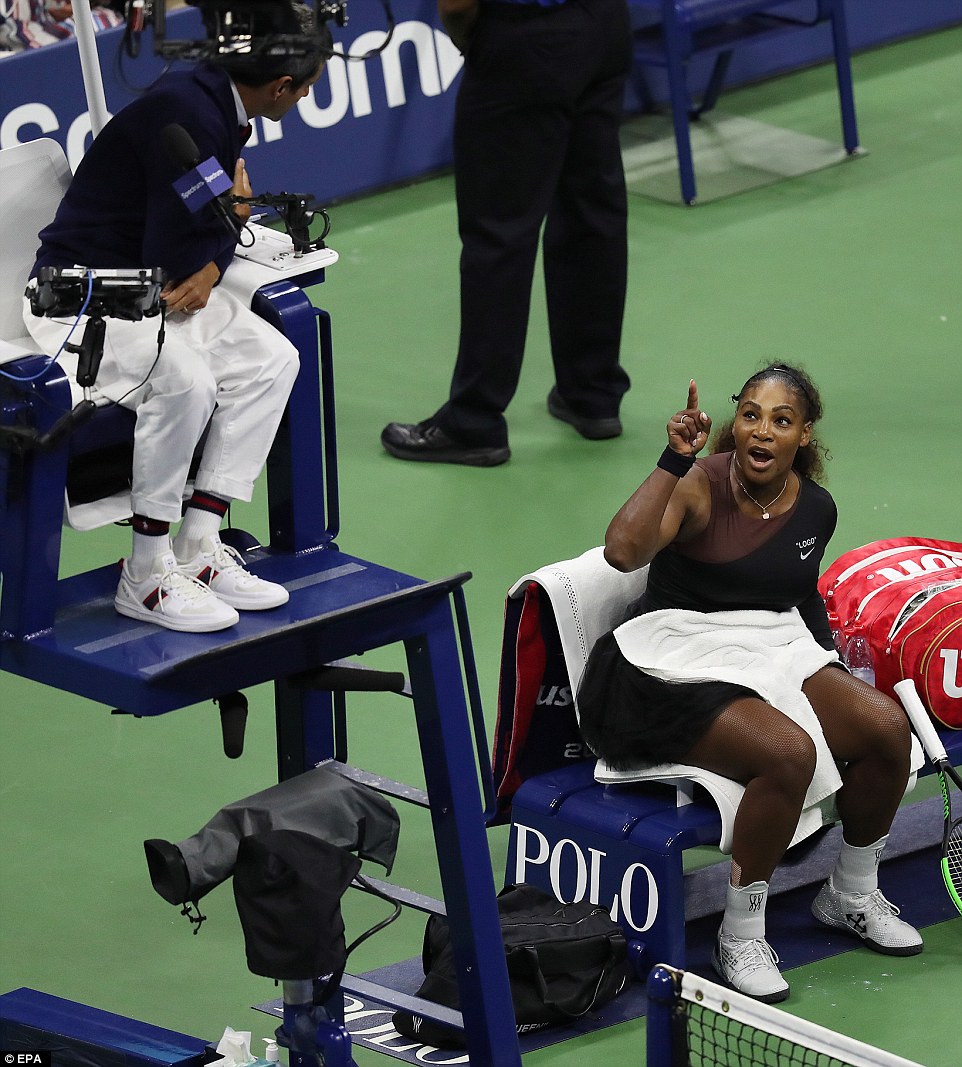
    Williams was docked a game during the defeat to Naomi Osaka for verbally abusing umpire Carlos Ramos, calling him a ‘thief’ and a ‘liar’ after he deducted a point from her for previous violations — coaching and smashing her racket.

    Now umpires could refuse to chair her matches due to discontent over the treatment of Ramos during the fallout of the match, according to The Times

    Following the match Williams cited sexism as the reason for her punishment, claiming that she had been treated more harshly than a man would have been.

    The Women’s Tennis Association (WTA) and United States Tennis Association (USTA) have backed those claims following Williams’ straight sets defeat to Osaka.

    This has further ruffled the feathers of some umpires, with an anonymous official revealing there is a growing consensus that umpires are ‘not supported’ by the USTA, while Ramos was ‘thrown to the wolves for simply doing his job and was not willing to be abused for it’.

    There are now discussions about boycotting Williams’ matches between a group of umpires that lack a body to represent their interests.

    Ramos is deemed one of the more experienced umpires in the game with almost 30 years of experience but for overseeing the Grand Slam final he received a fee of just £370 — a standard daily rate.

    Ramos is a gold-badge umpire for the ITF, who have released a statement in support of him.

    It read: ‘Carlos Ramos is one of the most experienced and respected umpires in tennis. Mr Ramos’s decisions were in accordance with the relevant rules and were reaffirmed by the US Open’s decision to fine Ms Williams for the three offences.

  • Drama, Outburst, Boo & Meltdown @ U.S Open Final

    With Osaka in control of the match after taking the first set, Portuguese chair umpire Carlos Ramos sent Williams into a rage when he handed the 23-time Grand Slam champion a code violation in the second game of the second set after he spotted Williams’ coach Patrick Mouratoglou making some hand signals from the player’s box.

    A string of bad behavior followed from Williams and she went on to incur a point penalty for smashing her racket before being slapped with a game penalty at 4-3 down after she launched into a verbal attack against Ramos, accusing him of being “a liar” and “a thief for stealing a point from me”.

    Williams rant continued throughout the second set as she got more and more incensed with things going against her

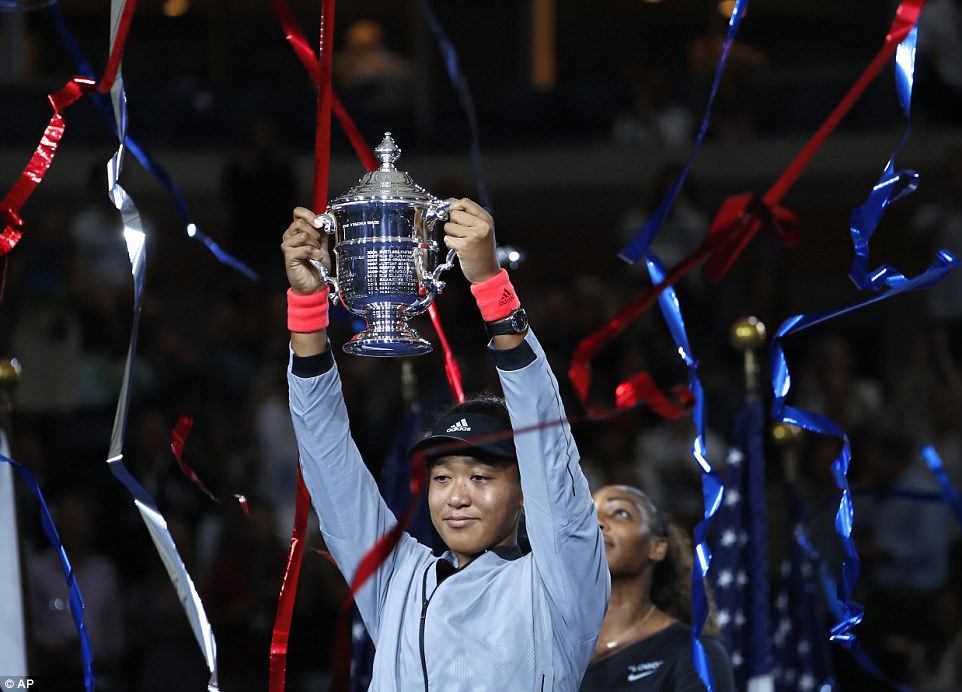
    The game penalty put Osaka 5-3 up and the 20-year-old Japanese kept her cool to pull off a historic win.

    That coaching warning ignited the first outburst from Williams, who screamed at Ramos that she was a mother and would never cheat, adding that she would rather lose.

    Order seemed to be restored when Williams finally broke Osaka for the first time to go up 3-1 but things quickly slid out of control when the Japanese 20th seed broke back, prompting the former world number one to smash her racket and Ramos to issue the point penalty.

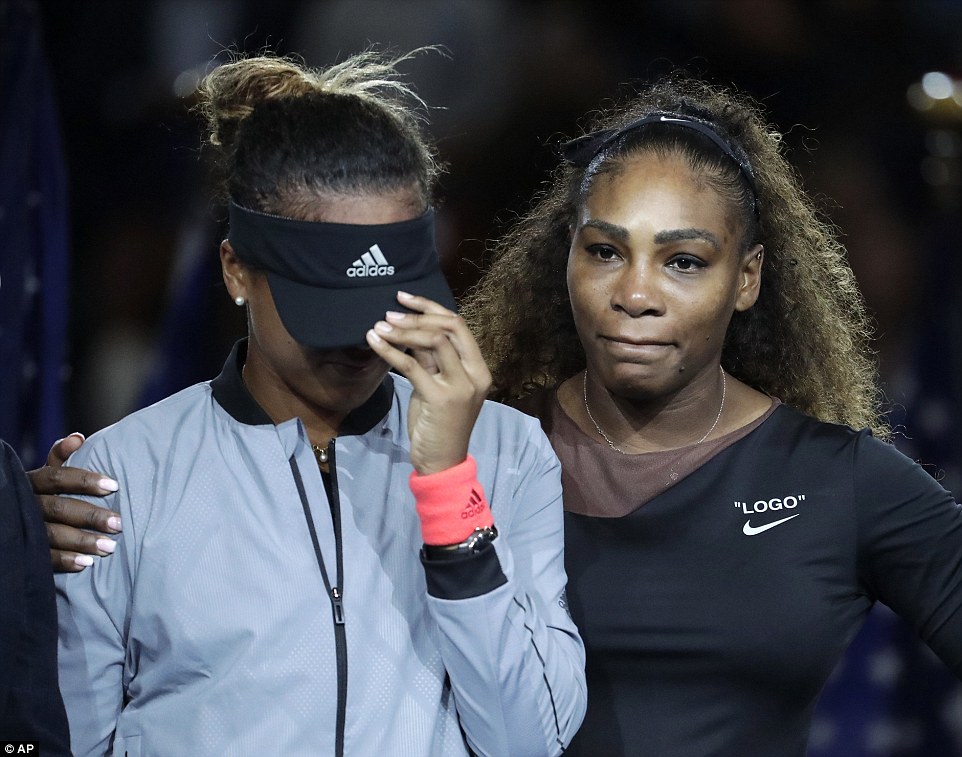
    That brought another tirade from Williams which was followed by a game penalty, bringing a shower of jeers from the packed stadium and another explosive outburst from the teary American.

    Osaka lowered her capNaomi Osaka wins the US Open in straight sets after beating Serena Williams 6-2 6-4 at Flushing Meadows

    Later Mouratoglou admitted he had been trying to coach Williams from the stands with some hand signals but accused Osaka’s coach Sascha Bajin of doing the same.

    Naomi Osaka wins the US Open in straight sets after beating Serena Williams 6-2 6-4 at Flushing Meadows

    “I am honest. I was coaching,” said Mouratoglou. “I don’t think she looked one time.

    “Sascha was coaching every point too.”

    The controversial finish cast a cloud over what should have been Osaka’s shining moment.


    “I know everyone was cheering for her and I’m sorry it had to end like this,” said Osaka. “I just want to say thank you for watching the match.

    “It was always my dream to play Serena in the U.S. Open finals… I’m really grateful I was able to play with you.”

    The result prevented Williams from winning a record-equaling 24th Grand Slam title.