Tag: Serena Williams

  • Serena, the girl from “Ajegunle”, already a serenade for all times!

    Of course, I am referring to Serena Williams. And of course, she’s not from our Ajegunle; she’s from one of the countless “Ajegunles” of America, the town of Compton in California. After official, legal and all-determining racial segregation ended in the United States and the number of middle class professional African Americans grew exponentially, something of historic significance happened to Black neighborhoods to create ghetto communities like Compton. What was this event or phenomenon?

    Well, most of the members of the newly created Black middle class left their communities and moved into either all-Black or integrated suburbs. Those who remained, those who could not leave either because they were poor or had little education, found themselves in communities now deprived of the services and amenities associated with the presence and interests of middle and upper classes. From that moment, something crucial entered the politics of race in America. That something was the reality and awareness of class. In other words, class division within African Americans became a very important factor in African American affairs, expressed in terms of who lived where and what privileges and amenities attached to one’s community of domicile. This happened all over the country, but most especially in a state like California, the most affluent state in America. Affluence always goes with its opposite, poverty, and that’s the significance of a place like Compton, the American “Ajegunle” from which Serena and her sister, Venus Williams, came. But what does all this have to do with the subject of this essay?

    I am writing this piece on Friday, September 7, 2018. By the time that it is published on Sunday, September 9, 2018, Serena would probably have won her 24th Grand Slam singles victory in the US Open of 2018. Last night, Thursday, September 6, 2018, Serena won a crushing victory of Anastasija Sevastova of Latvia in the semi-finals. Serena has played and won more Grand Slam singles semi-finals in the so-called Open Era than any other tennis player, male or female. Far more importantly, she has won more singles finals than any other player in this same “Open Era” that started fifty yeas ago in 1968. On the basis of that achievement, I am arguing that even before the finals tomorrow when she may win her 24th singles Grand Slam victory, Serena has already earned the right to the greatest acronym in tennis history, this being GOAT.

    This acronym, by the way, has nothing to do with the well-known mammalian quadruped of that name; rather it means, Greatest of All Time. Now, it is true that a few influential commentators and pundits of tennis history have already begun to declare Serena as the GOAT of the sport. But they are a very small minority. For most of the pundits, commentators, aficionados and historians of tennis, Serena will become GOAT only when and if she wins her 24th Grand Slam victory. Why? Because Margaret Court, the Australian turned American, has 24 Grand Slam singles victories to her credit. And on that basis, as of this historic moment, Court has the highest number of Grand Slams victories: she has 24 while Serena has 23. Ergo, Serena must reach 24 not only to equal Court but to achieve the uniqueness of having won all her victories in the Open Era while Margaret court won most of her victories prior to the emergence of the Open Era. This issue is at the heart of my observations and reflections in this essay.

    These days, when commentators and pundits write about the difference between the Open Era and the long, long period before it, they make light of the tectonic difference between the two periods. All they say is that before the Open Era, only amateurs were allowed to play in the four Grand Slams, the Australian, the French, the US, and the French; professional players were disqualified from participation in them. This meant that in order to continue to be qualified to play in any of these Grand Slams, you had to remain a non-professional amateur for all your playing life. In fairness to most of those who underestimate the significance of the difference between the Pre-Open Era (POE) and the Open Era (OE), it must be noted that they do admit that in the POE, the field of contestants was vastly restricted. But beyond that, they barely ever talk of the racial, class and ethnic dimensions of that restriction. For the truth of the matter is that for much of the more than a century of the history of the Grand Slams, only Whites – and of a mostly affluent background – could afford to regard competitive tennis as a matter only and exclusively for non-professional amateurs precisely because they had money and didn’t have to depend or live on the prize monies of the Grand Slams. In plain language, competitive tennis in the POE was overwhelmingly an all-White, country club affair that shut out all other racial and class demographics from the competition. In other words, let us say that we are talking here of periods in tennis history that were segregationist and post-segregationist, even if that term was never directly used.

    Back to the issue of who is the GOAT of tennis history now, before the finals of US Open 2018. Is it Margaret Court or Serena Williams? Let us consider the following facts. Of her 24 Grand Slam singles victories, Court won 13 of them in the POE, winning only 11 in the OE. Similarly, of all her singles titles of 192 in all competitions,100 of them were won in the POE when the competition was highly restricted. Meanwhile it is noteworthy to state that 11 of Margaret Court’s total singles Grand Slams victories of 24 were won at one of the four Grand Slams, this being the Australian Open. This is is not only her “native” Grand Slam, in the Pre-Open Era, it attracted the lowest number of competitors in the period because it was considered so far away that only few people could afford the expenses entailed in competing in it. To all these facts and figures, let us consider Serena Williams’ achievement, all in the Open Era when all restrictions to competition had gone forever.

    Serena’s longevity and staying power in competitive tennis is unsurpassed by anybody, male or female. She is the only player in tennis history, male or female, to win all the four grand slams over the course of two decades – and still counting. She is also the oldest player to hold all the slams in one year (2014-2015). She is the only player in history, male or female, to win three of the four slams 6 times. Second only to Martina Navratilova, Serena is one of two players to have won two of the four slams over the course of three decades. With 2018 close to the end of the current decade, she may very well become the only player in history to win slams over the course of four decades, a feat that simply boggles the mind. In combination with her sister Venus, she has outpaced every other pair of sisters that ever played the game of tennis in all categories – singles, doubles and mixed doubles. And between them, Serena and Venus have won more Olympics Gold and Silver Medals, again in both singles and doubles. And let us remember that this is all in the Open Era while the majority of Margaret Court’s also extremely impressive achievements were before the Open Era.

    At this point in the discussion, it is important to allude to the fact that before the possibility of Serena catching up and perhaps even surpassing the record of Margaret Court became real and imminent, the achievements and records of the Open Era used to be kept separate and distinct from those of the Pre-Open Era – as they very well should be! In concrete terms, commentators and pundits, by an overwhelming majority, used to refer to Margret Court and Steffi Graff quite separately: Graff’s 22 singles victories were kept distinct from Court’s 23 victories. In other words, as Serena went over number 20 in her singles victories, everyone said that catching up with and surpassing Graff was what she needed to become the GOAT of tennis history. But no sooner had she achieved that goal was the goalpost moved to – Margaret Court. The differences between the two eras were obliterated and Margaret Court was nominally elevated to a title and a nomenclature which nobody had hitherto ever applied to her. She became the GOAT – a player who had won most of her victories when the field of competition was severely restricted and, moreover, had won the lion’s share of those victories at the Australian Open, her home or “native” slam!

    Like football (soccer), competitive tennis had its origins in Europe. And like the dominance of European football in the world, to a large extent European tennis is dominant in competitive world tennis. But then, think of this: with the single exception of Cristiano Ronaldo of Portugal, which commentator or pundit of soccer would look to Europe for the world’s greatest player of all time? How many, if any, would think to give the achievements of European master footballers the same weight as the achievements of Pele or Maradona as arguably the greatest footballer of all time? The same logic, the same consideration applies to world or global tennis competition: when it moved out of its narrow racial and regional enclave, it entered a different history. Therefore, it no longer makes sense to compare the achievements and records of one age to those of the other more globally inclusive and less restricted and restrictive history. In plain language, Margaret Court and Serena Williams belong to ages or eras of tennis history and it is unproductive in the extreme to compare their achievements.

    This is the point at which our opening allusion to Ajegunle needs a further elaboration, no matter how brief. Like our own Ajegunle, Serena’s Compton used to be thought of as a trap, a dead zone of possibilities for its residents, especially the young. But as we all know, many of our best footballers and other team sports have come from the Ajegunles of the country. The obvious point or moral of this profile is, of course this: in our age, our epoch, we have seen extraordinary manifestations of creativity, skill and talent sprouting from the most deprived and marginalized of our ghettos. That is Serena’s background. But there is far more to the matter than this. Serena and her sister, Venus, not only brought a different style and presence to their sport, they transformed some its most conservative and ethnocentric values and practices. They encountered all kinds of racial, gender and ethnocentric biases and prejudices in their sport and they fought fearlessly and wisely against them, Venus especially but also Serena, in her own more nuanced ways.

    Tomorrow, Saturday, September 8, 2018, Serena will probably reach that figure of 24. Her chances are quite good against the much younger Naomi Osaka. But in the end, it does not really matter. Serena is already the GOAT. Osaka, by her own admission, owes her entry to competitive tennis to Serena and her sister, Venus. Osaka is half Haitian and half Japanese. She is thus a link in the long chain of expansion and diversity that entered tennis history with the transition from the Pre-Open Era to the Open Era, a link that owes it existence and global reach to the Williams sisters. It all began at Compton.

  • Serena makes Annual Best Dressed List 2018

    Serena Williams gunning for her 24th Grand Slam as she takes 19th seeded Anastasija Sevastova on Thursday in the semi final of the US Open, has been named in the Annual Best Dressed List.

    Serena Williams roared into her 12th US Open semi-final on Tuesday night in her quest to equal Margaret Court’s record of 24 Grand Slam titles remained on course.

    Also in the said list dished out by organisers of the Vanity Fair, are the Duchess of Sussex Meghan,  who is making her debut in the said list while joining what the outfit dubbed world’s most stylish men and women

    Meghan was joined on the 43-strong list by close friends Serena Williams, 36, pictured at the US Open last week even as she has been tipped to clinch her add another Grand Slam title to her collections this weekend

    Serena who is apparently the home favorite claimed eight games in a row to recover from an early break of serve in the opening set and secure a 6-4, 6-3 victory over No 8 seed Karolina Pliskova to hit the semi finals

    It was a nervy start from Williams, who after saving two break points in her second service game found the net on the third to hand her Czech opponent an early break.

    The six-time champion produced a glut of errors in the opening stages before composing herself to break back at 4-4 with some monstrous ground strokes. Victory over Pliskova marked her first victory over a top 10 opponent since January 2017.


  • US Open: Serena blows Venus away in all-Williams show

    Serena Williams roared through her 30th career meeting with her sister Venus on Friday, booking a US Open fourth-round berth with a 6-1, 6-2 victory.

    Serena was all business for the highly anticipated all-Williams clash under the lights on Arthur Ashe Stadium.

    Despite the emotional and tactical challenges of facing Venus, the 23-time Grand Slam champion said the match-up brought out the best tennis she has played since she came back from the birth of her daughter Olympia last September 1.

    “Absolutely this was my best match since I returned,” said Serena, who blasted winners off both wings — 34 in all — and fired 10 aces in the 72-minute match.

    Both players were subdued on court. There were no fist-pumps or “Come ons” and when Serena sealed it with a forehand winner the sisters met at the net for a hug and walked to their chairs before Serena acknowledged the crowd with a wave.

    “It’s not easy,” she said of facing Venus. “She’s my best friend. She means the world to me. Every time she loses I feel like I do.”

    Venus’s seven Grand Slam titles include a victory over Serena in the 2001 US Open final. But Serena has gone on to beat her in seven of eight major finals since then and now owns an 18-12 record over her elder sister.

    The third-round encounter marked their earliest meeting in a Grand Slam since Venus beat Serena in the second round of the 1998 Australian Open, the first time they met as professionals.

    “It’s not very easy, but it’s a tournament and we all know there’s more to life than just playing each other and playing tennis,” Serena said.


  • Serena off Witthoeft to set up Venus clash

    Serena Williams overpowered German Carina Witthoeft 6-2 6-2 to set up a third-round clash with big sister Venus at the U.S. Open on Wednesday.

    Williams sent down 13 aces and 30 winners to record her second consecutive straight sets victory at Flushing Meadows.

    The 36-year-old hunting a record-equaling 24th Grand Slam title, wrapped up the win in one hour and seven minutes.

    “It’s always such a great crowd at night. It’s just amazing to play in front of this crowd,” she said at court side after her victory.

    “I was happy with a lot of things.”

    Next up is a 30th career meeting with Venus, who beat her younger sibling in their most recent encounter at Indian wells earlier this year.

    The last time the two sisters met at a Grand Slam was in the 2017 Australian Open final, where Serena prevailed in straight sets.

    Read Also:Serena Williams lists super property for $6.5 million

    “It’s obviously a tough match,” Serena added.

    “It’s so young in the tournament, but it is what it is. It’s not the end of the world. We would rather have met later.

    ”We’re both going to come out per usual and play our best in front of you guys.

    “Normally, I would say cheer for me. But, whoever you feeling — me or Venus will work.” she said.

  • Serena: No Birthday Party for Olympia because of Religion

    Serena: No Birthday Party for Olympia because of Religion

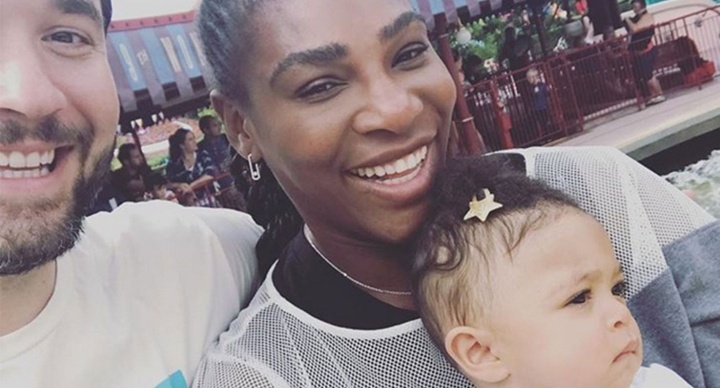
    Serena Williams‘ daughter, Alexis Olympia, turns one on Saturday, but don’t be thinking Instagram will be flooded with party pictures.

    And that’s not because the tennis ace wants to keep things low key, in fact, there will be no celebration at all.

    The tennis star has confirmed that she won’t actually be celebrating her little one’s first birthday because of her belief as a Jehovah’s Witness.

    Speaking at a press conference at the US Open, Serena was asked whether she had thought about how she would celebrate Olympia’s first birthday.

    “Is there a birthday party planned?” the 36-year-old was asked by a reporter, to which she replied: “Olympia doesn’t celebrate birthdays. We’re Jehovah’s Witnesses, so we don’t do that.”

    According to JW.org: “Jehovah’s Witnesses do not celebrate birthdays because they believe that such celebrations displease God.”

    The site goes on to say that Jehovah’s Witnesses believe the celebration of birthdays has pagan roots and that early Christians did not celebrate birthdays.

    Speaking to Vogue last year about her faith, Serena explained that her husband, Alexis Ohanian, has also embraced her beliefs.

    “Being a Jehovah’s Witness is important to me, but I’ve never really practiced it and have been wanting to get into it,” she said.

    “Alexis didn’t grow up going to any church, but he’s really receptive and even takes the lead. He puts my needs first.”

  • US Open: Serena Williams returns with a bang!

    Serena Williams marked her return to the US Open with victory as she embarked on her bid for a seventh title at Flushing Meadows.

    Williams opened the night session on Arthur Ashe and proved too strong for Poland’s Magda Linette, winning 6-4, 6-0.

    It was her first match at the tournament since a semi-final loss to Karolina Pliskova in 2016, having given birth to daughter Olympia during the tournament 12 months ago.

    The 36-year-old did not hold back on the court after suffering a difficult build-up to the event

    Williams has had a difficult build-up to the tournament, suffering her most one-sided loss ever when she won just a single game against Johanna Konta in San Jose – she subsequently revealed she had learned just before the match that the man who killed her half-sister had been released from prison.

    Williams then lost to Petra Kvitova in the second round in Cincinnati but pulled away here after a tight opening to the match and needed just an hour and nine minutes to clinch victory.

    The 36-year-old, who is looking to equal Margaret Court’s all-time record of 24 slam singles titles, said: ‘It’s such a good feeling to be back out here. It’s an experience you can only live in New York and it’s one of the best feelings in the world.

    ‘The first set was tight. Once I got settled, I started doing what I’m trying to do in practice, so it helped a lot. I think I’m getting there. I’ve been feeling really good in practice.’

    Williams could face a third-round meeting with sister Venus, who won a tough battle against fellow former US Open champion Svetlana Kuznetsova 6-3, 5-7, 6-3, but Simona Halep is no longer in her section following her shock loss.

    It was a tough draw against big-hitting Kanepi, who is a six-time grand slam quarter-finalist, and Halep simply could not find her rhythm as she slipped to a second successive first-round loss having been beaten by Maria Sharapova 12 months ago.

    It was the 12th time Halep has lost in the opening round of a slam, and she said: ‘I never play my best tennis here, even if I did quarter-finals, semi-finals. The city is busy. I’m a quiet person, so maybe I like the smaller places.

    Defending champion Sloane Stephens eased into the second round with a 6-1, 7-5 victory over Russian Evgeniya Rodina.

    The third seed said: ‘The first round of a grand slam is super tough, especially as defending champion. I’m super excited to get the tournament going.’

    Two-time Australian Open champion Victoria Azarenka is back in New York for the first time in three years as a wild card after the birth of son Leo and then the custody battle that limited her travel, and she battled to a 6-3, 7-5 victory over Viktoria Kuzmova.

  • Serena plays down on Roland Garros catsuit red card

    Serena Williams has been told that the black catsuit she wore at this year’s French Open will not be allowed next time round at Roland Garros.

    Despite wearing it partly for medical reasons, France’s Tennis Magazine Bernard Giudicelli, President of the French Federation, said that it had gone ‘too far’.

    ‘Serena’s outfit, for example, would no longer be accepted,’ he said, in announcing a Wimbledon-style clampdown on which clothes are allowed in Paris.

    ‘We are going to ask manufacturers to let us know what is coming. You have to accept the game and the place.’

    Williams, seeded 17th for the US Open next week, has however played down on what some had thought would snowball into another basket of controversy.

    ‘I feel like if they know that some things are for health reasons, and then there’s no way that they wouldn’t be okay with

    it, so I think it’s fine,’ she said.

    ‘The president of the French Federation, he’s been really amazing. He’s been so easy to talk to. My whole team is basically French, so we have a wonderful relationship. I’m sure we would come to an understanding and everything will be okay.’

    The fact that Williams did not want to further inflate the catsuit debate suggests a strong desire to avoid distractions, as she tackles a task that will not get any easier with the passing years. She re-echoed her readiness for the battle ahead adding that she remains a strong contender on the court all the way.

    ‘If anything, I have more fire in my belly,’ said Williams.’ It’s very difficult to describe. I thought after having a child I would be more relaxed, but I’m not. I work just as hard if not harder actually. I feel like I take it just as serious if not more. That’s been really surprising for me..’

  • Ondo first lady launches 2018 Summer Tennis Clinic for children

    The Wife of Ondo State Gov., Mrs. Betty Anyanwu-Akeredolu, on Friday launched the 2018 State Summer Tennis Clinic for children between four and 13 years old.

    Speaking at the ceremony, which took place at the Township Stadium in Akure, Akeredolu expressed joy that the dream of initiating the tennis clinic was gradually being realised.

    She said that she was impressed that the children who participated in last year’s edition attended other competitions and won laurels.

    “This clinic is essentially to identify and develop talents in our children.

    “It is important to encourage sports development among youths in the state, particularly at the grassroots level.”

    She said that the essence was to discover and develop the latent potential and skills of young ones who were capable of becoming champions.

    Read Also: ASUP re-elects chairman at Ondo poly

    “The benefits of catching our youth’s young, especially in sports, are enormous.

    “Let us look at champions like Venus and Serena Williams. They all started as young children.

    “Today, they have become world champions winning numerous awards. We have Roger Federer, Novak Djokovic, and Billie Jean King, just to mention a few.

    The governor’s wife said that the programme “is not a government thing”.

    “You can give into it. Let nobody wait for the governor to bring money here,” she said.

    Mr Saka Yusuf-Ogunleye, the state Commissioner for Youth and Sports Development, commended the governor’s wife for the initiative.

    Yusuf-Ogunleye said that the programme would go a long way in building future tennis players for the state and Nigeria.

    A participant, Aanuoluwapo Efunsile, said the participants would use the opportunity provided by Akeredolu to develop themselves and become great tennis players.

    300 students are participating in the programme holding from August. 23 to Septemper.1, 2018.

    It is organised by the Office of Wife of Ondo Governor in collaboration with the Ondo State Sports Council. 

  • US Open: 17th Seeded Serena ready to roll

    Serena Williams has been seeded 17th ahead of this year’s US Open which serves off August 27th, just a place below elder sister Venus, organizers said on Tuesday.

    Serena, who finished runner-up at Wimbledon this year after losing to Germany’s Angelique Kerber in the final, is ranked 26th in the world, nine places below the seeding she has been awarded.

    The current WTA rankings are the usual criteria to decide seeding in the women’s draw.

    Williams, who has won the US Open six times and will turn 37 next month, missed last year’s tournament because of pregnancy.

    In June, United States Tennis Association president Katrina Adams said the US Open would revise seeding to take into account the effect of pregnancy on the current rankings of players.

    Adams’ comments came in the wake of widespread criticism of tennis officials after Serena was denied a seeding at this year’s French Open, her first Grand Slam after returning to the sport.

    Romanian Simona Halep is the top seed in the women’s draw with defending champion Sloane Stephens at No 3, ahead of Kerber, who won at Flushing Meadows in 2016.

    There were no surprises on the men’s side with world No 1 and defending champion Rafa Nadal named top seed, ahead of Roger Federer and Argentine Juan Martin del Porto in third.

    Wimbledon champion Novak Djokovic, who heads to Flushing Meadows in arguably his best form since returning from a troublesome elbow injury, is seeded sixth, a place below big-serving South African Kevin Anderson.

    John Isner is the highest-seeded American in the men’s draw at No 11.

  • Serena drops first set but zooms into semis


    Serena Williams dropped her first set at Wimbledon Tuesday before recovering to beat Camila Giorgi and reach semi-finals

    The seven-time champion, who missed the tournament last year, was outplayed by Italian Camila Giorgi in the first set, but rallied to win 3-6, 6-3, 6-4 on Centre Court.Tuesday’s triumph takes her winning streak at the All England club to 19 matches

    It also proved beyond doubt that she is the woman to beat in the women’s draw, despite this being just her fourth tournament back since giving birth last September.

    Williams will face Germany’s Julia Goerges, the 13th seed, who reached her first grand slam semi-final with victory over Kiki Bertens.

    The 29-year-old dropped the first set to Dutch 20th seed Bertens but fought back to win 3-6, 7-5, 6-1.

    Meanwhile Canadian rapper Drake ought to thank his stars that Serena emerged victorious in the game despite the initial challenges.  Had she crashed out Drake would probably have been lampooned by fans who would have linke the loss to his unsolicited presence.

    They were rumoured to have enjoyed an on-off secret romance between 2011 and 2015.

    And Drake looked proud as he turned up to support Serena Williams during her quarterfinal match at Wimbledon on Tuesday.

    The Canadian rapper, 31, couldn’t help but smile as he showed up to another of the icon’s grand slam tennis matches, with the star vying for her 24th single Grand Slam title, and her first since welcoming baby daughter Alexis in September.

    The Rapper’s presence at the tennis tournament led to a mixed response from fans, with many calling for him to leave due to fears he would ‘jinx’ her match.

    One wrote ‘come on @drake you gotta leave. Serena loses when you are around. Be a good friend and let her win.’

    Another added: ‘jeez Drake… you gonna come to her work and errrrthing?’