Nigerian fashion is diverse, unique and is renowned for reflecting the nuances of the many, varied ethnic groups, religions and cultures that call the African country home.
Fashion creators with channels on YouTube are constantly educating, inspiring or entertaining with their creativity, as is evident in the popularity of their videos. YouTube has proven to be an important platform for Nigerian fashion creators to get noticed, grow their brand and reach an audience far beyond what traditional channels would typically allow for.
Nigerians love incorporating traditional fashion elements into their everyday look. Whether it’s something simple or a piece that shouts avante garde, the fashion creations in these videos effortlessly reflect the nuances of a rich urban and social culture.
Both men and women can often be seen sporting pieces that incorporate ornaments, embellishments, patterns and bold colours. Classically geometric or an eye-catching floral design, Nigerian street fashion oozes fantasy and creativity. Meet five Nigerian fashion creators who are producing content that shows users easy ways to create these iconic looks and fashion statements.
1. Bilikis Signatures
Bold, stylish and colourful, it’s easy to see what Bilikis Signatures’ 163K subscribers are drawn to. In just two-and-a-half years her content has been viewed more than 12 million times, proof that her videos are relevant, engaging and exactly what the audience wants. The channel is dedicated to sharing fashion video tutorials for enthusiasts and designers. Visitors on the channel can learn everything from “How to make a bustier top with cups” to “How to work with fraying lining”, “How to make a stylish kimono maxi dress” or “How to make an easily detachable peplum”, among other things. Whatever your style, Bilikis Signatures will inspire you if you love making women’s clothes.
2. Cynthia A.
Hair, beauty, DIY and more, Cynthia A’s 103K subscribers can’t get enough of the how-to content she shares. Since launching in July 2011, Cynthia’s videos have been viewed more than 7 million times. The comprehensive video tutorials demonstrate everything from “How to make a circle cape dress”, to “How to make a pencil skirt with Ankara fabric”, “How to make a princess draft blouse” and many others.
3. Debonke House of Fashion
In the three years that this channel has been active, it has attracted close to 80K subscribers. More significantly, Debonke House of Fashion’s content has been viewed more than 12 million times. The channel is a smorgasbord of dress ideas for both women and children in unique Ankara and Aso Ebi styles. It’s equally appealing to both designers and enthusiasts alike, and is always focussed on giving users the best African dress ideas for style and confidence.
4. e-Fashion World
With 129K subscribers and close to 14 million video views e-Fashion World is one of Nigeria’s biggest fashion creator channels on YouTube. It’s an all encompassing platform that offers content around beauty and health in addition to fashion.
Since joining the channel in November 2016, e-Fashion World has become one of the foremost online fashion hubs in the country with a major focus on African print designs. The channel’s mission is to promote the uniqueness of African design and fashion by showcasing the work of a variety of talented, highly creative designers and creators.
5. NaijaGlamWedding
Stylish, savvy and oozing creativity, NaijaGlamWedding is a digital wedding planning magazine, and one of a kind in Nigeria. It’s for brides, grooms and anybody else looking for ideas and inspiration on how to best plan and design their own Nigerian wedding.
The NaijaGlamWedding YouTube channel, which has been around since September 2013, has close to 14K subscribers and the videos have been viewed more than 4 million times. Advice, tools, tips and more, this channel is all about helping viewers bring their wedding day dreams to life without having to reach too deeply into their pockets. In their own words, Nigerians love “loud and classy wedding events” and the content here helps users achieve that – the DIY way.
NaijaGlamWedding’s videos are as entertaining as they are educational and instructional, and certainly work to make Nigerian fashion more accessible to the world.
Peace is the principal thing in life. It is said that if a man is at peace with himself, he is at peace with the world.
Contemporary world is filled with struggles and strife such that everyone is at war with himself or others. But peace remains the biggest desire of every man, no matter his position or status.
Inner peace is not all about dedicating oneself to prayers or spirituality; it is a state of emotional and mental peace without disturbing thoughts and having control over our moods and reactions.
These are five ways to be at peace with yourself:
Practice compassion
One fast way to be at peace with yourself is to help someone in his/her time of need. The world is filled with so much evil that it is becoming increasingly difficult to be compassionate, but even in this state, good people still exist.
Help out someone, be merciful and forgiving. You will find peace with yourself.
Do the next right thing
It is okay to make mistakes but research has shown that a man of integrity ends up a success. No matter how simple or insignificant, every right thing you brings peace and self-respect to you
Practice patience
There might be people who engage in doing wrong, or who push you to the extreme but patience makes you superior over them. All you can do to these people is to leave them to their conscience. Always choose to respond in a way that brings peace to you.
Celebrate your wins
There must be something right you have once done before. There must be something excellent you have achieved before. Occasionally remind yourself and celebrate it. You can even talk about it to someone else, but be careful not to brag about it, be careful of pride.
This brings inner peace and joy to you.
Make amends immediately.
If for some reason you have treated someone unfairly or unkindly, or you have done something dishonest, make amends for it as soon as you can. Correct your mistakes as soon as possible and you can find peace of mind in the fact that you have improved upon your actions and done your part to relieve any ill feeling or guilt.
It is still possible, in this day and age, to be at peace with yourself and with the world.
Entrepreneurial skill development is as important as water is to human life. Gone are the days when employers go about looking for potential graduates for employment.
The reason why many technicians earn more than most university graduates with good grades is because technicians have practical know-how that many graduates cannot boast of.
Here are reasons why you should consider acquiring a skill:
* Self-employment: A skillful person is a self-employed person and a self-employed person can never go hungry. A skillful person enjoys benefits a person working in an office won’t have access to. For example, a person with skills can spend their money as they like because they are not subjected to higher authorities. They also can decide to work from home because they are their own bosses and many more benefit that an employed person can’t have.
*To break away from white collar jobs: White collar jobs these days are scare and the pay are less compared to the work load an individual is expected to put in. People with skills don’t go hunting for white collar jobs because their skills are better off to most white collar jobs.
*People with skills are self-reliant and independent: Most skillful individuals cater for themselves and some even go as far as seeing themselves though higher institutions without the financial involvement of their parents. This makes them self-reliant and when they are graduates, they are more exposed to stand out in the labor market using their skills as they don’t depend on anyone for their daily living they even go as far as sponsoring family members.
*Diverse job opportunities: Have you ever seen someone who acquires many skills alone? Such person is classified as someone who is up and doing. Those who have many skills stand the chance of gaining more jobs from many establishments.
People who have many skills are being poached by many companies. They are in hot demand because of the skills they possess.
*To generate employments: There will be a lot of jobs generated for citizens if they are well equipped with skills. This is why it is necessary for government to organise skill acquisition programmes for the masses.
The informal market filled with fashion designers, makeup artistes and many more employ more people can the formal sector can.
.* Reduction in crime: Research has shown youths are mostly involved in crimes. People begin to think of many dirty activities they will do to make money when they do not have anything to do.
But with acquired skill by an individual he/she works and makes money from his/her acquired skill. This will make him/her to feel comfortable. Also the skills acquired by the citizens who indulge in crime can be used to win over those involved in such crimes.
Midway into the epileptic year of 2020, Nigeria is witnessing a growth spurt in the music industry. Fledging and talented artists are speedily making waves to get to the spotlight. Leveraging on the adverse effect of the pandemic which deterred popular musicians from releasing music, these artists quickly began to consolidate their gains by harnessing social media.
Here’s a list of artists you should keep an eye out for in the next half of 2020.
Oxlade
Oxlade
A young hustler from Surulere, Lagos, Ikuforiji Abdulrahman Olaitan, aka Oxlade went from being unheard to performing at Wizkid’s Starboy Fest, a sold-out show at the O2 Arena in London.
Right after that event, Oxlade began to gather attention to his music. Some of his biggest features include ‘Mamiwota’ by Blaqbonez, ‘Causing Trouble’ by DJ Tunez, his biggest hit so far titled ‘Shugar’, amongst others.
Lyta
Lyta
Lawal Raheem is 20-year-old Afropop singer and songwriter. Also known as Lyta, the singer is a former member of the popular record label, YBNL, owned by the famous indigenous rapper, Olamide. The Kwara State indigene made a name for himself after he featured former boss, Olamide, in a song, ‘Time’.
DamyQue
DamyQue
Orulegbaja Quadri also known as DamyQue is a young Nigerian artist making major moves in the Nigerian music industry. DammyQue who hails from Kwara state, began his career at the tender age of fifteen, being a very passionate and determined talent. He started with freestyles to famous instrumentals until he hit his first record deal with the CEO of Thugluvin Records. Dammyque’s call to fame began with his single ‘Yoo’ on which he featured Zlatan and Young John. Some of his songs include ‘Funwoje’, ‘Heavy Duty’ and ‘Muso’, all street bangers to this day.
Odunsi (The Engine)
Odunsi (The Engine)
Lagos-born and bred musician, Bowofoluwa Olufisayo Odunsi is a peculiar singer and Alté Movement personality with a short-lived tertiary education at a Ghanaian university in 2015.
Signed by Warner Music the performer bought the heart of Nigerians with his ‘Rare’ album in 2018 featuring artistes like Santi (formerly Ozzy B), Zamir and the rest of the Alté guys. On the syrupy track “Star Signs,” featuring the Afrobeats star Runtown, Odunsi fuses classic highlife melodies with auto-tuned verses about falling in love.
Lil Frosh
Lil Frosh
The indigenous rapper built himself a musical base by uploading freestyle videos on Instagram then successfully earned a lot of attention.
Lil Frosh raps in the Yoruba language with clear and smooth flows, coming up with well-cooked punchlines. His fame rose after he had a collaboration with Nigerian street sensation, Small Doctor on a track tagged “Firi Yahoo”.
As the reunion of Big Brother Naija Pepper Dem housemates enters the second week, Jackye, Venita, and Ella were the main attraction. Here are three takeaways from week two.
Jackye says she might get bigger boobs
The drama continued when the host, Ebuka Obi-Uchendu decided to talk about pretenders in the house. Jackye was quick to announce that Khafi was the biggest pretender in the house. Jackye said Khafi pretended to be a good and caring personality but she is not. Jackye reminisced on a conversation with Khafi on Mercy’s bum and how she twisted the conversation to curry Mercy’s favour.
Jackye also used the opportunity to say she has no ill feelings for body enhancement. The techy ex-housemate said it is obvious she has small boobs and there’s every possibility of enhancing her boobs.
I believe Ella is bipolar and deceitful – Venita
Another round of drama began when Ebuka sought to know the genesis of the issue between Venita, KimOprah, and Ella.
Venita expressed her dissatisfaction with Ella’s attitude saying she feels the vocalist is bipolar and deceitful.
“I believe Ella is deceitful and bipolar with five different personalities all in one,” Venita blurted out after explaining how Ella allegedly deceived other ex-housemates.
Venita said Ella deceived all housemates to get money from them at different times after which she went public to say she was broke and her mum was sick and she later shared a picture of herself performing at a gig looking sweet.
Ella insists her mum was ill and angry for soliciting funds
In response to the allegations against Ella on being deceitful and not straightforward, the vocalist insisted her mum was ill and that she never lied about her mum’s health. Ella further said she switched off from other ex-housemates because she had to be with her mum who was angry with her for soliciting funds from the public to support her. An angry Mercy had queried if Ella was doing drugs to which she stuttered but denied doing drugs. An emotional Ella broke down saying she is being perceived as a bad and deceitful person despite dealing with her sick mum’s displeasure over her decision to solicit funds from the public.
Micro Small and medium enterprises (MSMEs) are the important driving forces for economic growth of Nigeria, Africa’s most populous country. They occupy an important position in the economic development of any country, especially in the case of Nigeria, which is a commodity market with no fewer than 37 million micro businesses. TOBORE OVUORIEafter several interactions with micro businesses in the country, writes that despite such a huge importance to Nigeria’s economic growth, the MSMEs are battling for survival in the face of multiple pummeling by COVID-19
REIGN OF STAGNACY
“Since the coronavirus started, the business is dull; everything is dull. Nothing is moving as before because people are not going out. Since they are not moving out, they cannot make money,” Alex Adibemma, who runs a local medications retail outlet popularly referred to as ‘chemist shop’ in many parts of Nigeria, stated.
He also sells daily household consumables such as bread and drinking water, amongst others. This reporter had monitored his store located at Osaro, Akute, Ogun state for over two weeks and observed the shelves accommodating the medications became scantier every day. When she approached him for an interview for this story on May 18, the shelves were completely deserted, but for the loaves of bread and other daily consumables sitting in lonely corners of the once very busy store.
Adibemma said though President Muhammadu Buhari had partially eased the lockdown since May 4, there is yet no improvement in his business because people are still not moving out as such. “People are afraid. They only go out to get what they want and quickly return home. Whether they make money or not, they pick one or two things and go back to their homes. Nothing is moving at all.”
DAILY PRICE HIKES OF CONSUMABLES
A few days to the commencement of the COVID-19 lockdown, which began on March 29 in Lagos and the Federal Capital Territory, then a week later in Ogun state, this reporter had gone to various markets and stores in Lagos and Ogun states respectively, taking note of the prices of major food items consumed by families. After the announcement of the partial easing of the lockdown which became effective May 4, she has been monitoring prices of same items and observes prices are being hiked daily.
Before the advent of coronavirus in Nigeria and subsequent lockdown, a regular sliced loaf of bread sold for N250. But after the partial easing of the lockdown, it goes for N300 in some places while other retailers who do not buy directly from bakeries sell theirs for between N350 to N400. Adibemma sells his for N300.
“It is because of the way I bought it from the bakery. When I inquired, I was told that prices of baking materials are now very expensive. So, for them not to lose, they have to increase the price in order to make some profits, too,” he explained.
Owners of other micro businesses interviewed for this story explained prices are being hiked at all phases of production until the goods get to the final consumer because profits are meant to be made in businesses. They further explained their businesses are going through tough times as well. Their profits are now so reduced compared to before the onset of the coronavirus but they cannot shutdown their businesses since they have nothing else doing.
Adibemma said a family size unsliced loaf of bread, which he used to sell at the rate of N400 pre-COVID, is N450 because he buys directly from bakeries. The same loaf is sold for N500 at other places this reporter visited. Retailers and bakers interviewed for this story say prices of nylons, sugar, salt and even flour have skyrocketed, leaving them with no choice than to increase the price of the finished product.
Local bakeries, this reporter visited in Lagos and Ogun states respectively, lamented sugar is very scarce in the market. The few shops that have sugar sell at incredulous rates, so, they are left with no choice but to also increase the prices of bread.
A sachet of water Pre-COVID used to be sold for three N20 in certain parts of Lagos state and in most parts of Ifo, local government area of Ogun state. This is no more the case as retailers sell a sachet of water for N10. Packaged water producers whom this reporter interacted with for this story claim that the nylon used in sealing the water and packaging them into a bulk of 20 sachets per bag was now expensive.
Bottled waters are still being retailed at N50 each but the bulk purchasing price from the producers has been hiked. Before the emergence of the coronavirus and lockdown in Nigeria, water producers used to sell to retailers at N400 per pack. A pack contains 12 bottles of water.
But the same pack is being sold to retailers at N500 per pack. The sellers however bear the cost of the price hike because increasing the retail price of bottled water will be at their own detriment as not many Nigerians buy bottled water. But that of sachet water has been increased from between N100 to N120 (Pre-COVID) to N150 to N160 per bag.
Adibemma said he is learning to develop a thick skin to cope with the unpleasant twists in his business. “We need to survive that is why we are still selling. We cannot stop our business because of price hike. We are managing the little gain we get,” he said explaining why he still turns up daily at a deserted store.
His message to the government is: “Please, help the masses in any way they can. If they can give soft loans or bring down the prices of goods with their power so that the masses can survive, it will be greatly appreciated.”
‘NO MONEY, NO MARKET!’
President Muhammadu Buhari on March 29 declared a total lockdown in Ogun, Lagos and Federal Capital Territory, Abuja in a bid to contain the coronavirus which Nigeria and the rest of the world is struggling to curb its spread.
The total lockdown lasted between March 30 and May 3 before a partial ease was announced but with lots of restrictions with effect from May 4. Schools, businesses, airports, borders, worship centres, human and vehicular traffic are severely restricted except essential service providers such as healthcare workers, security operatives, petroleum distributors, power generating transmitting and distribution officials, the media and food processors.
However, the latter in the group- food processors who are essential service providers are operating skeletal services when compared to their Pre-COVID operations. This means, the end consumers in the supply chain bear the financial brunt.
“Business was booming before the advent of coronavirus in Nigeria but business is now very dull, while prices of commodities have been hiked. What we used to buy at N10, we now buy at N200. After buying at expensive rates, customers yet complain bitterly but we the sellers don’t make profits anymore. We are just managing,” Obinna Onyekachi narrated on May 19 at his store where he sells food items such as garri, rice, amongst others on Adebowale Street, Ojodu Berger Lagos.
Onyekachi says the partial easing of the lockdown has had no positive impact on his business whatsoever. He says prices of commodities are on the increase every day. For instance, sachet tomatoes, which was being sold at N50 was selling for N60. Pre-COVID, a bag of foreign rice was sold for between N20, 000 to N24, 000. But it was selling for N28, 000 per bag then.
Nigerian rice is N20, 000 and N22, 000. This is the white type without stones. Pre-COVID, the latter used to be sold between N17, 000 to N18, 000 per bag while the variety with stones was sold between N15, 000 to N16, 000.
Onyekachi says he is still in business just to make turnover. “We buy these goods quite expensive and our customers don’t believe us when we explain our plight to them. We buy the foreign rice at N27, 500. Bringing it to the shop costs N300. So, we are using N200 to sell each bag,” he explained.
He says no one can be blamed for the daily hike in prices of commodities. According to him, many persons were not working and managing the little money they had. He called on the government to come up with effective assistance programmes not only for business owners like him but those at home for various reasons such as losing their jobs.
Onyekachi also stopped credit sales. “Credit now is trouble because I cannot ‘drag with them’. Even if I ‘drag with them to Police station’ I will lose the case because there is no money anywhere to pay me. So, no money, no market.”
PHENOMENOLOGY OF MSMEs IN NIGERIA
Nigeria’s National Bureau of Statistics, in its June 2018 publication, revealed the nation was struggling with a huge predicament of youth unemployment. According to the NNBS, it has increased to all time high.
However, a survey carried out by the Small and Medium Enterprises Development Agency of Nigeria (SMEDAN) in conjunction with National Bureau of Statistics (NBS) revealed that there were 37,067,416 MSMEs firms in the country as at 2013. In this total aggregate, there were 36,994,578 micro businesses while small businesses were 68,168. According to the report, the Medium sized businesses in Nigeria were 4,670.
The 59,741,211 persons were employed by the sector as at December, 2013 represent 84.02 percent of the Nigeria total labour force. In addition, the Micro, Small and Medium Scale Enterprises’ contribution to the nation’s Gross Domestic Product (GDP) in nominal terms stood at 48.47percent while the sector’s contribution to exportation also accounted for about 7.27 percent total volume in the same year.
Reports by the International Council for Small Business (ICSB) indicates that MSMEs make up over 90 per cent of all firms, provide up-to 60 percent employments, and account for 50 per cent of GDP of any economy.
The small and medium sized businesses also boost the economy in most different areas such as employment creation, poverty reduction and industrial development, among others.
According to financial experts, the sector holds immense potential for generating employment opportunities for Nigeria’s ever increasing population, boost the development of indigenous technology, diversification of the economy and forward-integration with established sectors in Nigeria such as the banking industry, telecommunication sector, oil and gas, among others.
IMPACT OF COVID-19 ON MSMEs
Despite such huge importance to Nigeria’s economic growth, MSMEs face enormous challenges such as business financing and information promotion. Unfortunately, COVID-19 added greater economic uncertainty and much lower consumer spending to the mix. Micro business owners this reporter interacted with for this story say the latter is the greatest challenge so far for their small businesses’ growth and survival.
In a research- survey, carried out on the field and via the phone among 58 micro business owners, in Ogun, Lagos, Oyo and Rivers states respectively as well as the Federal Capital Territory, Abuja, 41 of them said they were experiencing lower consumer spending, nine said they were not experiencing such while eight said it was neither here nor there for them.
Of these 32 men and 26 women micro business owners surveyed, 35 of them said they feel very uncertain about their businesses’ future while 20 do not feel that way. Just three said they feel “somehow” about it. The 20 who feel certain about their businesses’ future reported being hopeful for a change if they are alive, cling onto various religious scriptures and rejecting any form of failures in their lives as a result of religious inclinations.
All 58 entrepreneurs said the partial ease of the COVID-19 lockdown has had no positive impact on their businesses. They all reported prices of commodities are not the same as pre-COVID era. They all shared same lamentations with this reporter.
Long before the advent of the coronavirus in Nigeria, 23 of them said they had been able to access loan facilities for their businesses, while 35 said they have never been granted loans for their businesses.
All of the respondents reported they have not been able to access any loan facility since the easing of the lockdown but will appreciate such facilities for their businesses.
Mr. Bismarck Rewane, a Nigerian economist, has words of encouragements for micro business owners and other entrepreneurs: they should be patient. Speaking in an exclusive interview, he explained consumer demand is lower because of the lockdown and shutdown, noting that it is a global phenomenon resorting in hard times for all businesses.
He explained the government was putting in palliatives to help though it may not be sufficient to address the magnitude of problems now prevalent in the country. “Half bread is better than none, so, it would take some time; once there is life, there is hope. Everybody should be patient,” he said.
Tope Fasua, an economist, in an exclusive interview, emphasised that Nigeria’s economy has been unstructured for so long, which was why many persons find themselves on the entrepreneurship path. Highlighting that there are no infrastructure in place for SMEs in the country while security is so poor, he said COVID-19 has forced micro business owners to be home, even as long as three months.
“I think our politicians need to be extremely careful and sensitive because how do we expect these people to survive? How do their businesses survive?” he queried.
Mr. Tope Fasua, Nigerian Economist
Giving an in-depth analysis of future global economic trends, Fasua said: “If we look into the future; a future that will be run by technology, a super-efficient future where we would rely more on robot and high technology, then it’s looking very bleak for entrepreneurs in Nigeria, especially solopreneurs struggling to survive from day-to-day.”
He stated government must acknowledge these problems and know it is its duty to provide employment for the citizenry, noting it must assist SME through provision of intervention funds.
Fasua stated that a lot of education about the intervention funds to SMEs needs to be done. It is very crucial SMEs are enlightened that the funds are not free money and must be repaid, he added.
FOOD ‘SCARCITY’, CUSTOMER APARTHY AND STRICTER SELLERS
“Market was moving well before corona started. But when they started saying lockdown, lockdown, there has been no business and prices are being hiked every day. What we used to buy N20,000 before, we now buy at the rate of N30,000. Then, after we have bought the goods, to sell them become difficult because people are complaining that things are still cheap but we are the ones cheating them,” Samuel Peter, a 27- year- old micro business owner, who sells uncooked food items in bulk and retails tells this reporter at his shop in Ifo local government, Ogun state.
He says the partial ease of the lockdown has had no positive impact on his business. “Everywhere is still dull and you can’t force people to buy because they don’t have the money.” Mr. Peter says if the Nigerian president wants Nigerians to continue the lockdown, it would be good but he should make necessarily provisions which would make the isolation successful.
He says people are afraid of working, while farmers too are staying away from their farms because “they don’t know where the disease (coronavirus) comes from”.
Mr. Samuel Peter, Micro business owner. PHOTO: Tobore Ovuorie
A paint bucket of white garri before the advent of coronavirus in Nigeria was sold at the rate of N300 but was selling for N700 while yellow garri that used to be N400 went for as high as N900. This, it was gathered, was because farmers and producers of these food items were no more working like they used to pre-COVID.
All MSMEs interviewed for this story lamented the hike in fare. They pay so much to transport the purchased goods to their shops. Consequently, the cost of transportation is added to the final price of the goods before being sold to consumers.
Peter has adopted same principle as Onyekachi: No credit. According to him, customers depend a lot on credit but that won’t longer be realisable. “I don’t sell credit anymore because you cannot force someone that doesn’t have money to court. If such happens, he/she will still tell the truth at the court that he doesn’t have money to pay,” he explains his reason for the new and strict business rule.
MSMEs IN GLOBAL ECONOMIC DEVELOPMENTS
The MSMEs are the backbone of successful economies like the United States of America, European Union and China where over 43 million small businesses employ about 60 to 70 per cent of the overall workforce and generate more than half of the nations’ GDP.
Financial statistics indicate as of 2016, there were 28.8 million small businesses in USA, (compared to 18,500 large companies in same country), which accounted for 99.7 percent of US businesses.
In December 2016, private-sector employment increased by 1.7 percent as the United States small businesses employed over 57.9 million people.
23 million of these businesses are self- employed and home-based, showing that small businesses are the biggest employers of labor, job creators, and contributors to the GDP.
The US has a GDP that is almost $17 trillion, which is a quantitative measure of the United States’ total economic activity.
A report by Liberty Capital Group also indicates that “around half of the American workforce is employed by small businesses, and almost 67 percent of all new jobs are generated by small businesses”.
MSMEs: CHINA’S REALITY
Several financial reports indicate MSMEs are the important driving forces for the economic growth of People’s Republic of China, a populous country in East Asia.
MSMEs in China are considered quite bigger, relative to that of Europe or the United States when looking at the labor intensity in the production and the huge size of China as a nation, which had a 2018 projected population estimate of 1,394,102,196. According to China’s Bureau of Statistics (CBS), the number of MSMEs rose to over 40m in 2004.
In 2015, a report from the China Statistical Yearbook indicated that MSMEs make up about 97.9 percent of all registered enterprises in China. They also contributed nearly 58 percent of the China GDP, and 68 percent of the total export volume.
MSMEs are playing significant roles in employment creation in China; with the number of employees in MSMEs sector amounting to average of 82 percent of total employees in the country. This implies that they are responsible for the creation of nearly 75 percent of the new jobs every year.
WAY FORWARD
Rewane emphasised that the COVID-19 is not all gloom; it presents an opportunity for investments, especially international investments. He noted that for these to happen, Nigeria’s fundamental issues must first be properly addressed, thereby increasing the level of confidence within and outside the country.
“More than anything else we have to encourage investments. This is a time when international investments can be useful. And, investments will not come until we address some of the fundamental issues.
“What you (this reporter) are saying is true, I agree with it and I feel it is time we increase the level of investments and confidence. Investment is as a function of confidence. As long as there is no confidence, there will be no investment. Every penny counts in investments.”
Professor Sheriffdeen Tella, a renowned Nigerian monetary and financial economist, says traders of daily consumed items such as food and medications have an advantage over their counterparts who sell other items or render other services. “People consider consumption first before any other thing,” he explained.
According to Tella, consumer demand is low because there is no money and when money is scarce, consumers’ consumption level become lower. He explained that entrepreneurs might not be able to make much money because potential customers’ income is low as many persons have lost their jobs. He noted that those who were not employed before the lockdown might not be able to secure employment on the immediate because the demands for employees have also gone down.
In his analysis, people who are dependent on others might not be able to get so much money anymore because their benefactors are also struggling with incomes. Tella said the general recession would affect them as well to the extent of not being able to dole out cash easily anymore.
He said the general uncertainty amongst business owners is normal in times of recession such as that which the COVID has birthed but emphasised that those who are into basic needs such as food, medications and essentials such as personal grooming- hair making, would still have patronage.
Tella says the Nigerian government should give SMEs some intervention funds but these must be monitored because the Nigerian system is “about who you know.” He highlighted nepotism as the problem that may flaw the disbursement of the intervention funds but suggests the SMEs should organise themselves into cooperatives in their various associations to access funds from the Bank of Industry (BOI) because it provides funds for both small and medium, as well as large scale enterprises.
His advice to government: “They must advertise where this money can be made available so that people would know these are the ways by which they can get intervention funds. And, that have to be properly monitored; they must give room for complaints so that people can complain if they are missing out because in Nigeria, even those who are not SMEs, would collect money as if they are small scale entrepreneurs which is not good enough. Until we change our orientation, we would keep having that problem.“
Tella says the MSMEs must form the cooperative and associations by themselves for that is the easiest way for their association or cooperative body to expose the problems they are facing in accessing the intervention funds.
“Now that the Central Bank has devoted some money for small scale enterprises, we don’t know where they are going to pass through- whether through the Bank of Industry or give directly to those businesses. But they must form themselves into associations. Being in associations will assist them in getting these fundings that we are talking about,” he stated.
RE-INVENT NIGERIA’S ECONOMY
Fasua recommends that beyond giving the SMEs loans at the moment, the economy needs to be re-invented from the scratch. “COVID is an opportunity for the scope of entrepreneurs to be expanded; to challenge them in different areas before globalization would come with a vengeance.”
He further recommended Nigeria should have a huge (coronavirus) budget just as other countries are doing towards recovering from the crisis birthed by COVID-19.
Currently, the total percentage Nigeria has made is not up to three percent of the country’s GDP. Financial experts such as Fasua say this is abysmally low. Worse still, it shrinks further when compared with African nations such as South Africa, which has been able to put together the total of Nigeria’s annual budget, specifically to recover from the COVID-19 pandemic.
“We have to be very experienced in terms of being bold to put big initiatives on ground and understand that what we need to get to, is not where we are coming from but to leap forward and beyond our every imaginations.
“Entrepreneurs, SMEs, Solopreneurs, will continue to be important to our economy….tax payers money, government money must be used to purchase locally and to build the capacity of our local entrepreneurs,” he concluded.
They all studied law. But they dumped the profession that used to mean so much to them for their first love-entertainment.
Instead of wearing wigs and appearing in courts, they show up in concerts and comedy shows to make Nigerians smile.
Here are seven prominent celebrities who studied law but are full-time entertainers:
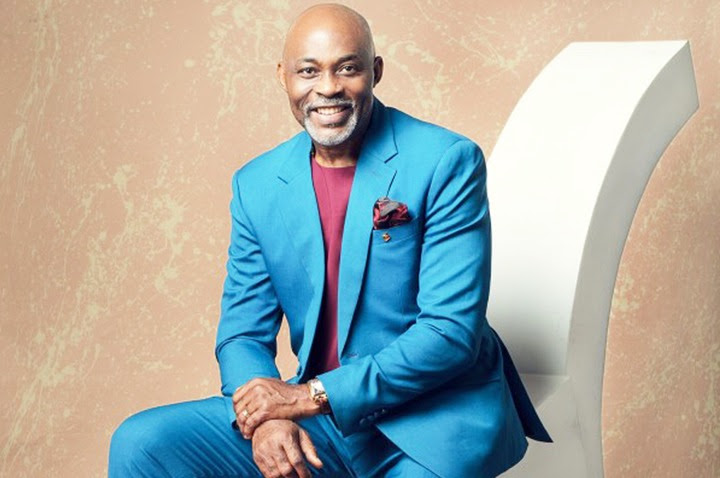
1. Richard Mofe-Damijo (RMD)
Richard Mofe-Damijo (RMD)
Richard Eyimofe Evans Mofe-Damijo, popularly known as RMD, was born on July 6, 1961. The actor and former Delta Commissioner for Culture and Tourism was born in Aladja community of Udu Kingdom, near Warri, Delta State.
He attended Midwest College, Warri and Anglican Grammar School and was a member of the Drama Club. He enrolled into the University of Benin to continue his education and studied Theatre Arts.
In 1997 Richard returned to the university to study law at the University of Lagos and graduated in 2004
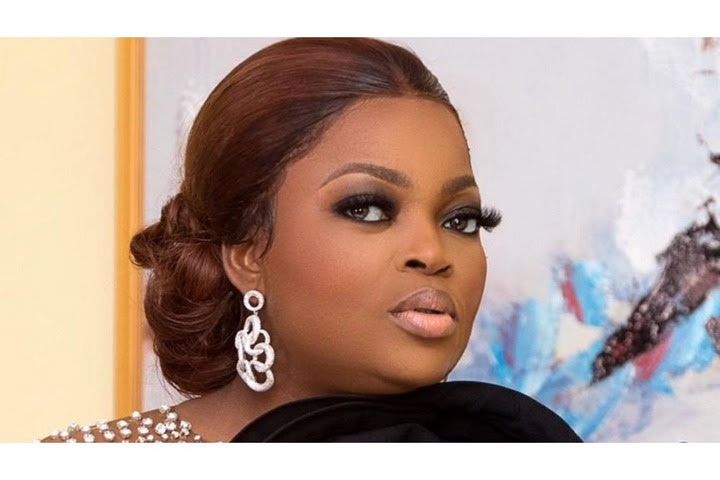
2. Akindele Olufunke Bello
Akindele Olufunke Belle
Akindele Olufunke Bello, popularly known as Funke Akindele and Jenifa, is a Nigerian actress and producer.
Funke starred in the sitcom I need to know from 1998 to 2002. In 2009, she won the Africa Movie Academy Award for Best Actress in a leading role. She plays the lead character in the show Jenifa’s Diary for which she was named best actress in a comedy at the 2016 Africa Magic Viewer’s Choice Awards.
Funke was born on August 24, 1977 in Ikorodu, Lagos State, Nigeria. She obtained an Ordinary National Diploma (OND) in Mass Communication from the former Ogun State Polytechnic, now Moshood Abiola Polytechnic, She later got a degree in Law.
3. Chukwuebuka Obi-Uchendu
Chukwuebuka Obi-Uchendu
Chukwuebuka Obi-Uchendu was born on 14 July 1982. He is known for hosting the reality show Big Brother Naija, the long running Rubbin’ Minds talk show on Channels TV as well as co-hosting The Spot and Men’s Corner on Ebonylife Television.
Obi-Uchendu has received several award nominations and won the award for Outstanding TV Presenter of the Year at the Nigerian Broadcasters Merit Awards for his work on Rubbin’ Minds.
4. Omawumi Megbele
Omawumi Megbele
Omawumi Megbele was born on April 13, 1982. Known by her stage name Omawumi, the singer-songwriter and actress of Itsekiri ethnicity is also part of the campaign called “Rise with the Energy of Africa”.
She gained attention as the 2007 runner-up on West African Idols, a reality TV show part of the Idols franchise. Her second album, The Lasso of Truth, was reported to be a commercial success in Nigeria.
Omawumi was born to Chief Dr. Frank and Mrs. Aya Megbele. She attended Nana Primary School during her pupilage, and later attended the College of Education Demonstration Secondary School.
She graduated from Ambrose Alli University with a Law degree. After graduating in 2005, she moved to Port Harcourt, Rivers State where she worked with her family’s law firm called “O.S Megbele & Associates”. She also studied French at Alliance Francaise. She married Toyin Yusuf on 13 January 2018.
5. Folarin Falana (FALZ)
Folarin Falana (FALZ)
Folarin Falana was born on October 27, 1990. He is better known by his stage name Falz. The rapper, songwriter and actor began his career while in secondary school after forming a group called “The School Boys” with his friend before his professional career as a music artist began in 2009. Falz became more well-known after his song “Marry Me” featuring vocals from Poe and Yemi Alade.
He owns an independent record label called Bahd Guys Records. He released his debut album Wazup Guy in 2014. His second album Stories that touch was released in 2015. He released 27 as his third studio album in 2017. On January 15, 2019, he released his fourth studio album Moral Instruction.
Falz was born in Lagos to renowned lawyers and human right activists Femi and Funmi Falana. He was called to the bar in 2012 after graduating from the Nigeria Law School in Abuja.
Falz completed his basic and secondary school education at St. Leo’s Catholic Primary School, Ikeja and Olashore International School, Osun State respectively. He is an alumnus of the University of Reading England, having graduated with an LLB honors degree in Law.
6. Omotunde Adebowale David (Lolo 1 of wazobia)
Omotunde Adebowale David (Lolo 1 of wazobia)
Omotunde Adebowale David also known as Lolo 1 of wazobia, is a Nigerian radio presenter who hosts the radio programme, ‘Oga Madam’ on Wazobia FM 94.1.
Omotunde attended Ijebu-Ode Anglican Girls secondary school where she also spent part of her school days in a hostel. She is a graduate of Law from Lagos State University and she later went to law school.
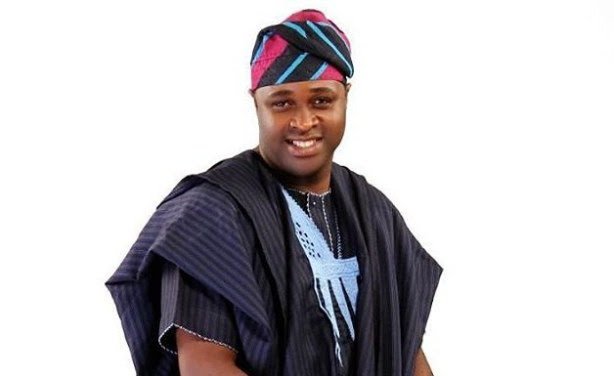
7. Femi Adebayo
Femi Adebayo
Femi Adebayo is a lawyer, film actor, director, producer and Special Adviser to the Governor of Kwara State on Arts, Culture and Tourism. He is the son of the veteran actor, Adebayo Salami.
He was born in Lagos, southwest Nigeria, but originates from Ilorin, Kwara State. He attended the C&S College for his secondary school education then to University of Ilorin where he obtained a bachelor’s degree in Law, and earned a master’s degree in Law at the University of Ibadan.
Rape is classified as a criminal offence anywhere in the world.
The death of 22-year-old Uwa Omozuwa, an undergraduate who was allegedly raped and attacked inside a church premises, death of Bello Barakat in Ibadan and many other rising cases of rape sparked outrage with many Nigerians taking a stand against rape and sexual violence.
Similarly, numerous reported cases have shown that children and minors are also victims of rape.
Many attributed lack of existing laws to serve as deterrents, poor law enforcement, decline in our moral standards and poor state of the education as responsible for rising cases of rape.
Over the years, some Nigerian celebrities have been enmeshed in different rape allegations and have been subject of public derision.
Many of the accusers have called them out on social media.
Below are some top personalities in Nigeria accused of rape:
*Dbanj – Dapo Oyebanjo
A talent/model scout, Benjamin Ese, alleged that Dbanj raped his friend two years ago.
His accusations came after the singer joined the campaign against sexual violence and demanded justice for rape victims in a post on his Instagram page.
Not disclosing the friend’s name, Ese wrote that his friend had attended a party in Lagos and was sighted by Dbanj, who allegedly wanted her.
He went on to reveal how she was allegedly raped by the musician.
He said Dbanj offered the friend in question money in exchange for sex, and she refused.
According to him, the incident happened in a hotel in Victoria Island. He said Dbanj collected the spare key of the girl’s hotel room from the receptionist and allegedly raped her there.
Although he did not mention the name of his friend, he said she decided to keep quiet after the incident because of the stigma.
Dbanj was yet to respond to the allegation at the time of this report.
*Brymo – Ọlawale Ọlọfọrọ
A twitter user identified as @Biligquis in a tweet on April 29 shared a screenshot of narration by the alleged victim.
The alleged victim claims to a huge fan of Brymo and had gone on a visit to the singer’s house with her friend.
But on getting there, the “Ara” crooner allegedly couldn’t let her go as he was horny and one thing led to the other.
The singer also allegedly threatened to sleep with the victim’s friend.
However, Brymo’s manager, Gift Adene of KFN said: “Brymo is not going to comment on that issue, I am his manager and we wouldn’t want to comment on this issue, as they will hear from our lawyer soon.”
Asked if the singer’s silence means he was guilty, the manager said: “I don’t know. What the media or anybody wants to call it like I said, we are going to go legal on the issue”.
However, Brymo finally responded days later. He said the allegations against him were false.
He called on his accusers to come forward.
*Kogi Commissioner of Water Resources, Abdulmumini Danga
A woman, identified as Elizabeth Oyeniyi, also accused Abdulmumini Danga, Kogi Commissioner of Water resources, of raping her.
In a viral video, Oyeniyi said the commissioner abducted her over a Facebook post against him.
She further accused the commissioner of making her record a video to recant her Facebook claims.
Governor Yahaya Bello however ordered an investigation into the matter.
Commissioner for Information, Kingsley Fanwo said the governor ordered the investigation so the truth can be uncovered.
*MC Galaxy – Innocent Udeme Udofot
In July 2019, actress Simbee Davis accused pop singer Mc Galaxy of raping her over 9 years ago.
Her disclosure came at the heels of Timi Dakolo’s rape allegation against Pastor Biodun Fatoyinbo last year.
She broke her silence on Instagram where she narrated how the singer molested her at knifepoint and then “made sure she took drugs to avoid pregnancy.”
She alleged MC Galaxy carried out the act at an apartment in Mount Zion road in Calabar, Cross River state, between 2009 and 2010.
Mc Galaxy was also in the news following a nudity scandal with Etinosa Idemudia, actress and filmmaker.
*Biodun Fatoyinbo Vs Busola Dakolo
Busola, married to popular musician Timi Dakolo, in June 2019 accused Pastor Fatoyinbo of raping her twice.
The allegations went viral on social media with some saying it had triggered Nigeria’s #MeToo moment.
Mrs. Dakolo told YNaija that she was only 16 when Fatoyinbo came to her family residence in Ilorin and raped her, deflowering her in the process.
The mother of three said the first encounter happened on a morning when Fatoyinbo knocked on the door of her family home in Ilorin. The family had been a long-time member of COZA.
The allegation also forced the pastor to go on “leave of absence from the pulpit” for weeks because it was the “right thing to do”. He, however, denied any wrongdoing.
Busola however in September 2019 sued the founder of COZA to court for intentionally inflicting and causing her continuous emotional distress.
In a reaction to the lawsuit, Fatoyinbo filed a counter-claim stating that the accusations from Busola should be dismissed because it was frivolous and statute-barred.
Mrs Dakolo’s allegation came six years after Mr Fatoyinbo faced allegations of sexual misconduct and adultery from two women, including Ese Walters. The two other women did not accuse Mr Fatoyinbo of raping them, and they also largely avoided confronting him unlike Mrs Dakolo.
In what seem like an update after almost a year since the police began its investigations, Busola in a statement said the police “handed over its report to the Ministry of Justice in Abuja for onward prosecution of Biodun Fatoyinbo.”
*Peruzzi – Okoh Tobechukwu
Peruzzi, who is signed on to Davido’s DMW, has responded to a rape allegation leveled against him by a lady identified as Princess.
Princess, who tweeted from the handle @Jayamah22, alleged that the singer raped her in 2012, despite dating her friend at the time.
She narrated that she went with her friend to the singer’s house and ended up sleeping there, which allegedly led to her being raped.
Princess admitted she was young and naive but added that it was no excuse for him (Peruzzi) to take advantage of her.
Perruzzi however denied the allegations on Twitter.
He tweeted: “MY NAME IS OKOH TOBECHUKWU, I HAVE NEVER AND WILL NEVER BE A RAPIST.”
Peruzzi, who is not a stranger to controversies, was accused by a UK-based singer, Daffy Blanco, of rape earlier in the year.
Blanco said she did not press charges against Peruzzi because of DMW lawyer whom she identified as Bobo.
Rape and sexual assault have gone rife in Nigeria with many ladies becoming victims.
Because of stigma and blame culture among Nigerians,many rape survivors prefer not to speak out.
The following centres offer free medical, legal and counselling services to rape and sexual assault survivors while paying utmost attention to confidentiality.
1. MIRABEL CENTRE:The Mirabel Centre opened on July 1, 2013 and was founded by Itoro Eze-Anaba. It is the first rape crisis centre in Nigeria. It is a Sexual Assault Referral Centre (SARC) that provides holistic and high quality medical and psycho-social services to survivors of sexual assault and rape.
Address: Lagos State University Teaching Hospital, (LASUTH), Ikeja, Lagos.
Phone Number:07013491769, 01-2957816, 08187243468
2 PROJECT ALERT:Project Alert is a non-governmental women’s rights organisation set up in January 1999 to promote and protect the rights of women and young girls. The headquarters of Project Alert is in Lagos while Abuja has a branch office.
Project Alert seeks to influence society by actively advocating for zero tolerance for all forms of violence against women and young girls.
Addresses
Lagos: 21, Akinsanya Street Off Isheri Road, Taiwo Bus stop Ojodu – Berger, Lagos.
Abuja: 26 Bamenda Street, Off Abidjan Street, Wuse Zone 3, Abuja.
Phone Number: +2348052004698, +2348180091072
3. STAND TO END RAPE: Stand to End Rape Initiative is a youth-led Not-for-Profit organisation founded by Ms Ayodeji Osowobi. The organisation is involved in advocating against sexual violence, providing prevention mechanisms and supporting survivors with psycho-social services.
The organisation advocates for rape survivors who can’t speak about their ordeal due to stigmatization, by enlightening our community on the need to end rape and victim blaming.
The organisation uses various platforms to educate people and also engages in interactive sessions via social media.
4. WOMEN AT RISK INTERNATIONAL FOUNDATION:(WARIF) is a non-profit organization founded in 2016 by Dr. Kemi DaSilva-Ibru MD; MPH in response to the high incidence of sexual assault, rape and human trafficking occurring amongst young girls and women across Nigeria.
The Foundation was established to raise awareness and address the prevalence of this problem through the “WARIF Approach”- a unique holistic method of tackling Gender Based Violence through the development and implementation of a series of initiatives, targeting both the intervention/treatment of these affected women, as well as providing preventive measures in education and community service to reduce the high incidence.
Every relationship is unique. Individuals go into relationships for various reasons, some for fun and others for marriage and mutual connection. Regardless of these reasons, individuals who get included, want a relationship where they are companions with their accomplices.
Building a healthy relationship is like cooking. If you don’t include a traditional and necessary ingredient, it can change the taste of the meal.
The following are the steps to take to build a healthy relationship:
* Communication
The first step in building your relationship is to ensure that you are on the same page. Make sure you understand each other, your needs and expectations. In a relationship, you have to learn to communicate well with your partner as this helps you to understand who you are dealing with. Make your message clear and be sure your partner understands it.
It isn’t just for you to talk but also listen. Listening is an effective communication skill that will help your partner open up and be more honest. When you really listen, you’ll hear the subtle intonations in your partner’s voice that will tell you if something is amiss. It doesn’t mean changing your opinion but can help you resolve the conflict by looking at a common point of view.
* Trust
Trust is a key component of a healthy relationship and the glue that binds relationships. Without trust, there is a probability that your relationship won’t last long. If you don’t trust the process, chances are you won’t be totally involved in the relationship. While it is true that some battle with trusting others, it is something that they have to embrace and learn to do especially with themselves first. Whether it is friendship or relationship, all bonds are built on trust.
On issues surrounding trust, there are people who are not comfortable with the idea of a long-distance relationship. These set are of the opinion that this type of relationship can erode trust. However, there are success stories of people who were engaged in long-distance relationships. Learn to build yourself up with trust, it doesn’t matter if it’s a long-distance or close relationship. A relationship without trust is a time bomb. Trust means you can entrust your life with someone without looking back.
* Compromise
In a relationship, conflicts are unavoidable. However, you can come to an agreement in resolving it via compromise.. It helps balance you and your partner needs by considering both positions. Healthy compromise helps you and your partner grow together as a team. It shows you have a common goal in mind. Compromise isn’t selfish.
*Peace
While people assume peace is an abstract term, it is something that many do not realise comes from within and is their willingness to allow it reign in a relationship. Apologies, admitting when you are wrong, making an effort to change and respecting your partner are key in a healthy relationship. If you want to have peace in your relationship, it starts with you.
*Love
Love isn’t a feeling, it’s a choice. The decision to stay in love or out of love lies with you. That stated, a relationship needs continual love. You can demonstrate it by giving out gifts, creating time for each other, shopping. Contrary to popular opinion, to win in love, it has to be a give and take situation. It is not only the responsibility of a guy but both genders can contribute to it and express love the way you can.
A popular quote states, “ Actions speaks better than words.” You can start with things you know your partner or spouse would love and do it with a positive mindset and not out of obligation to him or her. You can express it by cooking a meal, doing the laundry, among others.
*Gifts
You can pick out a lovely present for your partner, that is meaningful.
* Physical touch
Nothing is more impactful than the physical touch of your partner. Some partners feel more connected and safe in a relationship by holding hands, hugging and kissing.
Quality Time:
This love language is about undivided attention. You need to dedicate your time to your partner without distractions.


 However, the latter in the group- food processors who are essential service providers are operating skeletal services when compared to their Pre-COVID operations. This means, the end consumers in the supply chain bear the financial brunt.
 Of these 32 men and 26 women micro business owners surveyed, 35 of them said they feel very uncertain about their businesses’ future while 20 do not feel that way. Just three said they feel “somehow” about it. The 20 who feel certain about their businesses’ future reported being hopeful for a change if they are alive, cling onto various religious scriptures and rejecting any form of failures in their lives as a result of religious inclinations.