Category: Online Special

  • Nigerian delicacies you should try this weekend

    Nigerian delicacies you should try this weekend

    By Praise Olowe


    Nigeria, with her diverse ethnic groups, has several foods delicacies that even some Nigerians are yet to try.

    These ethnic groups are diversified by varying factors including culture, language, beliefs and even food choices. Although Nigeria is diverse, food among other things have a way of unifying the people.

    Western influences have, however, transformed the Nigerian culture in many ways including eating habits. We have become comfortable with canned, frozen and well packaged food found in supermarkets and malls.

    Interestingly, we have so many foods and are creative with them, which is why we can adopt anything that is not ours and come up with interesting stuff. We have our adopted jollof rice which doesn’t have its roots in Nigeria but many of us are not aware of.

    Since we have Nigerianized it, we can afford to have social media wars with Ghana to prove that the Nigerian jollof rice is better.

    The Nigerian chapman is something else I recently read of. Until I did, I never imagined that Nigeria had its own variant of chapman. How many other dishes have we colonized? The list is a handful.

    There are, however, some Nigerian foods that we most likely did not “colonize” because they are peculiar to certain parts of Nigeria. You may also want to try them out.

    There is no doubt, most of us find it difficult preparing our local recipes. Nevertheless, these traditional recipes have nutritious value.

    You might want to try some of these numerous recipes, below is a few Nigerian traditional recipe you should try.

    Iyan (pounded yam) and ishapa

    Iyan
    Iyan

    Iyan (pounded yam) is one of the Nigerian fufu recipes, made from pounding boiled yam repeatedly. It is common among the Ondo and Ekiti people. Ishapa is a tangy vegetable used to make egusi soup served with pounded yam. It is mostly eaten by the Ondo and Ekiti people. It originated from Zobo (roselle)  a woody shrub of the hibiscus species (hibiscus sabdariffa ). The leaves are used as vegetables. Ishapa has lot of health benefits such as Lowers cholesterol, Boosting the immune system (from its high levels of vitamin and antioxidants), Decreases inflammation of the kidneys, Decreases occurrence of urinary tract infections, diuretic properties (helps with water retention) and many more. How to prepare.

    Starch and Banga soup

    Banga
    Banga soup

    Starch (Usi) is a popular delicacy in the Southern part of Nigeria especially with people from Delta state. It’s the major type of “swallow” used in eating the popular Banga soup. It’s made from the common starch used in laundry in Nigeria. How to prepare

    Abula

    Abula
    Amala & Ewedu Abula

    Abula is a wonderful Yoruba soup. It is a mixture of gbegiri (bean soup) and ewedu (draw soup).  Amala (yam flour) is a solid brown paste  made from yam or cassava flour which has been peeled, cleaned, dried and blended into a flour and is simply delicious. There are two types of amala which are yam flour (amala isu) and cassava flour ( amala lafun). Abula and Amala is just a perfect match, you should give it a try. How to prepare

    Masa

    Masa
    Masa food

    Masa is a northern staple similar to a pan-fried rice cake. You can experiment with some onion and ginger to derive that perfect taste. Traditionally, Masa is made into oval shape. How to prepare

    Fufu and ofe owerri

    Fufu and ofe owerri
    Fufu and ofe owerri

    This is a nutritious traditional meal, loved and eaten by Owerri people. Ofe owerri is basically made with assorted fish, mixed with green vegetable. Fufu is a starchy accompaniment for ofe owerri soup. It is made with a flour made from a cassava plant. This meal is popular for it rich taste and nutritional value. How to prepare

    Eba and Edikangikong

    Edikangikong
    Eba and Edikangikong

    Eba is made from cassava flour popularly known as garri. Edikangikong is another traditional meal, eaten by the native of Efiks, Akwa ibom and cross river. It is prepared with a great quantity of pumpkin leave and waterleave. It is nourishing in every sense. Eba and Edikangikong is just perfect. How to prepare

    Abacha and Ugba

    Abacha

    It is popularly known as African Salad. It is made with dried shredded cassava(Abacha) and fermented oil bean seeds(Ugba). Your African salad will not be complete without ugba. How to prepare

    Tuwo masara

    Tuwo masara
    Tuwo and Masara

    This is a corn flour dish popularly eaten in the Northern part of Nigeria.To prepare tuwon masara you must first let your maize dry and afterwards grinded. Let your water boil and then pour the grinded maize fine particles, stir and allow it to harden until it become like a firm dough. Tuwon Masara can be eaten with different type of soups and it has nutritional values. How to prepare

    Miyan Taushe

    Miyan
    Miyan Taushe

    Miyan Taushe is a Pumpkin soup popular among the Hausas in Nigeria. It is prepared with ripe pumpkin meat and enjoyed by both young and old. There are different species of Pumpkin, but the Gourd type is very common in Nigeria, nevertheless, feel free to make use of any species you can get as long as it is ripe. How to prepare.

  • Seven prominent Nigerian men who married younger women

    Age, as the popular axiom says, is nothing but a number. And when it comes to love, it is surely not a boundary. This is why many men have married much younger women. Some of them married younger women later in their lives. One politician even married a woman 40 years his junior.

    Here are the older prominent Nigerian men who married much younger women.

    Sen. Ahmed Rufai Sani Yerima

    Ahmed Rufai Sani Yerima

    Yerima, a former governor of  Zamfara State who was born on 22 July 1960 married an Eyptian girl rumoured to be 13 years old sometime in 2010 but he denied that she was not that age. He refused to give her age in an interview with Daily Trust newspaper, saying it was an invasion of her privacy.

    Prince Ned Munir Nwoko

    Ned Nwoko and Regina Daniels

    Ned Nwoko married Regina Daniels on May 26, 2019 when he was 59 and she was 19.

    He is a lawyer, politician and businessman. Ned was born in December 21, 1960.

    Ned and Regina relaxing

    Regina is a Nollywood actress and was born in October 10, 2000.

    Ned has four wives before making Regina the fifth. It is her first marriage.

    Chief Rasaq Okoya

    Chief Rasaq Okoya and Folashade Okoya

    A billionaire industrialist and the Aare of Lagos married Folashade Adeleye in 1999 when he was 59 and she was 21.

    Rasaq was born in 12 January 1940 while Shade, the Managing Director of Eleganza Fashion Products Limited and Eleganza Cruise and Travels Limited was born on 25th April 1977.

    Chief Rasaq Okoya, Folashade and their children

    The couple are still married, and they have four children together. Rasaq has married other women before while it is her first marriage.

    Chukwuemeka Odumegwu Ojukwu

    Chukwuemeka Odumegwu Ojukwu and Bianca dancing on their wedding day

    The late military officer and politician married Bianca Odinaka Olivia Onoh in November 12, 1994 when he was in his mid-50s and she was 22.

    Odumegwu-Ojukwu was born on 4 November 1933 while Bianca was born on 5 August 1968.

    She won the Most Beautiful Girl in Nigeria pageant in 1988 and Miss Intercontinental in 1989, the same year she started dating Ojukwu.

    Chukwuemeka Odumegwu Ojukwu, Bianca and their children

    It was her first marriage while Ojukwu was married once before.

    Before he died on 26 November, 2011, the couple had three children together.

    Chief Dr. Emmanuel Iwuanyanwu

    Chief Iwuanyawu and Chinonyerem during their traditional marriage ceremony

    Iwuanyanwu, a politician and renowned businessman married Frances Chinonyerem Enwerem in September 14, 2013, two years after his wife died. He was 72 at the time while Chinonyerem was 22.

    Iwuanyawu, Chinonyerem and child

    He was born in September 4, 1942, and the couple has a son together.

    Adams Aliyu Oshiomhole

    Oshiomhole and wife Lara

    The current national chairman of the All Progressive Congress (APC) political party and former Governor of Edo State, Nigeria married Lara Fortes, a Cape Verdian model on 5 May 15, 2015, five years after he lost his first wife to cancer.

    Oshiomhole was born in 4 April 1952. He was 63 while Lara was 30 when they got married in Auchi, the hometown of Oshiomhole.

    Emir of Kano Muhammad Sanusi II

    Sanusi and Barkindo


    The former governor of the Central Bank of Nigeria and the 14th Emir of Kano, who was crowned on 8 June 2014, married Barkindo Mustapha in a low-key ceremony in Yola on September 25, 2015 when she was 18 and him 54.

    Sanusi was born in 31 July 1961, and Sa’adatu is the fourth wife. She is currently an undergraduate in the United Kingdom.

    Sanusi and Barkindo

    *Why do you think so many men choose to marry women who are half their age? Share your thoughts in the comments section.

  • Nine deadliest fuel tanker explosions in Africa

    No fewer than 60 persons died last month when a fuel tanker exploded after overturning.

    Here is a look at the most deadly tanker blasts in Africa in the last decade:

    * May 6, 2019, Niger: At least 76 people died in an explosion near the airport of the capital Niamey. Most of the victims were trying to collect fuel flowing from the overturned truck when the blast occurred.

    * October 6, 2018, Democratic Republic of Congo: At least 53 people were killed when an oil tanker collides with another vehicle and catches fire on a highway west of the capital Kinshasa.

    * November 17, 2016, Mozambique: At least 93 people were killed when an oil tanker carrying petrol exploded in the west of the country. Hundreds were trying to siphon off the fuel at the time.

    * September 16, 2015, South Sudan: At least 203 people were killed and 150 injured as people tried to recover fuel from an oil tanker following a road accident west of the capital Juba.

    * May 31, 2015, Nigeria: At least 69 people burnt to death in the southeast of the country after a petrol tanker loses control, rammed into a busy bus station and burst into flames.

    READ ALSO: Lagos tanker explosions’ victims get N13.35m compensation

    * July 12, 2012, Nigeria: At least 104 people were killed as they tried to recover fuel from a petrol tanker following an accident in the southern River State.

    * July 2, 2010, DR Congo: At least 292 people were killed in a petrol tanker blast in the eastern village of Sange. Some victims were trying to recover fuel after the accident; others were watching a World Cup football match nearby.

    * October 9, 2009, Nigeria: At least 70 people were killed in the southeastern Anambra state after a petrol tanker explodes and the flames engulf several other vehicles.

    * January 31, 2009, Kenya: Flames engulfed a crowd scooping fuel when a tanker overturns near Molo, northwest of the capital Nairobi, killing some 122 people.

  • Six ways to honour your mother on your wedding day

    Six ways to honour your mother on your wedding day

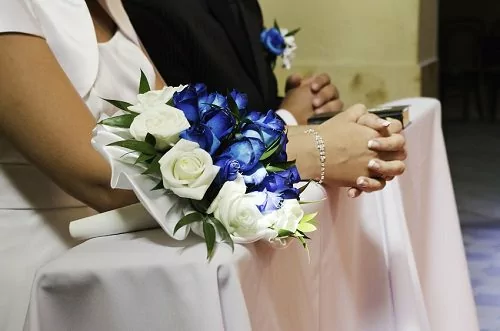
    The Wedding day is, undeniably, a big day for most people. Thus, whatever you do and how you go about it, stays with you for a long time. For some people, it is until death or as long as the marriage lasts. And for women, when she gets engaged, it’s usually her mother who gets to hear about it first.

    The fact that women choose to call their mothers first each time anything important happens in their lives, says a lot about the relationship they share with them. Many women love the idea that they could announce to the world how grateful they are for all that their mothers have done for them.

    According to AmerikankiWedding, the day they get married often presents itself as an excellent opportunity. If you would like to make a touching statement on your wedding day about the relationship that you have with your mother, here are ideas on how to do it.

    1. Wear your mother’s wedding dress

    It can be a beautiful gesture to ask your mother for her wedding dress to wear on your wedding day, instead of picking up a new one. Many brides who try this idea get an expert tailor to have a few updates. Most probably your parents got married in 1980s, which means the style of your mom’s wedding dress differs a lot from what we see nowadays. In this case, you may use your mom’s jewellery and accessories.

    You can also adorn the stem of the bouquet with her scarf or the fabric from her gown or use some items that are dear to her, for example, your family heirloom. If your mother’s D-Day dress isn’t right for you at all, you may still consider wearing her veil. By incorporating an article of her clothing into your outfit, you will gain a special bond between you and your mom.

    2. Choose your mother’s outfit yourself

    Usually, once the bride chooses her wedding dress, she shows it to her mother. The mother, then, goes on to buy an outfit of her own to complement the wedding dress. Then, the groom’s mother buys an outfit to go with all the others. It could be a sweet gesture, though, for you to buy dresses both for your mother and your future mother-in-law, yourself.

    3. Your mother could give you away, too

    In the Jewish tradition, both the mother and the father walk the bride down the aisle. In the Christian tradition, though, it’s only the father. Admittedly, walking down the aisle with your father, brother, grandfather or other male relative had been a strong tradition for a long time. There’s no need to follow tradition to a tee. The convention could be bent a bit, though, if it would help honour your mother. You could ask your mother to join you and your father as you walk down the aisle. After all, both of your parents have to say goodbye to their little girl. However, it would be reasonable to know if your dad is ok with that. Sharing this special moment will be a great way to honour your mother at your wedding.

    Also Read: Housewife offers N120,000 bride price to quit five-year-old barren marriage

    4. The mother-daughter dance

    While it’s common for the bride to dance with her father at her wedding, a mother-daughter dance isn’t nearly as usual a sight. This could be a great place to change tradition. Mothers deserve dances, too. The choice of the song is one of the most important aspects of the dance since the song should be meaningful to both of you and it should be entertaining for your guests. Play her favourite song during the ceremony or opt for the composition that accompanied your parents’ wedding ceremony.

    If you choose the song, consider Mama’s Song by Carrie Underwood and I’m Every Woman by Whitney Huston. These are eternal compositions. Ask the officiator to announce the song and say a few words before you start dancing. Suggest that your spouse dance with both your mom and his mom too.

    5. Make a change to the traditional bouquet toss

    This is another great alternative to a traditional bouquet toss. Nowadays, in some weddings, brides choose to replace the traditional wedding bouquet toss with a bouquet dedication. She gives a little speech about her mother and dedicates the bouquet to her. If your mother doesn’t know about your plans, this is going to be a great surprise for her!

    You can say how important this person is for you without mentioning her name and at the end come up to your mom, hug her and give her your wedding bouquet. This gesture will show her (and everybody there) how important her support was over the years. Be sure, tears are guaranteed. You can also duplicate the wedding bouquet for your mom. Look through her wedding photos and give the picture to your florist.

    6. Re-create your parents’ wedding cake

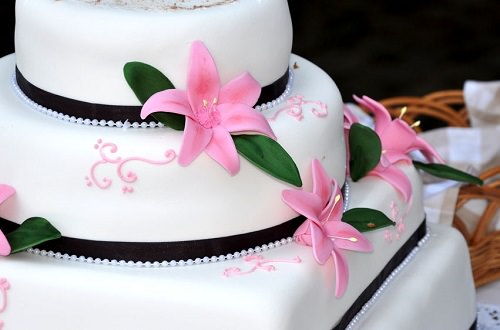
    It can be a beautiful gesture to design your own wedding cake after the one that you see in your parents’ wedding photos. Try to reduplicate every prominent feature and detail of their wedding cake like colours and small decoration flowers. My mom would be just shocked to see the exact copy of her cake on my wedding table!

    You can also incorporate her favourite sweets into your desserts such as chocolate cookies. Be sure, your mom will eagerly share her top secret recipes with you! You can think up a wedding menu after the one that your parents had. It’s not necessarily to pattern everything, but a few dishes taken from your parents’ wedding menu will definitely honour your mom and dad!

  • 10 most valuable currencies in Africa

    African currency was originally formed from basic items, materials, animals and even people available in the locality to create a medium of exchange.

    This started to change from the 17th century as European colonial powers introduced their own monetary system into the countries they invaded.

    Since the advent of legal tender in the form of paper or polymer notes and ditching the old trade by barter system, currencies have continued to remain a fundamental factor in analyzing the strength of the economies of nations across the globe. Here is the current list of top 10 highest currencies in Africa,


    1. Libyan Dinar (1 USD – 0.77 LYD)

    Libyan dinar is known for its vast deposit of crude oil, which accounts for 95% of the nation’s total export earnings and 60% of its GDP. Libya sits at the top with the most stable currency in Africa. The country was made quite famous by its late leader Muammar Gaddafi. Although ravaged by war, its standard of living is not as bad as the oil sector. Compared to Nigeria, the continent’s largest economy, One Libyan Dinar goes for about a staggering N225.


    2. Tunisian Dinar (1USD – 2.3 TND)

    The Tunisian comes second after the Libyan Dinar. This North African nation has a diversified economy based on phosphate, oil, car parts manufacturing, tourism, and agro-food products.  The country is an island with a 99% of inhabitants being Muslims. The average living standard here is relatively on the prime side with a high minimum wage. The economy is rock stable, thriving and with a small populace. More interestingly is its unemployment rate is stooping so low at 14%.


    3. Ghanaian Cedes (1USD – 4.75 CEDI)

    Ghana has a stable diversified economy rich in hydrocarbon, tourism, solid minerals, and automobiles among and many more. Its economy rose to prominence in the days of the gold boom and the cocoa era. The booming economy has steadied its currency and made it a promising nation in the globally. Ghana was ranked the fastest developing country in the world.


    4. Sudanese Pound (1 USD – 6.41 SDG)

    The Sudanese pound is one of the highest currency in Africa.  Sudan has gone through a series of wars and divisions but manages to maintain a stable currency exchange rate. Sudan’s economy is yet still afloat despite the split that saw South Sudan gaining their independence. Sudan is seen in at the top due to its consistency in the foreign exchange market over time. To a Nigerian a Sudanese pounds is equal to N47.63.


    5. Moroccan Diharm (1 USD – 16.2 Mad)

    The conservative Islamic caliphate still in North Africa has the 5th largest economy in the continent and also the 5th highest currency in Africa it. It runs a liberal and a capitalist economy gaining major control over the economy. Some of its industries include mining, tourism, automobiles, construction, and textiles. A flourishing economy that has made its GDP stand at an impressive $148.1 billion. 1 Mad equates to about N33.


    6. Botswana Pula (1 USD – 10.7 Pula)

    Botswana is a landlocked state in Southern Africa with a well-defined landscape defined by the Kalahari Desert. It holds a record for retaining one of the world’s longest economic boom streak. The economic growth rate of Botswana is fast-paced and fairly consistent. Its economy depends on agriculture, copper, diamonds, textiles, and livestock. This South African nation is a major key player in the economy of its sub-region and it houses the South African development community corporate headquarters.


    7. Zambian Kwacha (1 USD – 10.0 ZMK)   

    Zambia prides itself as the largest producer of copper in the continent before its neighbors, the Democratic Republic of Congo eyed the title with green eyes and used it. It is a landlocked of rugged terrain and diverse wildlife. Zambian’s economy has always been anchored on copper which is it’s a major source of export earnings. Although the country has been characterized by economic woes and fluctuations in it’s a price of commodities, it still finds itself on the top 10 list.


    8. South African Rand (1 USD – 13.4 Rand)

    It is the currency used in South Africa. It is the most developed democratic state in the African continent. South Africa has the second largest economy in Africa, trailing behind Nigeria. It has a very vibrant and competitive economy and is the only African member of the G-20 economic group. Its economy is diversified, comprising of mining (41% gold in the world and 90% platinum), automobiles assembly, textiles, agriculture, gold, fertilizer.


    9. Eritrean Nafka (1 USD – 15.0 ERN)

    Eritrean is an island nation in Africa, a remote country in the horn of Africa is quite small in economy, land area and population, its currency is Nafka. After parting ways with Ethiopia, it still shares the same currency with the old nation. Eritrea has a stable currency from a not too lively economy.


    10. Egyptian Pounds (1 USD – 17.8 EGP)

    Egypt is a famous Arab nation that as existence since the biblical times. Well known for its civilization and home to the ancient pyramids. The nation is Africa’s third largest economy and one of the most developed in the continent. Its capital Cairo is the second largest city in Africa. Cairo is an economic and industrial hub, bustling with various activities.

  • 10 tricks you probably didn’t know about your smartphone

    By Praise Olowe
    Smartphones have revolutionised the world in so many different aspects. Most people don’t know the usefulness of their Smartphones as some just think they are only meant to call, receive calls, surf the internet etc.

    While people maximise most of the features of their smartphone, others use them just to make calls.

    However, no matter where you fall on the spectrum of tech users, there are apps as well as hidden features built into the phones that can make your life easier and more enjoyable.

    Measure height and distance: These apps are useful if you need to check the dimensions of a room or the distance across your yard or determine whether a piece of furniture will fit through your door.

    Monitor your heart: Many people check their heart rates often for signs of a medical problem or to help determine fitness levels. The app ¬Instant Heart Rate has more than 5 million ¬users.
    You place your fingertip over your phone camera lens for 10 seconds. Using the camera sensor and flash, the app detects a colour change in your finger from blood flow each time your heart beats and then calculates your pulse rate. Instant Heart Rate keeps a ¬record of your tests so that you can share them with medical professionals and/or monitor the effects of your physical workouts.

    Translate foreign languages: Point your phone’s video camera at any printed material such as a road sign. The app replaces the words in the live picture on your screen with its English translation. It covers major languages including French, German, Italian, Portuguese, Russian and Spanish. The Android and Windows versions even work without an Internet connection.
    This is a free feature in the Google Translate app for Android and iPhone. Windows Phone users can download a similar visual translator that is part of the free Bing Translator app.

    Mail a postcard: Now your phone gives you a way to easily create your own custom paper postcard and have it mailed. The Postcard on the Run app allows you to take a snapshot and -personalize it with a message and your signature. You send it via text message to the company, which prints and mails your card for you to anywhere in the world.
    The app is free for the three major phone operating systems.

    Digitize documents: CamScanner allows you to take a picture of any document, receipt or photo and instantly convert it to a high-quality PDF or JPG file format. The ability to “scan” on the go without a cumbersome office scanner can be very useful. Features allow you to enhance scanned images, adjusting for low lighting and for documents with light print or handwriting. Free for all three major phone operating systems.

    Allow you to create a high-security password: Instead of using a simple four-digit code to unlock your phone, you can create a more complex password with a mix of letters, numbers and special characters.
    iPhone: In the Settings menu, tap Touch ID and Passcode (or just Passcode on older phones), then Turn Passcode On. Turn off the switch that reads “Simple Passcode.”
    Android: In Settings, tap Screen Security, then Screen Lock. Select Password, then type in the password you want.
    Windows: In Settings, tap Lock Screen, then Password. Type your password.

     Take a screenshot: There may be times when you want your phone to capture a picture of what appears on your screen and save it, for example, detailed information on a web page that has constantly changed content.
    iPhone: Press and hold the Home button, along with the Sleep/Wake button. The screenshot will appear in your Camera Roll section. If you have an operating system earlier than iOS 6, consult Apple.com for directions.
    Android: Hold down the Power and Volume buttons at the same time. The image is saved to the Screenshots folder in your Gallery app. Note: This works only for Android OS 4 or later. If you have an earlier version, you’ll need to download the free app, AirDroid.
    Windows: On Windows Phone 8.1, press the Power and Volume Up buttons at the same time. The screenshot is stored in the Screenshots album in ¬Photos Hub. For Windows Phone 8, press and hold the Start button and Power button at the same time. The shot also is stored in your Screenshots album. Earlier Windows Phone versions do not have screenshot capability.

    Enable you to see text more easily: If you’re having a difficult time reading from your phone’s small screen, you can change the size of the text.
    iPhone: In the Settings menu, tap General, then Accessibility, then Larger Text and/or Bold Text.
    Android: In Settings, tap Display, then Font Size.
    Windows: In Settings, type Ease of Access. Under Text Size, move the slider to change the size of the text. This works only in Windows Phone 8 or later. Earlier versions do not allow you to change the text size.

     Let you customise vibration mode patterns: With iPhones and Android phones, you can set your phone to vibrate in a different pattern depending on who is calling you so you can tell, say, that your spouse is trying to reach you, even if your phone is not set to ring.
    iPhone: Go to Contacts. Tap on a contact name. Tap Edit, then Vibration to choose or create a pattern.
    Android: Go to Contacts, and tap on a contact name. Under Vibration Pattern, tap Default and choose a preset pattern.

    Turn off music automatically: Many people like to fall asleep listening to ¬music. You can set your phone to turn off the music automatically after a certain period of time in order to avoid draining the battery.
    iPhone: Go to the Clock feature and tap Timer. Set the desired length of time you want the music to play. Tap the phrase When Timer Ends. Scroll to the bottom of the screen and select Stop Playing.
    Android: Open the music player, tap Menu, then Settings. Tap the phrase Music Auto-off, and set it to however long you want the music to play.
    Windows: There is no built-in feature to turn off music automatically. Instead, you can download and install the free app Stop Music. It works with Windows Phone 7.5 and later.

  • 25 countries Nigerians can visit without visa

    25 countries Nigerians can visit without visa

    Traveling for Nigerians increasingly requires adequate planning. With Nigerian passport ranking 83rd in freedom to travel across the world, acquiring a visa is always difficult and strenuous.

    However, there are visa-free countries accessible to all Nigerian passport holders. With just a valid passport, you can gain entry into these African countries without having to stress yourself over a visa. Some may, however, be required to apply for a visa at their point of entry.

    1. Rwanda
    Easily the neatest African country, Rwanda has become a destination choice for investors and tourists. After the 1994 genocide war, the East African nation is wearing a new look. It is also a secured nation with less than five percent national crime rate.

    Visa is obtained at the entry point with just $100 for Nigerian passport holders.

    2. Djibouti
    In East Africa, one of the best places to visit from Nigeria is Djibouti. You may require a visa on arrival at an affordable rate, but the country still has beautiful places to visit such as the Lake Assal, which is the lowest point on land in Africa. In the world, it is only the third after the Sea of Galilee and the Dead Sea.

    3. Morocco
    The culture, weather and exotic offering of Morocco make the country a great destination for honeymooners. There are super-amazing sites, shops, restaurants, cafes and more around the streets of Morocco which could definitely tempt you to turn your honeymoon into a typical excursion you will not regret.

    4. Cape Verde
    This is an island country that is found on the West African coast. It is one of the most welcoming tourist destinations on the continent as it has great weather and beautiful spots that you could have a splendid vacation.

    5. Kenya
    This beautiful tourist destination has a lot of wildlife, safari and historical places on offer. Cities to explore include Nairobi and Mombassa with the hosts generally welcoming and helpful. Visa is also at the point of entry.

    6. Uganda
    This East African nation with rich historical cuisine and sites such as the Lake Victoria and others allow Nigerians to travel to obtain visa at the point of entry.

    7. Sudan
    Nigerians can get visas at the entry point to visit the massive deserts and wildlife conservations in this hugely vast country.

    8. BURKINA FASO
    Location – West Africa
    (Visa free)

    The country also plays host to International Arts and Crafts Fair, Ouagadougou which is regarded as one of the most important African handicraft fair.

    Burkina Faso is visa For Nigerian who would love to stay as long as they like. The Country is boasts of a gold reserves and is rich in music and art like the drumming culture.

    9. BENIN REPUBLIC
    Location – West Africa
    (Visa free for 3 months)

    As a Nigerian passport holder, you can visit Benin Republic and stay for 3 months without a visa. A country located close to Nigeria, there are a number of tourist attractions in the country that may interest you like the nominated UNESCO World Heritage site named Pendjari National Park.

    10. BURUNDI
    Location – East Africa
    (Visa free for 30 days)

    Nigerians are allowed a visit to Burundi for 30 days without a visa requirement. The country is known for its craft works that serve as a great gift option for tourists. From shields, baskets and masks to statues and pottery. An important part of the culture in Burundi is drumming, the Royal Drummers of Burundi have been performing for 40 years. The oral tradition of the country through poetry, storytelling and songs is also something worth enjoying.

    Read Also: Seven countries Nigerians can visit without visa

    11. CHAD
    Location – Central Africa
    (Visa free for 3 months)

    Chad offers a 3-month visa-free stay for Nigerians. All you need to do is provide a return ticket that shows you do not plan to stay in the country permanently. You can visit the Chad National Museum,

    Chad Cultural Centre to get a feel of the rich cultural heritage of the Chadian people.

    12. CAMEROON
    Location – West Africa
    (Visa free for 90 days)

    Enjoy a great time in Cameroon as entry is visa-free for Nigerians. Check out the National Museum & Mvog-Betsi Zoo in Yaounde or the La Pagode Maritime Museum in Douala. There are a number of wildlife species ranging from lions and antelopes to snakes and birds, you will find at any of the parks.

    13. COTE D’IVOIRE
    Location – West Africa
    (Visa free)

    A visa free stay in Cote d’ivoire formerly known as Ivory Coast is worth it as there several points of interests and tourist attractions you can visit during your stay. The beach resorts of Assinie, the Parc National de Tai, valleys of Man and the artsy Grand Bassam are some of the breathtaking tourist attractions you can see in Cote d’ivoire. You may also enjoy the lagoon boat tour or visit the open markets in Treichville or Cocody.

    14. COMOROS
    Location – East Africa
    (Visa on arrival)

    You can travel to Comoros without a visa but you can get the visa on arrival for $50. Comoros Island is made up of four developed islands with white sandy beaches, giant fruit bats, volcanoes, and rainforests. Enjoy one of the best adventures on Comoros Island and make memories of a lifetime.

    15. CAPE VERDE
    Location – West Africa
    (Visa on arrival)

    A visa will not be required by Nigerian citizen upon entry to Cape Verde, provided you can prove to the immigration officials you do not plan to stay permanently in the country. You will be required to provide a return ticket, as well as proof of funds.

    16. CAMBODIA
    Location – Southeast Asia
    (Visa on arrival for a period of 30 days)

    This country allows Nigerians entry with a 30-day visa on arrival at the port of entry. The country is well known for its beautiful beaches and ancient temple cities. You may visit during the annual Water Festival in November.

    17. DOMINICA
    Location – Caribbean Region
    (Visa free for 21 days)

    18. DJIBOUTI
    Location – East Africa
    (Visa on arrival)

    19. FIJI
    Location – South Pacific Ocean
    (Visa free for 4 months)

    20. GHANA
    Location – West Africa
    (Visa free)

    21. GUINEA
    Location – West Africa
    (Visa free)

    22. GUINEA BISSAU
    Location – West Africa
    (Visa free for 90 days)

    23. THE GAMBIA
    Location – West Africa
    (Visa free for 90 days)

    24. HAITI
    Location – Caribbean
    (Visa free for 3 months)

    25. IRAN
    Location – Middle East


  • No, Kogi State does not occupy 30,354 sq Kilometres of land!

    Claim – That Kogi state occupies 30,354 square kilometres of land

    Claim 2 – Kogi state has a population of 4.7 million people

    Conclusion – Mostly false

    The two part statement made by the Kogi State Senator and gubernatorial aspirant, Dino Malaye is mostly false. This is consequent on the fact that Kogi state currently occupies 29,833 square kilometres of land and there is insufficient data available on its current population.

    Full Story

    With the upcoming governorship elections around the corner, indigenes are keeping their eyes and ears peeled for promises by aspirants. Such is the case with Senator Dino Melaye.

    On July31st, The Senator representing Kogi Central Constituency who happens to also be a governorship aspirant caught the attention of the media with a singular statement.

    “I will operate Kogi like an independent country. Kogi occupies 30,354 square kilometres of land, with a population of about 4.7 million people,” he said.

    A media interaction organised by the Kogi state Council of the Nigeria Union of Journalists (NUJ) for governorship aspirants in Lokoja reported.

    https://staging.thenationonlineng.net/ill-revive-kogi-economy-in-four-years-melaye/

    Senator Dino Melaye, representing Kogi West Senatorial District at the National Assembly, on Wednesday, pledged …

    However, what was of interest was the assertion that the state occupied 30,354 square kilometres and has a population of 4.7 million people

    Kogi state is one of the states slated to have its governorship elections in November and political activities has kicked off in the state. To this end, this fact check is necessary to ensure that the public is well informed about the claims of their political aspirants and other popular figures; one of which is Dino Melaye, a Nigerian politician, Senator and member of the 8th National Assembly, representing Kogi West Senatorial district. Dino is also a member of the People’s Democratic Party. He is currently the Chairman of the Senate Committee in F.C.T.

    Verification of claims

    Having conducted research on the subject, it was found that Kogi state actually occupies a total of 29,833 square kilometres. This of course renders the first claim to be FALSE. It is worth noting that although Wikipedia are not the most reputable source, their reliability with respect to statistical data of this sort is well known.

    https://en.m.wikipedia.org/wiki/Kogi_State
    It is also worth noting the limitations to determining the veracity of the second claim. With the latest national census being held as far back as 2006, population projection analytics had to be consulted. Data from the census (2006) put Kogi state at a population of 3,313,043.

    https://en.m.wikipedia.org/wiki/Kogi_State

    Population projection data found in the Nigeria Bureau of Statistics (NBS) and information on Kogi state website further showed that as at 2016, the state is expected to have a population of 4,473,490.

    https://www.kogistate.gov.ng/political_structure.html

    Considering that most of the available data on the subject are either outdated or at best, calculated guesses, the veracity of the claim remains in question. Regardless, we are certainly not saying it is admissible. This is because the Senator would not have verifiable data to make such an assertion.

    A message was sent to the Senator via his Facebook pages to know the source of his claim. And, as at the time of filing this report, we can confirm the read receipt; but still no official response.

    Conclusion

    The two part statement made by the Kogi State Senator and gubernatorial aspirant, Dino Malaye is mostly false. This is consequent on the fact that Kogi state currently occupies 29,833 square kilometres of land and there is insufficient data available on its current population.


    This fact-check was done by a Dubawa Fact-checking Fellow in collaboration with The Nation Newspaper.

  • 10 Nollywood superstars married at least twice

    Even though there are plenty of famous couples who have made their love last, Nollywood stars are not so lucky with relationships. But you have to hand it to the celebrities who keep going back to the altar for not giving up on love.

    Here is a list of Nigerian movie superstar who have been married at least twice

    1. Funke Akindele Bello

    Funke Akindele and JJC Skillz

    Popular Nigerian actress Funke Akindele also known as “Jenifa” is one of the many celebrities who have been in more than one marriage. In May 2012, Funke married Adeola Kehinde Oloyede. Barely a year after they wedded, the marriage crashed and the couple divorced in July 2013.

    Akindele later got married Nigerian rapper Abdul Rasheed Bello, known as JJC Skillz in London in May 2016 exactly four years after her first marriage. The couple is blessed with twins.

    2. Stella Damasus

    Stella Damasus and Daniel Ademinokan

    Stella Damasus Stella has been married three times and involved in various affairs. Damasus married her first husband, Jaiye Aboderin, in 1999. They two daughters before Jaiye suddenly died in 2004. Damasus re-married in 2007, this time to Emeka Nzeribe.

    The marriage lasted for seven months before a mutual agreement to divorce. In 2011, she became associated with multiple award-winning Nollywood producer &director Daniel Ademinokan. The couple has been together ever since. Their relationship sparked a lot of controversies all over Nigeria and Africa because both parties never publicly admitted to be dating, engaged or even married until 2014.

    3. Toyin Abraham

    Toyin Abraham and Kolawole Ajeyemi

    You most likely would know her as Toyin Aimakhu. This Nigeria born, actor, producer and director got married to a Nollywood actor Adeniji Johnson in 2013. The union appeared so sweet on social media as we the duo never ceased to gush about each other.

    Surprisingly, in 2015, news went round that the celebrity couples were having it hot as they announced their separation.
    It is however interesting to know that the duo has moved on with their lives as Toyin Abraham recently welcomed a baby boy with another Nollywood actor Kolawole Ajeyemi. The union between herself and Ajeyemi had been secretive until recently when a wedding photo with her new husband hit social media.

    Read Also: 10 Nollywood celebrities that have died in 2019

    4. Bukky Wright

    Bukky Wright

    Bukky Wright had previously been married to Gboyega Amu, who is the father of her two sons. Shortly after separating from Amu, due to what she termed irreconcilable differences, she moved into the arms of fellow actor and one time NNPC top shot and current member of the House of Representatives, Rotimi Makinde, without officially divorcing Gboyega Amu.

    The union lasted a few years before she moved on in the same fashion and found solace in the arms of society journalist and image-maker, Femi Davies. Bukky and Femi got married at the Akodo Registry in Lagos.

    5. Solomon Akiyesi

    Solomon Akiyesi

    Solomon Akiyesi has been married four times. He wedded his university love, Ezinne in 2003. He was alleged to still be married to Ezinne when he contracted another marriage with Lilian, who was said to be 8 months pregnant and living in Port Harcourt when Solomon attempted to marry another wife, Uloma Agwu in Lagos on April 13, 2013.

    Akiyesi and Agwu were almost pronounced as husband and wife when Lilian stormed the Overcomer’s World Outreach church, Surulere Lagos where the wedding was going on. She stormed the place with some family members and policemen

    6. Clarion Chukwura


    Clarion Chukwura Clarion tied the nuptial nuts with her U.S. based fiancé, Anthony Boyd making it her third marriage. She once had a relationship with Afro-Juju legend, Sir Shina Peters and bore a son, Clarence Peters after she ended her first marriage to a certain Mr. Abiola in 2003.

    She then remarried in 2004 to Femi Oduneye popularly known as Femi Egyptian. They, however, separated in 2006, after which they got back together before they finally got divorced. She, however, lost her first husband, Tunde Abiola, and her second spouse, Femi Oduneye in 2017.

    7. Femi Adebayo

    Femi Adebayo is a Nigerian actor, filmmaker and director. He is also one of the celebrities who have tied the knot more than one.
    He has three children born by his first wife Khadijat. This was his ever first marriage and, just as many things in life, turned out to be a failure. Khadijat gave birth to the three adorable kids within the eight years of their marriage but in the end, they decided not to wait any longer and broke apart.
    He got married to Omotayo Adebayo after staying out of marriage for 8 years. They got married in October 2016.

    8. Mercy Aigbe

    Mercy Aigbe and Estranged husband

    Mercy Aigbe, who is popular for her fashion sense on social media, was a wife to an Igbo man and had a beautiful daughter for him but the union couldn’t stand the test of time as it crashed a few years later.
    Mercy and Lanre officially tied the knots at the Ikoyi Registry in 2013 but the marriage also crashed in 2017.

    9. Monalisa Chinda


    The actress, film producer, television personality and media personality’s first marriage was to Dejo Richards.

    The marriage did not stand the test of time as it collapsed sooner than expected.

    The couple parted ways in 2009 after they had a daughter together. She later married Victor Tonye Coker in 2016.

    10. Foluke Daramola-Salako

    Foluke Daramola and husband Kayode Salako

    Foluke Daramola-Salako is a Nigerian actress. She married Babatunde Sobowale in 2005, and the union ended in 2008 after two kids, on allegations of wife battering and infidelity. The actress has since remarried and is happy with her latest husband, Kayode Salako.

  • Weekly Review: Important stories you might have missed this week

    This week heralded the Eid-el-Kabir celebration for Muslim faithfuls across the world and also some other interesting news stories.

    It’s possible that you may have missed some of our most interesting stories from this week. To make sure you’re up-to-date, we take a moment every week to bring you important stories.

    Buhari’s pledge to the poor, Obaseki and Oshiomhole’s truce, Ganduje battle with Emir Sanusi continues, suspension of SIPRPP chairman, Okoi Obono-Obla and other controversial news dominated the political discourse this week.

    The Nation brings you a brief round-up of the major stories this week. Alao Abiodun Reports.

    Buhari pledges to fight for poor Nigerians

    buhari

    President Muhammadu Buhari on Tuesday in Daura, Katsina State, said he will use his second term in office to improve the lives of Nigerians by paying close attention to the poor and those on the lower rungs of society.

    Addressing leaders of various communities from five local government areas of Daura Emirate, who paid him a visit as part of Eid El-Kabir celebration, the president said he is convinced that majority of Nigerians understand who he is and his mission, on account of which they returned him for a second term in office with larger margin of votes than 2015.

    “You know how much I laboured to get here. I ran three times in the past. The fourth time, God used technology to do it for me. The fifth time I ran (February 23, 2019), I went to all the states of the federation. The turnout of crowds was overwhelming.

    “Truly, the people know and understand my mission. This is what the votes showed. The administration will dwell on our campaign issues — security, economy and corruption. We will fight for the poor,” the president said.

    He emphasized the important place of agriculture under his administration, promising to appoint a minister who is knowledgeable and will know how to promote interest and investment in the sector.

    Boy, 15, stages own kidnap, arrested

    A 15-year-old boy allegedly staged his own kidnap. He demanded N500,000 as ransom.

    The minor, who was paraded in Jos, the Plateau State capital, on Thursday, told reporters that he initiated the plan with his friends, to enable him buy clothes and celebrate his graduation.

    “I was the one who initiated the plan and not my friends. I wanted my father to give me money for clothes and to also celebrate my graduation,” he said.

    Briefing reporters on the arrest of the minor, Police Commissioner Isaac Akinmoyede said five persons were arrested in a case of criminal conspiracy and kidnapping, including the victim, who stage-managed his own kidnap.

    He said the father of the victim, Mr. Jerry Vichi, on July 19 reported at ‘A’ Division, Jos that his son, working as an apprentice at a motor vehicle electrical wiring shop, did not return after the day’s job.

    The police commissioner said the suspect’s father reported that he received a phone call from a hidden number informing him that his son had been kidnapped and taken away from Jos.

    Edo crisis: Obaseki, Oshiomhole meet

    Governor of Edo State, Governor Godwin Obaseki, and his predecessor, Adams Oshiomhole appears to have set aside the alleged rift between them as both men met on Monday in the latter’s village, Iyanmoh near Auchi area of the state.

    Recall that Obaseki had in a Catholic mass to mark the 80th birthday of former APC national chairman, John Odigie-Oyegun, said things will soon return to normalcy in the state as he and his predecessor do not have any fundamental issues.

    Speaking to journalists after the closed-door meeting, which lasted for about an hour, Oshiomhole said the meeting was not unusual as he was in constant touch with Obaseki.

    The APC chairman said, “It is not an unusual visit; the meeting afforded me the opportunity to meet with my brother and with people I have worked with.”

    Obaseki also noted that the visit was to celebrate the Islamic holiday with his former boss.

    Ganduje continues battle with Emir Sanusi

    This week, Abdullahi Ganduje, Governor of Kano State, ordered some district heads in the state not to attend Kano Durbar.

    A durbar is a festival that holds during eid el Kabir and eid el Fitri celebrations. It begins with prayers, followed by a parade of the emir and his entourage on horses.

    In a statement signed by Abba Anwar, chief press secretary to the governor, Ganduje asked them to celebrate the festivity in their respective emirates, saying “against some calls circulating in the social media, that all district heads were directed to attend Hawan Daushe at Kano emir’s palace, the Kano State government has directed all Hakimai to attend Hawan Daushe at their respective emirates.

    Buhari suspends SIPRPP chairman, Okoi Obono-Obla

    President Muhammadu Buhari has suspended the chairman of the Special Investigation Panel for the Recovery of Public Property, Okoi Obono-Obla,

    This is to allow for investigations into cases of alleged falsification of records and financial impropriety against him.

    A letter addressed to him through the secretary to the government of the federation, says the suspension would be in place until the Independent Corrupt Practices and other related offences Commission concludes its probe.

    His trouble was linked to an investigation by the anti-graft agency, ICPC, which found that he had falsified his WAEC result to enrol at the University of Jos, where he studied law in the 1980s. He also attended the Nigerian Law school on the back of the fake high school records.

    The findings of the ICPC also corroborated a previous inquiry by the House of Representatives in 2018. A House committee that investigated Mr Obono-Obla’s WAEC documents found that it was fake and asked Mr Buhari to remove him from office.

    The lawmakers also said Mr Obono-Obla’s university degree and law school certificate should be withdrawn and he should be handed over to federal authorities for prosecution.

    Another matter that worried administration officials was the growing claims that Mr Obono-Obla had used his office to enrich himself. The House also reached similar conclusions in its December 2018 report.

    Mr Obono-Obla has strongly denied all allegations of certificate forgery or corruption, saying he was a victim of vindictive powerful interests who are offended by his anti-corruption fight.

    El-Zakzaky arrives Nigeria, DSS takes him into custody

    The leader of the Islamic Movement in Nigeria (IMN), Ibrahim El-Zakzaky, has back arrived Nigeria from India.

    Mr El-Zakzaky’s flight arrived the Abuja airport on Friday.

    He was promptly whisked away by security operatives, believed to be officials of the SSS.

    The Shiite cleric has been in the custody of the SSS since his arrest in December 2015 following a massacre of over 300 IMN members by soldiers in Kaduna, for blocking a road.

    He travelled to India following an Abuja court order that he be allowed to receive treatment there.

    He claimed, upon arriving in India, that the Nigerian government working with the Indian government frustrated him from getting adequate treatment.

    Similarly, the Nigerian government has denied the accusations and said the Shiite cleric had ulterior motives for his actions in India.

    However, Hostilities resumed on Friday between the Federal Government and the Islamic Movement in Nigeria (IMN) moments after officials of the Department of State Services (DSS) took the leader of the sect, Sheikh Ibraheem El-Zakzaky, and his wife, Zeenat, back into custody.

    4.7 million have participated in NYSC since inception — DG

    The National Youth Service Corps (NYSC) says more than 4.6 million graduates have participated in the scheme since inception in 1973.

    The director-general of the scheme, Shuaibu Ibrahim, said this on Thursday in Abuja while giving the scheme’s scorecard.

    Mr Ibrahim said the scheme has achieved so much in fostering unity and contributing to national development over the years.

    He said the educational development of the country has also been positively impacted by the presence of corps members as teachers in schools.

    “Since inception, 4,664,804 Nigerians have participated in the NYSC scheme. The scheme has done a lot to foster unity and integration through the policy of posting of corps members to other states than their state of origin,” he said.

    “Educational development of the country has been positively impacted through the posting of corps members to schools.

    PDP BoT chair okays RUGA

    The Chairman of the Board of Trustees (BOT) of the Peoples Democratic Party (PDP), Walid Jibrin, has urged Nigerians to embrace the establishment of Rural Grazing Areas (RUGA) programme of the Federal Government.

    Mr Jibrin told journalists at his Nasarawa country home on Tuesday in Nasarawa State that the proposed settlement policy for herdsmen would promote peace and security in the country.

    He also explained that the programme would boost food security and improve the health and standard of living in rural communities.

    Mr Jibrin, who is also the Sarkin (leader) of Fulani in Nasarawa State, commended the federal government for introducing the RUGA programme in the country considering its importance.