Tag: NEMA

  • NEMA, flood alerts and disaster mitigation

    NEMA, flood alerts and disaster mitigation

    • By Abdulhamid Abdullahi Aliyu

    It has become a ritual tradition that, close to the rainy season, the federal government, through respective authorities, usually issue alerts warning state governments and residents about impending floods in vulnerable areas.  These alerts and predictions aim to prompt appropriate proactive measures to mitigate the menace of this human-induced and natural form of disaster bedevilling our environments. During the 2024 Annual Flood Outlook, the Nigerian Hydrological Services Agency (NIHSA) predicted that 31 states covering 148 local government areas (LGAs) are within high flood risk areas.

    Additionally, 35 states, including the FCT, with 249 LGAs, fall within moderate flood risk areas. The forecast for remaining 377 LGAs is low flood risk areas. The Nigeria Meteorological Agency (NiMet) and the NIHSA predicted that floods in high-risk areas will occur between April and November.

    Addressing stakeholders at the National Emergency Coordination Forum (ECF) meeting in May on the need for proactive measures against the predicted 2024 flood disaster, the Director-General of National Emergency Management Agency (NEMA), Zubaida Umar, highlighted the importance of early warning backed by early action to mitigate the impact of disasters.

    Notwithstanding, Nigeria has faced the recurring challenge of flooding, particularly during the rainy season. The impact of these floods has been devastating, affecting lives, properties, and the economy. The most devastating of all these floods was in 2012, when countless lives were lost and many properties were destroyed.

    Flooding in Nigeria is a multifaceted issue, driven by both natural and human-induced factors. The primary natural cause is heavy rainfall, which overwhelms the drainage systems in many urban areas.

    Human activities exacerbate these natural causes. Urbanization, with inadequate planning and poor drainage systems, contributes significantly to the problem. Many cities have outdated or poorly maintained drainage systems, which are often clogged with waste, preventing the efficient flow of water.

    Deforestation and land degradation also play crucial roles, reducing the land’s ability to absorb water, leading to surface runoff that causes floods. In response to these threats, NEMA has been implementing a comprehensive strategy to mitigate the impact of floods.

    A key component of this strategy is the enhancement of early warning systems. NEMA leverages advanced technologies and real-time data to provide timely alerts to vulnerable communities. This allows for better preparation and quicker response times, potentially saving lives and reducing damage.

    Read Also: Flood: 148 councils in 31 states at high risk, NEMA warns

    Before the beginning of every rainy season, NEMA always intensifies its community sensitization campaigns. These campaigns aim to educate residents in flood-prone areas about the risks and preventive measures they can take.

    Emphasizing the importance of maintaining clear drainage systems and proper waste disposal, these programs foster a culture of preparedness and community responsibility. The involvement of local leaders and stakeholders is crucial in ensuring that these messages reach a broad audience. Addressing the issue of flooding requires a collaborative approach.

    NEMA works closely with state emergency management agencies, local governments, and international partners to ensure a unified and effective response. This collaboration extends to training and capacity-building exercises for emergency responders and community leaders, ensuring they are equipped with the necessary skills and knowledge to handle flood emergencies. 

    It is against this inter-agency collaboration that NEMA recently allied with the Nigerian Security and Civil Defence Corps (NSCDC), a critical stakeholder in the emergency response situation in Nigeria, to mitigate the menace posed by floods during the rainy season.

    Meanwhile, reducing the occurrence of floods also involves improving urban drainage infrastructure. NEMA advocates for the desilting of drainage systems, the construction of flood barriers, and the incorporation of flood-resistant designs in urban planning.

    These measures, combined with strict enforcement of environmental regulations, can significantly reduce the risk of flooding. Adequate funding and political will are essential for the successful implementation of these infrastructure projects. Government policy support is vital for effective flood mitigation.

    Strengthening policies related to urban planning, waste management, and environmental protection can lead to sustainable improvements. Effective implementation and enforcement of these policies require concerted efforts from all levels of government and active participation from the public.

    Furthermore, investment in technology plays a crucial role in disaster mitigation. Real-time monitoring and predictive analytics can enhance early warning systems, allowing for more accurate predictions and timely interventions.

    Utilizing drones for aerial surveys and mapping flood-prone areas can provide valuable data for planning and response efforts. By harnessing technological advancements, NEMA can improve its ability to predict and respond to flooding events more effectively.

    Community engagement is essential for the success of flood mitigation strategies. Active participation of residents in maintaining and protecting their local environment can make significant difference. Regular community clean-up activities, proper waste disposal practices, and adherence to environmental guidelines are simple yet effective measures that can prevent blockages in drainage systems and reduce flood risks. Engaged and informed communities are better equipped to handle emergencies and mitigate the impact of floods.

    In addition to immediate responses, long-term solutions are necessary to address the root causes of flooding. Afforestation and reforestation initiatives can help restore natural landscapes and improve the land’s ability to absorb water. Implementing sustainable agricultural practices can also reduce soil erosion and enhance water retention.

    These long-term strategies contribute to building a more resilient environment capable of withstanding heavy rainfall and minimizing flood risks. As Nigeria faces the impending flood season, the collective efforts of NEMA, government agencies, and local communities are crucial to minimizing the impact of floods.

    Through proactive measures, community engagement, and sustainable practices, Nigeria can build a more resilient future, ready to face the challenges of climate change and environmental disasters. The nation stands united, determined to safeguard lives and livelihoods from the relentless threat of

    • Aliyu, a youth corps member with the Centre for Crisis Communication writes via abdulhamidabdullahiali@gmail.com.
  • Flood: 148 councils in 31 states at high risk, NEMA warns

    Flood: 148 councils in 31 states at high risk, NEMA warns

    The National Emergency Management Agency (NEMA) has said 148 local government areas in 31 states are prone to flooding in this season.

    Director-General of the agency, Zubaida Umar stated this yesterday in Lafia during the downscaling of flood warning strategies for early actions in Nasarawa State.

    Represented by the agency’s Director of Search and Rescue, Air Commodore Kennedy Mayaluwo, the DG said: “The rainfall and flood advisories contained in the seasonal climate prediction, SCP and Annual flood Outlook, AFO of the Nigerian Meteorological Agency and the Nigeria Hydrological Services Agency (NIHSA) have provided us with valuable early warning alerts.

    “Consequently, all of us are expected to take actions that will drastically reduce the adverse impacts of floods on the entire  landscape and the Nigerian population, especially for the most vulnerable person’s living in communities identified to be at risk of flooding.’’

    He continued: “NIHSA has specifically stated in the 2024 AFO that 31 states with 148 LGAs have been predicted to be within the high flood risk areas while 35 states, including FCT with 249 LGAs, are considered to fall within the moderate flood risk areas.

    “The remaining 377 LGAs are forecast for the low flood risk areas. These flood risk areas are presented with their degree of vulnerability to serve as a tool for governments at all levels to develop risk reduction measures to avert disaster losses during this rainy season.

    “These LGAs, which are under high and moderate flood risk areas, include Nasarawa,Toto, Doma, Karu and Awe. These are already listed in the NEMA communication to the government of Nasarawa State.’’

    Governor Abdullahi Sule, represented by the Commissioner for Local Government and Chieftaincy Matters, Mohammed Iyimoga, said about nine local government areas are prone to flooding, adding that the state is doing its best to mitigate it.

    Also, the  Bayelsa State Directorate of Flood and Erosion Control (BYSDFEC) has been directed to identify higher grounds for flood relief camps and identify structures built on canals within the Yenagoa, the state capital for demolition.

    The directive came against the backdrop of the flood warning by the Nigerian Meteorological Agency (NIMET).

    The Deputy Governor, Lawrence Ewhrudjakpo, gave the directives yesterday at a meeting with the Director-General and the directors of BYSDFEC and local government chairmen and their rural development authorities (RDA) counterparts at the Government House, Yenagoa.

    Read Also: Makinde, Olubadan-Designate commission ultramodern palace

    In a statement, his Senior Special Assistant on Media, Mr Doubara Atasi, the Deputy Governor said identifying and building camp grounds were part of measures to mitigate any massive flooding.

    Ewhrudjakpo, however, urged the Directorate to liaise with the local government and RDA chairmen to establish more relief camps close to flood-prone communities to spare rural dwellers the troubles of moving to the state capital.

    He stressed the need for the Ministry of the Environment and other relevant agencies to intensify efforts in opening up canals and waterways for free water flow.

    The Director-General of the BYSDFEC, Walson Omuso, said efforts were underway to identify additional higher grounds for the flood relief camps in preparation for the huge flood as predicted by NIMET.

    In Anambra State, the Commissioner for Special Duties, Mrs Beverly Ikpeazu-Nkemdiche, has reassured residents of flood-prone communities of speedy delivery of palliatives ahead of predicted flooding in the state.

     She gave the assurance at a news conference, yesterday in Awka, the state capital.

    According to her, the government sensitises the major flood-prone areas – Ogbaru, Ayamelum, Anambra East and West, to relocate to upland.

    Meanwhile, the Federal Government  has  clarified its position on some reports that Lagos State is experiencing submergence from flood.

    Controller of Works, Olukorede Keisha said while the Ministry acknowledged that localised flooding affected certain sections of federal roads, no part of it was submerged.

  • Ìbẹ̀rùbojo gbọkàn àwon aráàlú nítorí ẹ̀kún omi 

    Ìbẹ̀rùbojo gbọkàn àwon aráàlú nítorí ẹ̀kún omi 

    Igba Náírà ni àwọn géndé fi n gbé àwọn èèyàn kọjá ẹ̀kún omi
    Ajọ NEMA ní kí àwọn tó n gbé létí odò ó tètè sá àsálà fẹ́mìí wọn
    Nìjọba àpapọ̀ bá lárùn kọ́lẹ́rà yóò tún lágbára sí i

    By Kayọde Ọmọtọṣọ

    Lati Ọjọruu, Wẹsidee, ọsẹ to kọja ti arọda ojo alagbara kan ti rọ kaakiri ipinlẹ Eko ati awọn ipinlẹ kan nilẹ Yoruba ni ibẹru-bojo ti gbọkan ọpọlọpọ eeyan. Koda, ki i ṣe ẹkun Iwọ-oorun nikan ni ojo yii ti rọ, ṣe lo rọ ni awọn ipinlẹ bii Yenagoa, Gusau, atawọn ipinlẹ mi-in kaakiri orileede yii. Koda, ọkan awọn to mu ile ti eti odo ni ko balẹ mọ, ṣe ni wọn ti n ronu ọna ti wọn yoo gbe e gba ti arọda ojo yii ko fi ni i ṣakoba nla fun wọn.

    Tẹ o ba gbagbe, ọjọ Iṣẹgun, Tusidee, ọsẹ to kọja ni ajọ to n mojuto iṣẹlẹ pajawiri lorileede yii, iyẹn National Emergency Management Agency (NEMA), pariwo sita pe awọn ipinlẹ mọkanlelọgbọn ni o ṣee ṣe ki iṣẹlẹ ẹkun omi o ti ṣẹlẹ lọdun yii.

    Koda, ni ọjọ Ẹti, Furaidee, ọsẹ to kọja yii ni arọda ojo kan rọ ni ilu Gusau, nipinlẹ Zamfara. Ṣe ni ojo yii ko jẹ ki ọpọ eeyan o lọ sibi iṣẹ, to si ba ọpọlọpọ dukia awọn eeyan jẹ.

    Ninu alaye ti ajọ NEMA ṣe, wọn ni arọda ojo ti yoo mu iji lile pẹlu ara lọwọ yoo bẹrẹ si i rọ bẹrẹ lati Ọjọruu, Wẹsidee, ọsẹ to kọja. Lara awọn ipinlẹ ti wọn ni ọwọja ojo yii yoo ti pọ ni ipinlẹ Eko, Jigawa, Kano, Katsina, Sokoto, Kebbi, Zamfara, Taraba, Adamawa, Kaduna, Yobe, Bauchi ati Gombe.

    Bakan naa ni wọn ni awọn ipinlẹ bii Kwara, Kogi, Benu, Niger, Ogun, Abia, Rivers, Edo, Akwa Ibom ati Cross Rivers naa yoo foju wina arọda ojo ti yoo mu iji lile lọwọ.

    Eyi lo jẹ ki ọkan ọpọ awọn eeyan o ma balẹ mọ. Ṣe awọn agba bọ wọn ni ẹni Ṣango ba lu iya rẹ pa kl ni i duro nibi ti wọn ba ti n bu Olukoso. Iriri ti awọn eeyan ti ni nipa ọṣẹ ti ẹkun omi n ṣe lo fa a ti ọpọ awọn to mu ile si eti odo fi bẹrẹ si i ko ẹru wọn kuro.

    Ṣe lasiko ojo ọdun to kọja ni ọkọ iyawo tuntun kan, Glory Jato, ba omi lọ ni adugbo kan ti wọn n pe ni Bethel Estate, Ọba Ile, nijọba ibilẹ Ariwa Akurẹ, nipinlẹ Ondo. Koda, ṣe ni ojo ọdun to kọja ọhun tun pa gbajumọ aafa arọwaasi kan ni adugbo Agbaluku Arigidi, nijọba ibilẹ ariwa-iwọ-oorun Akoko, nipinlẹ Ondo, Saliu Abdulrahman, bẹẹ naa lo tun ba ọpọlọpọ oko jẹ.

    Ọṣẹ ti ojo to ṣẹṣẹ bẹrẹ si i rọ lọdun yii ṣe naa ko lonka. Lọjọ Iṣẹgun, Tusidee, ọsẹ to kọja ni agbara ojo gbe ọmọ ọdun mejila kan, Joshua Inioluwa, lọ laduugbo Ikosi-Ketu, niluu Eko.

    Niṣe ni iya Joshua bu sẹkun gbaragada, to si fomije ṣalaye fun awọn oniroyin pe “baba Joshua ti salọ tipẹ, emi ni mo n tọju rẹ. O n mura fun idanwo aṣewọle ileewe girama lọwọ ni, ṣe ni mo maa n ṣọ ọ lọwọ-lẹsẹ. Nitori owo ile ti mi o ri san lo sọ mi di ero ibi ti mo n gbe yii, ti awọn ẹlẹyinju aanu fi fi ibi ṣaanu mi. Ile ti mo n gbe tẹlẹ jona ni, lẹyin eyi ni mo tun nijamba ọkọ. Inu aawẹ ni mo wa lanaa, ko sounjẹ ninu mi ti wọn fi tufọ iku ọmọ mi fun mi. Kilaasi ipele akọkọ lọmọ mi fẹẹ bọ si, ọkọ mi si ti salọ tipẹ. Ọjọ Aje, Mọnde, ọsẹ to kọja yii ni mo ṣe sanwo ileewe rẹ lẹyin ti a dari ti ilu Ọyọ de. Inu ọja ni mo wa ti wọn fi pe mi pe omi gbe ọmọ mi lọ. Ọmọbinrin ni, oun nikan si ni obinrin ti mo bi. Wọn ti pa ọmọ ologo kan ṣoṣo ti mo ni. Iṣẹ awakọ baalu lo wu ọmọ mi lati ṣe, ṣugbọn wọn ti fi iku ja a gba mọ mi lọwọ.”

     Nibi ti ọwọja ojo yii lagbara de, ṣe ni awọn ọdọ kan tun sọ ẹkun omi yii di ibi ti wọn yoo ti ri ounjẹ. Ṣe ni wọn n gba igba Naira (#200.00), lọwọ awọn eeyan ti wọn ba fẹẹ gbe kọja ẹkun omi, paapaa ni awọn agbegbe bii Ọjọ, Ketu, atawọn agbegbe mi-in.

    Nigba ti ajọ to n mojuto iṣẹlẹ pajawiri n sọrọ, wọn ni ki gbogbo awọn to n gbe nitosi odo o tete ko ẹru wọn kuro kiakia, nitori ẹmi wọn wa ninu ewu. Adari ajọ NEMA, Zubaida Umar, lo sọ eyi di mimọ lọsẹ to kọja niluu Awka. 

    Lẹkun Iwọ-oorun ilẹ wa, awọn ijọba ipinlẹ naa o kawọ gbera lori ọrọ ẹkun omi. Ninu ọrọ ti ijọba ipinlẹ Eko, latẹnu kọmisanna fọrọ ayika, Tokunbọ Wahab, sọ l’Ọjọruu, Wẹsidee, ọsẹ to kọja lo ti ni ko si aniani pe awọn yoo bi ọpọlọpọ ile to n ṣe idiwọ fun lilọ-bibọ agbara wo lulẹ.

    Ṣe awọn agbegbe ti ojo ọhun ti ṣọṣẹ ju l’Ekoo ni Ẹpẹ, Eredo, Bogijẹ, Labọra, Abijọn, Ṣangotẹdo, Awoyaya ati Ibẹju-Lekki.

    Nigba ti ijọba apapọ n sọrọ, wọn ni arọda ojo to n rọ yii yoo tun ṣakoba nla fun itankalẹ arun kọlẹra kaakiri orileede yii. Minisita fọrọ ohun alumọọni inu omi, Ọjọgbọn Joseph Terlumum, lo sọrọ yii l’Ọjọbọ, Tọsidee, ọsẹ to kọja. Ṣe lọwọlọwọ bayii, eeyan mẹtalelọgọta lo ti ku latari itankalẹ arun kọlẹra yii, ti ẹgbẹrun meji eeyan si tun n gbatọju lọwọ.

    Minisita ni ẹbẹ ti awọn fẹẹ bẹ awọn ijọba ipinlẹ ati ijọba ibilẹ ni pe ki wọn tete gbe igbesẹ lati kapa iṣẹlẹ ẹkun omi, nitori ko si ibudo omi kankan ti wọn ṣi silẹ lasiko yii ti omi fi bẹrẹ si i yale kaakiri. O ni awọn ipinlẹ ti ẹkun omi yoo ti ṣẹlẹ ni Akwa Ibom, Anambra,Adamawa, Enugu, Benue, Kogi, Kebbi, Kaduna, Niger, Nasarrawa, Ondo, Ogun, Rivers, Taraba ati FCT.

    Ṣa, ojo to n rọ lẹnu ọjọ mẹta yii ti n mu ki ọpọlọpọ eeyan maa ko aya soke, adura ni kaluku si n gba pe ki awọn ma ri ija omi.

  • NEMA receives 103 Nigerians deportees from Turkiye

    NEMA receives 103 Nigerians deportees from Turkiye

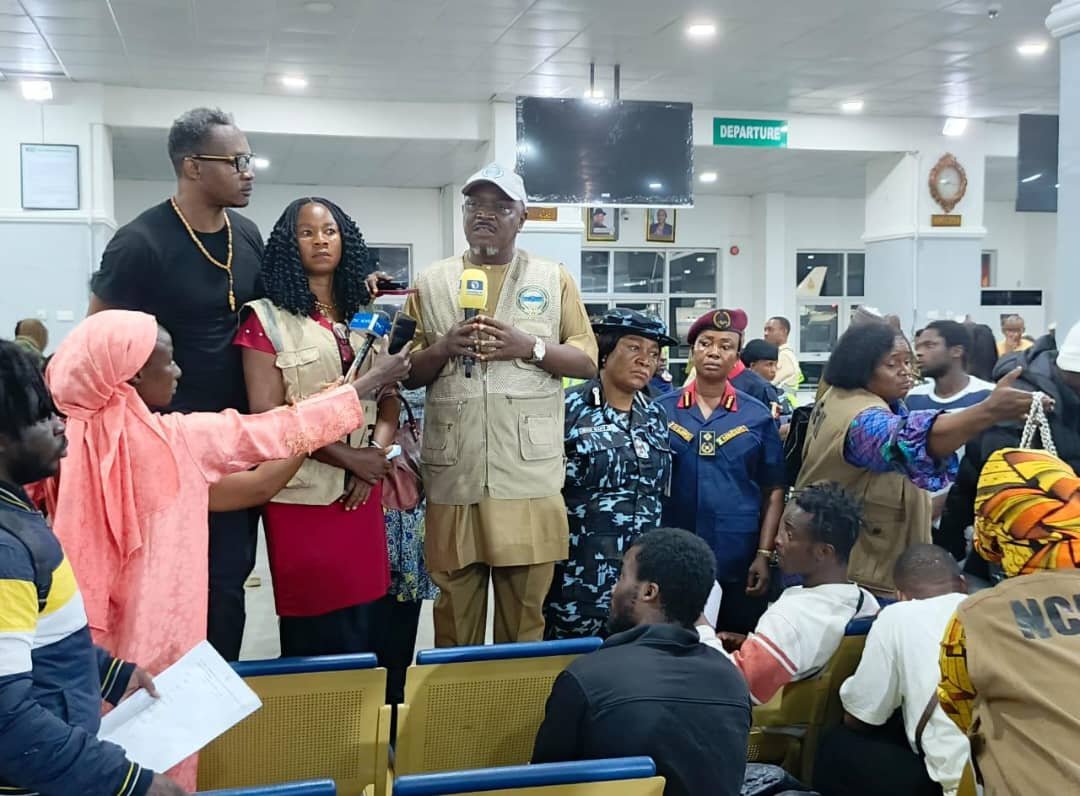
    A total of 103 Nigerians deported from the Republic of Turkiye back to Nigeria were received by the National Emergency Management Agency (NEMA) and other Stakeholders.

    The deportees who arrived at the Nnamdi Azikiwe International Airport, Abuja, on Friday at 7pm through the pilgrims wing of the airport were received by the Federal Government officials led by NEMA

    A Southwind Airlines flight TCGRB conveyed the deportees from Turkiye to Nigeria.

    Addressing the returnees, the Director General NEMA, Mrs Zubaida Umar, admonished them to accept their experience in good faith and be law abiding.

    The DG NEMA, who was represented by the Director, North Central Zone, Alhaji Bashir Garga, said the returnees were received with dignity to assuage their experience and assured the concerns of Federal Government over their plights.

    Umar announced that a token of financial support had been provided to assist in their transportation to their various locations.

    Read Also: Voltage coming to Nigerian cinemas

    After being screened by officials of Port Health authority, profiling was done by NEMA and NCFRMI, they were cleared by NIS and were given transportation to aid their movement to their various destination.

    Other stakeholders that joined to receive the deportees were officials of the Nigerian Immigration Service (NIS), National Commission for Refugees Migrant and Internally Displaced Persons (NCRMID), National Agency for Prohibition of Trafficking in Persons (NAPTIP).

    Other are the Federal Airport Authority of Nigerian (FAAN), Nigerian Police Force (NPF), Nigerian Security and Civil Defence Corps (NSCDC) and National Drug Law Enforcement Agency (NDLEA) Others were officials of Port Health Authority and National Intelligence Agency.

    (NAN)

  • 12 LGs in Niger at risk of flooding – NEMA 

    12 LGs in Niger at risk of flooding – NEMA 

    The National Emergency Management Agency (NEMA) has identified 12 out of Niger state’s 25 local government areas as high flood risks, calling on the state government to start sending warning alert and making early preparations for proper response.

    The 12 local government areas include Agwara, Bida, Magma, Munya, Agaie, Shiroro, Bosso, Kontagora, Gurara, Chanchaga, Rafi, and Lavun local government areas. 

    The Director General of NEMA, Mrs. Zubaida Umar, stated this when she made the presentation of 42 metric tonnes of assorted grains to the state Governor, Mohammed Umar Bago in Minna on Tuesday.

    Highlighting the gravity of the situation, NEMA’s Director General emphasised the critical need for preemptive actions to mitigate potential flood disasters underscoring the necessity for the state government to implement strategic measures promptly. 

    Read Also: Relocate people from flood-prone areas,  NEMA tells 33 governors

    “Niger state is known to be one of the major food producers in the country, the citizens largely engage in farming but the annual occurrences of flood have threatened this potential. It is the responsibility of the government to involve strategies to minimize loss through adherence to warning alerts, early preparations and proper responses”, she said.

    During her visit, Umar made delivery of federal government-approved assorted food commodities to the state government to alleviate potential distress caused by floods. The food commodities recieved include The food commodities include maize, sorghum, and millet.

     “The president approve 42 metric tonness of assorted food commodities from the national food reserves under tge custody of the federal ministry of agriculture and food securuty. This would aid vulnerable communities across the state”, she said. 

    Niger state governor, Mohammed Umar Bago while receiving the food commodities appreciated the federal government’s support pledging to ensure transparent distribution of the relief items. 

    “Anyone attempting to divert or sell these items given to us by the federal government would be persecuted. The local government chairmen and traditional institutions should be in their toes to make sure that these gets to the right people it is meant for”.

    The governor also disclosed that committees have been set up for the proper distribution of the item adding that every logistical requirements would be taken care of by the state government.

  • Omíyalé yóò ṣẹlẹ̀ káàkiri ìpínlẹ̀ mẹ́tàlélọ́gbọ̀n lọ́dún yìí, àjọ NEMA ṣèkìlọ̀

    Omíyalé yóò ṣẹlẹ̀ káàkiri ìpínlẹ̀ mẹ́tàlélọ́gbọ̀n lọ́dún yìí, àjọ NEMA ṣèkìlọ̀

    Kayọde Ọmọtọṣọ

    Ajọ to n ri si iṣẹlẹ pajawiri nilẹ wa (NEMA), ti kilọ fun awọn to n gbe nitosi odo tabi ibi ti ẹkun omi ti maa n ṣẹlẹ pe ki wọn tete maa ko ẹru wọn kuro nibẹ kiakia. Ajọ ọhun tun rọ ijọba pe ki wọn maa mojuto awọn ibudo omi kaakiri ipinlẹ wọn, ki wọn si ko gbogbo gọta ati oju agbara nitori apẹẹrẹ ti n foju han pe iṣẹlẹ omiyale yoo ṣẹlẹ kaakiri orileede yii lọdun yii.

    Gẹgẹ bi akiyesi awọn ajọ to n mojuto  oju ọjọ (Nigeria Meteorological Agency; NiMet) ipinlẹ mẹtalelọgbọn niṣẹlẹ ẹkun omi yoo ti ṣẹlẹ ati pe ipinlẹ marundinlọgbọn ni yoo ti buru ju, paapaa laarin oṣu to kọja si oṣu to n bọ.

    Read Also: Yómì Fabiyi bu sẹ̀kùn níbi ayẹyẹ ọjọọbì ati ísìlè ẹ́

    Ajọ yii ni lati inu oṣu keje si oṣu kẹsan-an ni omiyale yoo pọ, ti awọn ipinlẹ bii mẹtalelọgbọn yoo si faragba. Wọn ni to ba di inu oṣu kẹwaa si kọkanla, ipinlẹ mọkandinlogun ni yoo faragba nibi iṣẹlẹ ẹkun omi naa. 

       Adari ajọ NEMA, Abilekọ Zubaida Umar, waa pe fun ilanilọyẹ fun awọn olugbe agbegbe ti ẹkun omi yoo ti ṣẹlẹ naa ki wọn ba a le ko oju agbara, ki wọn si tun gbaradi fun iṣẹlẹ yii nitori ogun awitẹlẹ ki i pa arọ to ba gbọn. O fi kun un pe ajọ NEMA naa ko ni i kawọ gbera, nitori awọn yoo ṣe ojuṣe awọn lati ri i pe iṣẹlẹ ẹkun omi ti awọn sọ asọtẹlẹ rẹ yii ko buru ju bo ti yẹ lọ. Umar ni to ba tiẹ waa ṣẹlẹ, awọn ti gbaradi lati dide iranwọ fun awọn to ba faragba nibẹ, ti awọn si ti bẹrẹ ilanilọyẹ fun wọn.

  • Relocate people from flood-prone areas,  NEMA tells 33 governors

    Relocate people from flood-prone areas,  NEMA tells 33 governors

    Those living on flood-prone communities should start relocating now, the National Emergency Management Agency (NEMA), has counselled.

    The agency also called for the monitoring of dams, desilting and clearing of debris in water bodies by relevant authorities to prevent blockages and the creation of detention dams.

    According to predictions and the outlook released by the Nigeria Meteorological Agency (NiMet) and Nigerian Hydrological Services Agency (NIHSA), 33 states will be pounded by flood this year.

    The agencies listed 25 of the 33 states and 72 local government areas with heightened vulnerability to flooding between last month and next month.

    The vulnerability, according to them, will persist from July to September and affect all the 33 states and 135 local government areas identified as high-risk areas.

    Read Also: Foreigners earning more from mining than Nigerians, says Akpabio

    Between October and November, 19 states and 44 council areas will be affected by flood.

    To curb the likely impact of the flood, NEMA’s Director-General, Mrs. Zubaida Umar, called for proper sensitisation campaign in communities that would be affected.

    Mrs. Umar, who spoke at the National Emergency Coordination Forum, said: “We should ensure community sensitisation and awareness campaign to ensure early desilting and clearing of debris in water bodies to prevent blockages; monitoring of dam discharge and regulations, as well as creating detention dams.

    “There is also the need for sub-national entities to mobilise flood-prone communities to clear waterways and channels and relocate from flood plains.”

    She also assured that NEMA will continue to intensify efforts to take proactive measures to reduce the impact of the predicted flooding.

    The NEMA boss stated that in the event of the occurrence of flood or other disasters, the agency will work with other government partners to provide necessary succour to affected persons.

    She also called on all stakeholders to live up to their responsibilities to prevent loss of lives and property, that may occur due to the predicted climate-related disasters in 2024.

    Mrs. Umar said: “Various emergency sectors including food security, water sanitation and hygiene (wash), health, nutrition, education, protection, information, emergency shelter & non-food item, camp coordination and camp management, security, information and logistics are requested to be holding regular (coordination) meetings.

  • NEMA distributes FG’s 20,078 bags of palliatives in Anambra

    NEMA distributes FG’s 20,078 bags of palliatives in Anambra

    The Federal Government has sent 20,078 bags of garri and maize to Anambra State to alleviate the sufferings of the vulnerable homes.

     But the handling of the important palliatives was done secretly in the state at the weekend by the National Emergency Management Agency (NEMA) in conjunction with the state government

    The Nation gathered that out of the number, 16, 130 bags were maize, while 3,948 were bags of garri

    They were handed to the Anambra State Government for onward distribution to vulnerable persons in the state to help cushion the effect of economic hardship in the country.

    The food items that came from the National Strategic Reserve took place at the Anambra State Emergency Management Agency, Awka with four local governments, Awka North and South, Dunukofia, and Njikoka as the first batch of beneficiaries.

    The officials of NEMA, Southeast Zone, The Nation, learnt, wanted to share the items with the Anambra State Government and Transition Committee Chairmen of some local government areas save for the governor’s intervention

    Read Also: How technology with agile mindset can improve Nigeria’s electoral process

    The palliatives were for the 21 Local Government Areas which would in turn share to the less privileged

    The state governor, Prof Chukwuma Soludo said the distribution was very important now that the prices of goods were skyrocketing on a daily basis

    He assured that through the committee set up by the state government, the assorted commodities would be adequately distributed and would get to the doorsteps of those who were in true need of them.

    “The items due for each local government area should be given to religious organizations and three percent will be given to boarding schools in the local government areas”.

    The Executive Secretary, Anambra State Emergency Management Agency, SEMA, Chief Paul Odenigbo, said that they had set up a 16-man distribution committee in each of the local government areas for a seamless distribution exercise.

    He assured them that the items would get to the targeted audience.

  • NEMA distributes 20,078 bags of palliatives in Anambra

    NEMA distributes 20,078 bags of palliatives in Anambra

    The Federal Government has sent 20,078 bags of garri and maize to Anambra State to alleviate the suffering of vulnerable homes.

    But the handling of the palliatives was done secretly in the State at the weekend by the National Emergency Management Agency, (NEMA) in conjunction with the State Government. 

    The Nation gathered out of the 16,130 bags were maize while 3,948 were bags of garri.

    They were handed to Anambra Government for onward distribution to vulnerable persons in the State to cushion the effect of economic hardship in the country.

    The food items from the National Strategic Reserve were distributed at the Anambra State Emergency Management Agency, Awka with Awka North and South, Dunukofia and Njikoka as first batch of beneficiaries.

    The officials of NEMA Southeast zone, The Nation learnt wanted to share the items with the Anambra State Government and Transition Committee Chairmen of some local government areas save for the Governor’s intervention

    The palliatives were for the 21 Local Government Areas who would in turn share to the less privileged.

    Governor Chukwuma Soludo said the distribution was very important now that the prices of goods were skyrocketing on a daily basis 

    He assured through the committee set up by the State Government, the assorted commodities would be adequately distributed and would get to the door steps of those who were in true need of them.

    The Executive Secretary, Anambra State Emergency Management Agency (SEMA) Chief Paul Odenigbo said that they had set up a 16-man distribution committee in each of the local government areas for a seamless distribution exercise.

    He assured the items would get to the targeted audience.

    A resident from one of the local government areas close to Awka told The Nation the initial intention of those in charge of the palliatives was to share them to their relations.

    According to the source: “Tomorrow they will come out and condemn Tinubu but see them they didn’t want anyone to know that FG had sent food items to be given to the vulnerable homes. 

    Read Also: NEMA confirms three dead, two injured in Kano building collapse 

    “We thank Governor Soludo for the instructions, people you think that are sincere are not, that’s the bane of our society “

    However, Transition Committee Chairman, Mr Onochie Ozonma of Onitsha North Local Government Area said the gesture complements what  Soludo was doing in the state to ensure that Ndi Anambra were well taken care of 

    He promised that the items would go to the poorest of the poor in their different communities .

  • NEMA confirms three dead, two injured in Kano building collapse 

    NEMA confirms three dead, two injured in Kano building collapse 

    The National Emergency Management Agency (NEMA) has confirmed three persons dead and two injured in a three-storey building collapse incident at Kuntau Quarters, Gwale Local Government Area of Kano.

    Dr Nuradeen Abdullahi, NEMA Kano Territorial Coordinator, confirmed the incident and casualty figures to the News Agency of Nigeria (NAN) on Friday in Kano.

    Read Also: NEMA commiserates with Lagos govt over Dosunmu market fire

    “We received a distressed call today at about 9:20 a.m from a good Samaritan that a three- storey building under construction collapsed at Kuntau quarters.

    “On receiving the information, we quickly sent our rescue team to the scene.

    “So far, five persons were rescued and taken to Murtala Muhammad Specialist Hospital, out of which three were confirmed dead, while two victims sustained injury and are receiving treatment” Abdullahi said

    He noted that the search and rescue operation was still ongoing to rescue those trapped.

    “NEMA rescue team, Kano State Fire Service, Police, red Cross, NSCDC and SEMA among others are still at the site of the incident to ensure removal of other trapped victims,” Abdullahi said

    (NAN)